RAIN marks 35 years with keynote by alumna Teresa Brockie
For decades, UND’s RAIN program has supported American Indian students, as distinguished alumna Teresa Brockie confirms
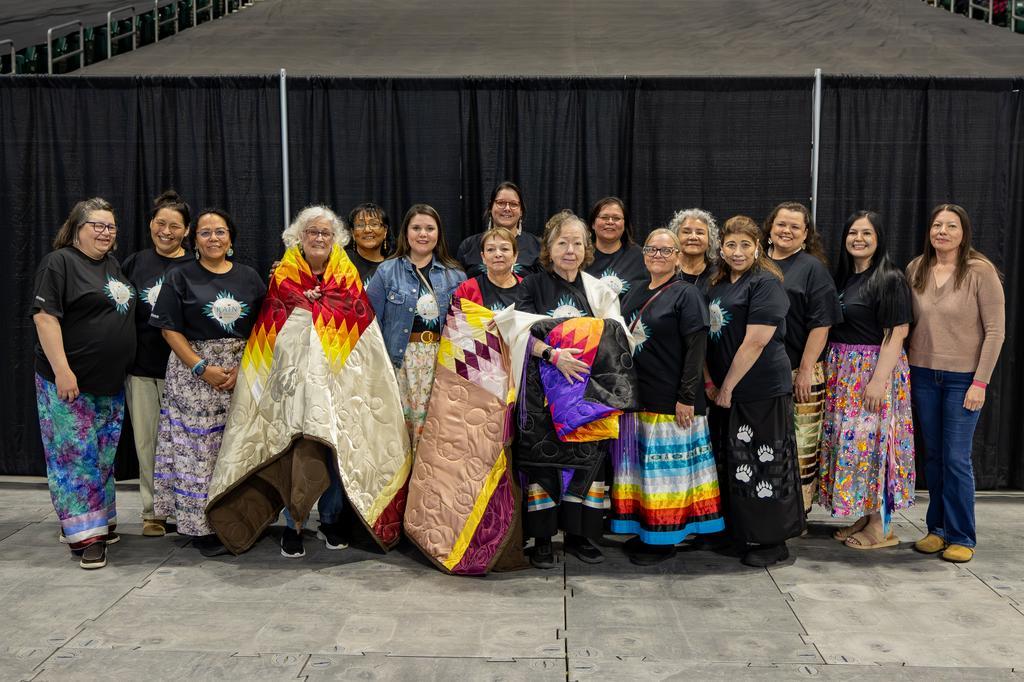
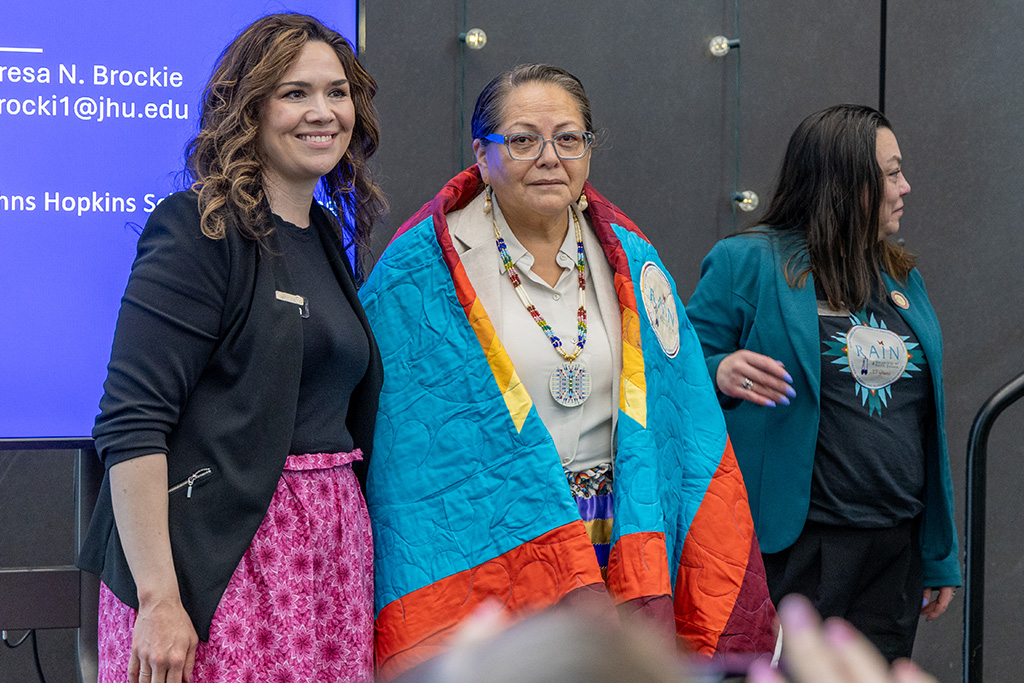
Before Teresa Brockie began her keynote at the Gorecki Alumni Center on April 16, the room already reflected the legacy of the program being celebrated.
Graduates, faculty, staff and supporters of UND’s Recruitment & Retention of American Indians into Nursing program had gathered to mark RAIN’s 35th anniversary. For many, it was more than an alumni event. It was a homecoming.
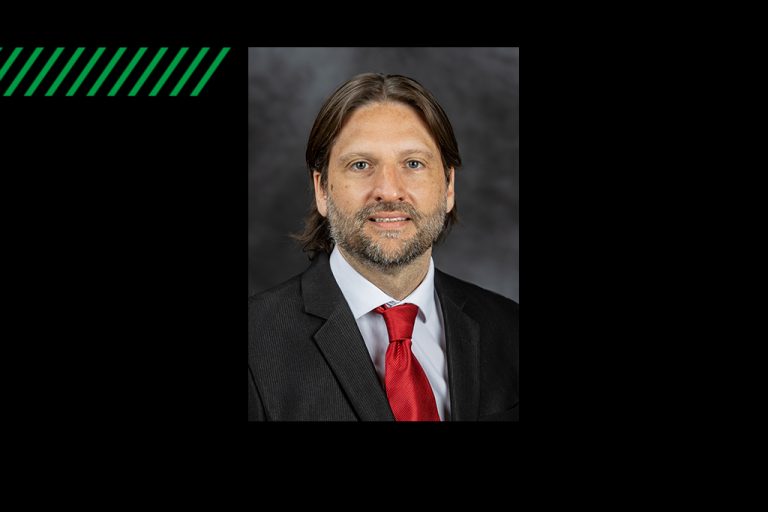
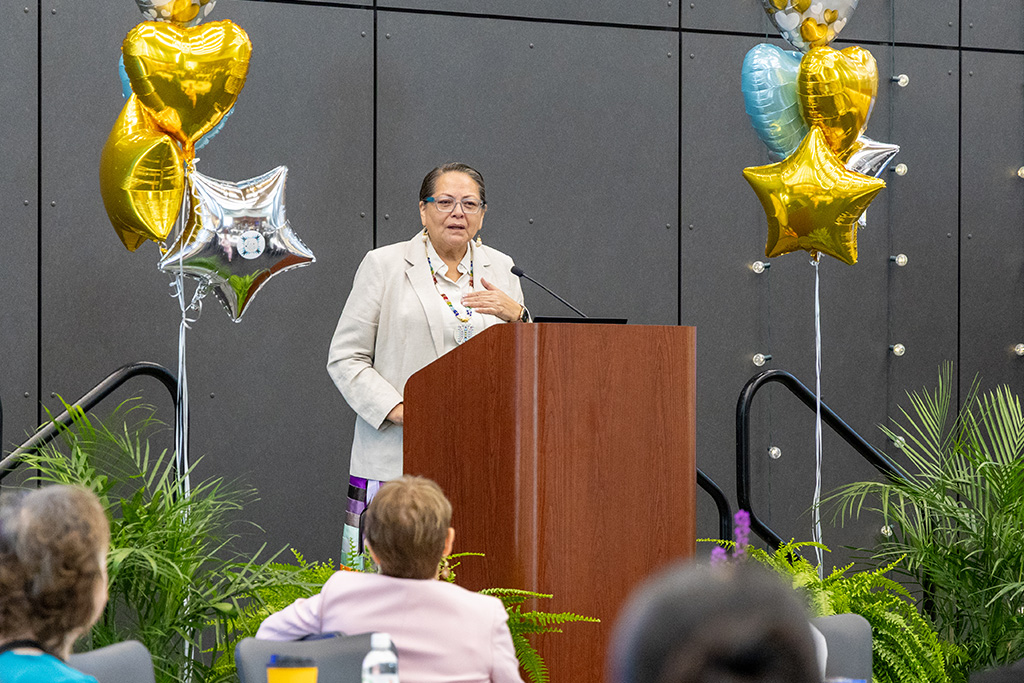
Brockie, an Indigenous nurse scientist, educator and associate professor at the Johns Hopkins School of Nursing, spoke as both a nationally recognized researcher and a RAIN graduate. The program, she said, helped shape her path into nursing, academia and research.
“It was here that I first became a nurse and received the support through the RAIN program,” Brockie said.
That support has been central to RAIN’s mission and to the broader work of preparing Native nurses, researchers and health leaders to serve their communities.
“We’re here today to celebrate excellence,” she said. “Because that’s what RAIN is.”
RAIN, a program built on support
Since 1990, students from more than 20 tribal nations have graduated through RAIN. The program lists 348 American Indian graduates, including 258 Bachelor of Science in Nursing graduates, 87 master’s graduates and three doctoral graduates.
RAIN provides advising, guidance, personal and financial counseling, and what many students describe as a “home away from home” for American Indian students pursuing degrees in nursing, nutrition and dietetics, and social work.
For Brockie, who graduated from UND in 1999, that support helped make the transition into nursing — and later into research — possible.
After earning her degree from UND, she went on to earn advanced degrees from Johns Hopkins University and build a nationally recognized research career focused on suicide prevention, trauma, adverse childhood experiences and Indigenous health.
But throughout her keynote, Brockie returned to the place where that path began.
Brockie called to nursing through family
Brockie’s path into nursing began long before she arrived at UND.
While helping care for her grandmother, who was dying of cancer, Brockie watched public health nurses come into the home. Doctors came, too, she said, but it was the nurses who left a lasting impression.
“What I saw was the nurses coming to the home and the care they provided,” Brockie said. “I was just overwhelmed with the care and the love that they provided for my grandmother. That’s when things really shifted for me.”
That shift shaped Brockie’s understanding of nursing as a way to respond to needs she had seen in her own community and heard about from elders and family members, including stories of Native people feeling unseen or underserved by health systems.
Native communities need nurses, practitioners, researchers and leaders who understand their histories, strengths and needs, Brockie said.
“When we think about addressing health disparities, or anything that has to do with health care, there should be a nurse at the table,” Brockie said.
True to this ideal, RAIN helps address that need by recruiting Native students into health professions, supporting them through graduation and preparing them to serve communities where representation is vital in healthcare settings.
And this approach works, said Brockie.
“If we recruit from those communities, they will return to those communities and help us address the health disparities,” Brockie said.
Nursing research rooted in relationships
Brockie also stressed the importance of research, especially when it’s guided by the communities it is meant to serve.
As an undergraduate, she said, she did not immediately understand why research mattered to nursing. Years later, after earning her Ph.D. and developing a research portfolio at Johns Hopkins, Brockie sees research as central to nursing and to the communities nurses serve.
“Everything we do as nurses is based on research,” Brockie said.
Her work now focuses on community-driven efforts to prevent suicide, trauma and adverse childhood experiences in Indigenous and underserved communities, much of it through long-term partnerships with tribal communities in Montana, including Fort Peck and Fort Belknap.
Brockie emphasized that research should not be done to communities, but with them. Projects are authorized through tribal resolution and guided by tribal advisory boards, whose members help shape questions, review protocols and determine how data are used.
The goal, she said, is to address “their needs, not what we think their needs are.”
In her work, studies have helped shape interventions focused on tribal identity, family and community relationships, and healing from historical and contemporary trauma. But, data isn’t the endpoint.
“You use that data to start developing interventions,” Brockie said.
Preparing the next generation of nurses
Following this forward-thinking thread, Brockie also pointed to the importance of paving the way for future Indigenous nurses, public health professionals and researchers.
One example was Young Medicine, a program for Native high school students at Fort Belknap, Mont., that introduces students to nursing, public health, science, mental health and cultural learning. As part of the program, students imagine their communities 100 years into the future, then consider what must happen in the next 10 years to move toward that vision.
Brockie said she saw students transform as the program went on.
“They start very reluctant, very quiet, and they end up very powerful and strong,” she said. “I have hope in my heart for the work that we’re doing, but also for the work that they’re going to do.”
And Brockie’s hope is the bridge between her current work and her beginnings at UND. Her own journey to nursing began with RAIN, a program built around mentorship, belonging and support. Decades later, she has come full circle and is helping create similar opportunities for another generation.
Celebrating 35 years of ‘first steps’
Near the end of her keynote, Brockie returned to UND and to the program being celebrated.
“It was that first step that really gave me that opportunity, that support I needed to excel at this program and to think that I can excel in any other program, like the one at Johns Hopkins,” she said.