Small stamp, big impact: UND alum shares Duck Stamp story
Former Federal Duck Stamp chief Suzanne Fellows, UND ’87, headlines Paur Lecture at UND
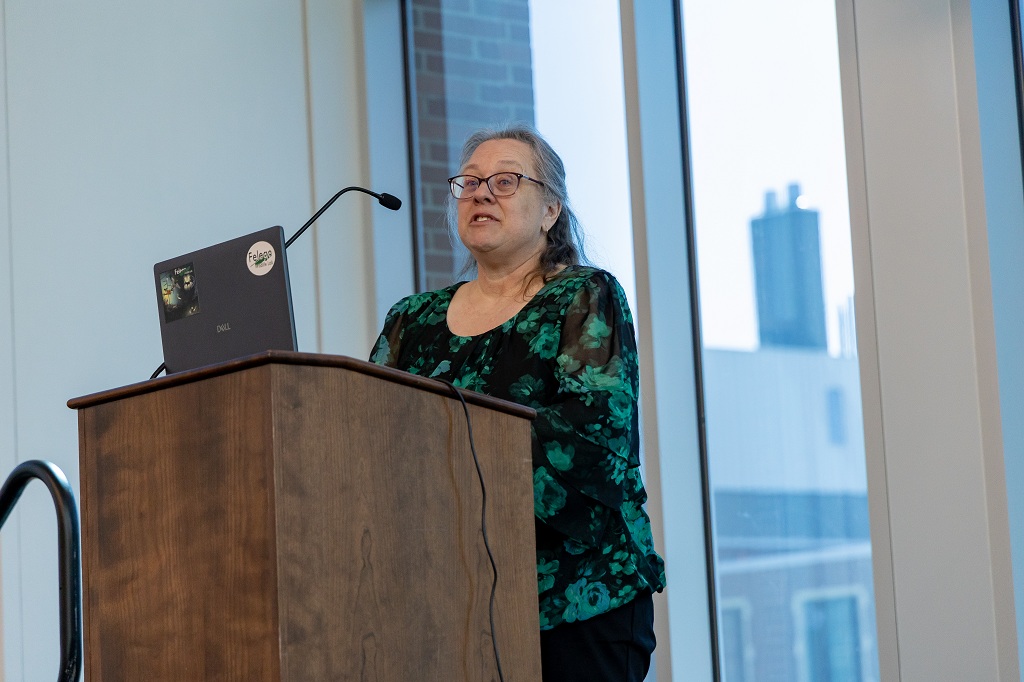
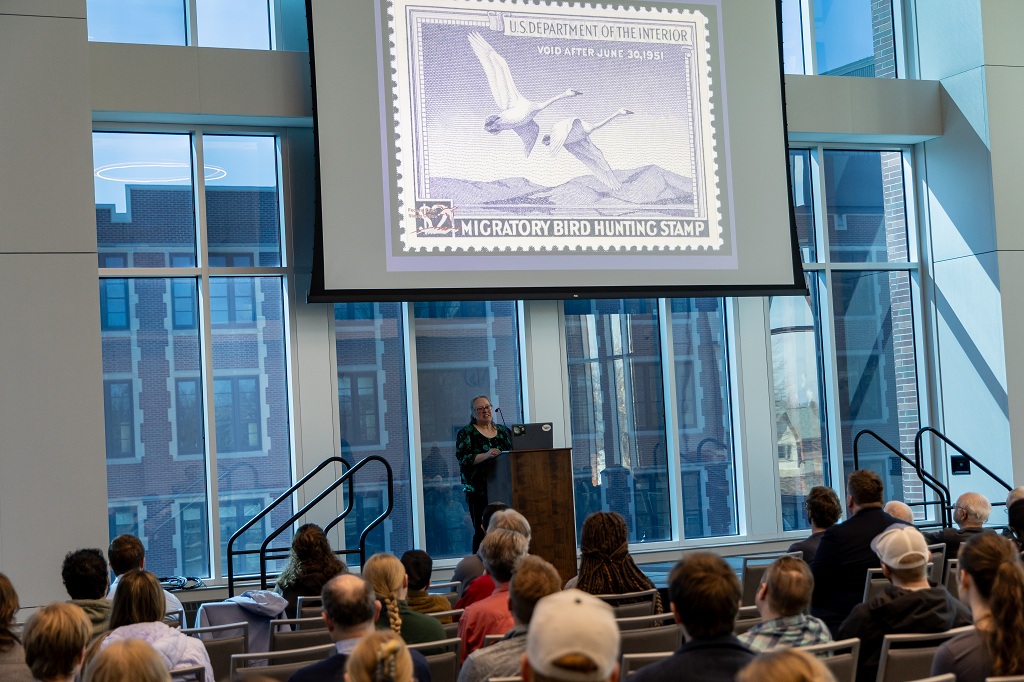
When Suzanne Fellows stepped to the podium in Memorial Union Ballroom 220 on April 10, she wasn’t just delivering a keynote address — she was coming home.
A 1987 graduate of the University of North Dakota and former chief of the Federal Duck Stamp Program, Fellows returned to campus as this year’s featured speaker for the Glenn Allen Paur Lecture Series, sharing both her deep ties to UND and a lifetime of work in wildlife conservation.
“UND holds a special place in my heart,” Fellows told the audience. “A lot of my heroes, my mentors have ties to North Dakota … and it is overwhelmingly humbling to be back here.”
Her visit brought together students, faculty, conservation professionals and members of the Paur family — including Glenn Allen Paur’s siblings — for an evening that blended remembrance, recognition and reflection on the future of conservation.
Honoring a legacy, supporting the future
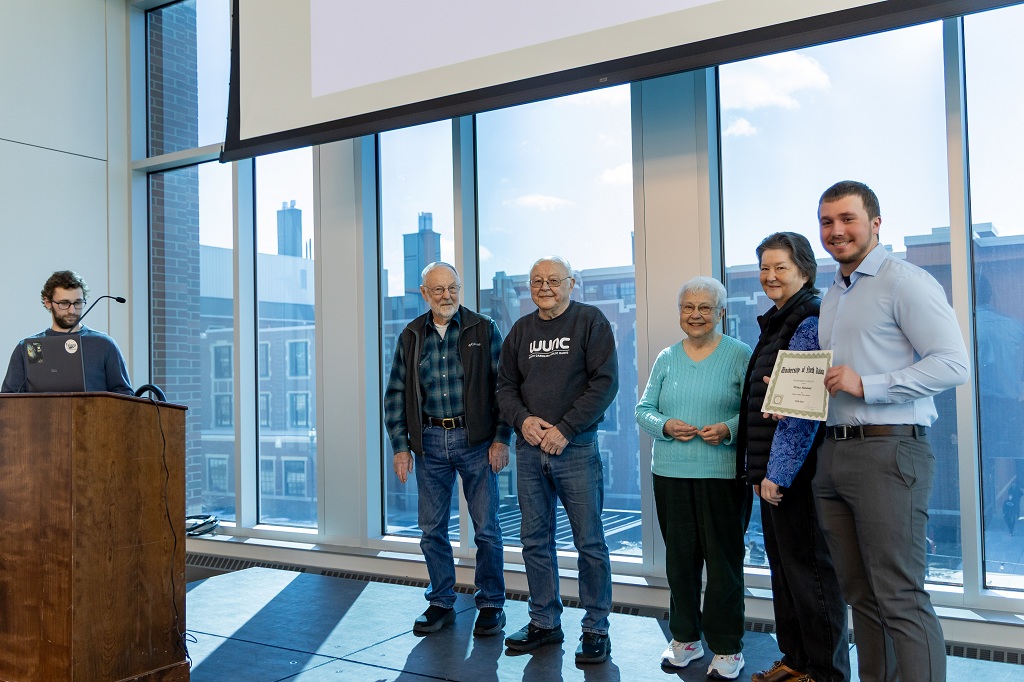
The event, hosted by the UND Wildlife Society and the UND Biology Department, opened with the presentation of the Glenn Allen Paur Memorial Scholarship. The scholarship is awarded annually to a UND biology student who demonstrates dedication to the fisheries and wildlife field.
This year’s recipient, Ethan Halstead, a biology student, was recognized for his promise and commitment — values that reflect the legacy of Paur, a UND graduate whose life was cut short in 1978 while assisting on a research project.
Organizers also acknowledged the enduring support of the Paur family, whose presence underscored the scholarship’s lasting impact on generations of UND students.
A career shaped by mentorship — and UND
Fellows’ path from UND student to national conservation leader spans more than three decades with the U.S. Fish and Wildlife Service. Along the way, she worked in environmental education and outreach, eventually becoming national coordinator of the Junior Duck Stamp Program and later chief of the service’s Federal Duck Stamp program.
She credited mentors — many with ties to UND and the Prairie Pothole Region — for shaping her career and passion for conservation.
“I was extremely fortunate … I had so many mentors and people who helped me, challenged me, corrected me, taught me,” she said.
That mentorship, she emphasized, continues today through UND students.
“You guys are my heroes,” Fellows said, addressing the audience of students. “I am very much convinced that you guys have got it.”
The Duck Stamp: A small stamp with a big impact
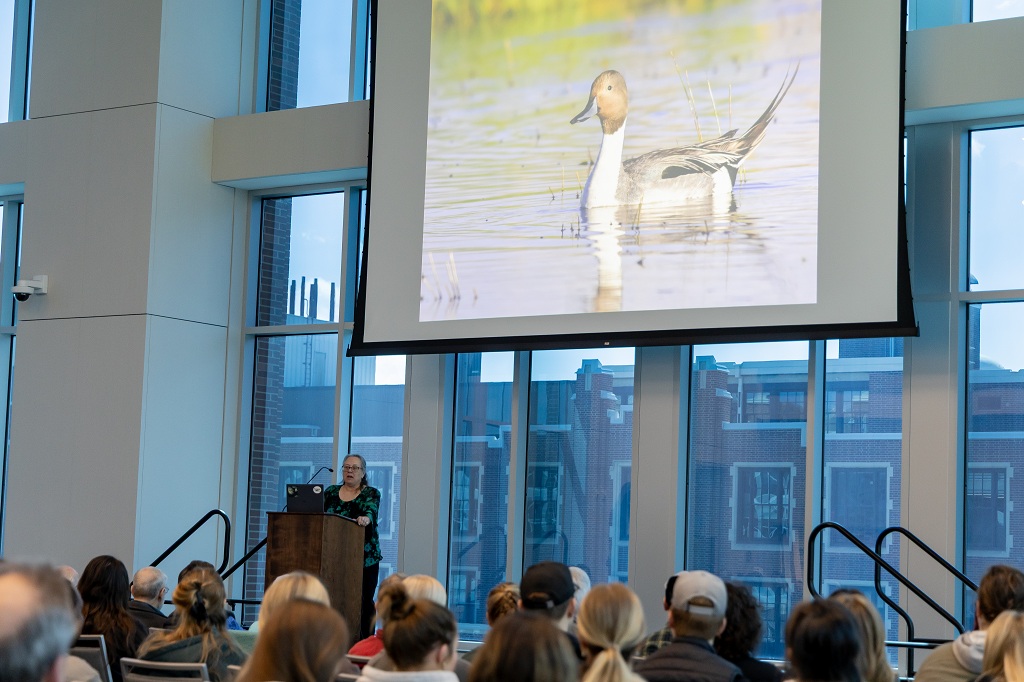
At the heart of Fellows’ talk was the story of the Federal Duck Stamp — a uniquely American conservation tool that blends art, policy and grassroots support.
Created in 1934 during a time of environmental crisis, the Migratory Bird Hunting and Conservation Stamp — commonly known as the Duck Stamp — requires waterfowl hunters to buy a stamp annually. But its impact reaches far beyond hunting.
“Ninety-eight percent of that revenue goes to fund habitat conservation,” Fellows explained, noting that proceeds support land acquisition for the National Wildlife Refuge System.
Over the past nine decades, the program has raised more than $1.3 billion and helped conserve more than 6 million acres of habitat across the country.
Fellows described the program as one of the most efficient conservation funding models in government, with only a small fraction of revenue used for administration.
“It’s one of the good things that we do,” she said.
Where art meets conservation
Beyond its conservation impact, the Duck Stamp program is also a celebrated artistic tradition. Each year, artists from across the country compete in the only federally regulated art contest in the United States to design the next stamp.
The winning image — always featuring a waterfowl species — becomes both a collectible item and a symbol of conservation.
Fellows highlighted how the program has evolved over time, from hand-engraved stamps to modern digital distribution, while maintaining its core mission.
She also emphasized the growing role of younger artists and new audiences, including those drawn in through social media and the Junior Duck Stamp Program, which introduces conservation concepts to students through art.
A tradition worth carrying forward
Throughout her talk, Fellows returned to a central theme: the Duck Stamp is more than a requirement for hunters — it is a shared tradition rooted in conservation.
“It’s a hunting stamp, but it’s not just about hunting,” she said. “The value is the habitat that it conserves.”
As participation in waterfowl hunting declines, Fellows encouraged broader support from birdwatchers, outdoor enthusiasts and the general public.
“We have to share and grow this tradition,” she said.
A full-circle moment at UND
For Fellows, returning to UND — where her own journey began — brought that message into sharp focus.
The Glenn Allen Paur Lecture Series, she noted, is itself a tradition — one that connects past, present and future generations of conservationists.
“This is one of the reasons why I’m so glad to be here,” she said.
As the evening concluded, Fellows left students with both a challenge and an affirmation: the next chapter of conservation is already in their hands.
And, if her confidence in UND students is any indication, it’s in capable ones, she suggested.