Community participation helps UND campus planning process advance
Workshop highlights feedback, data and timelines for decisions, as planning moves into next phase
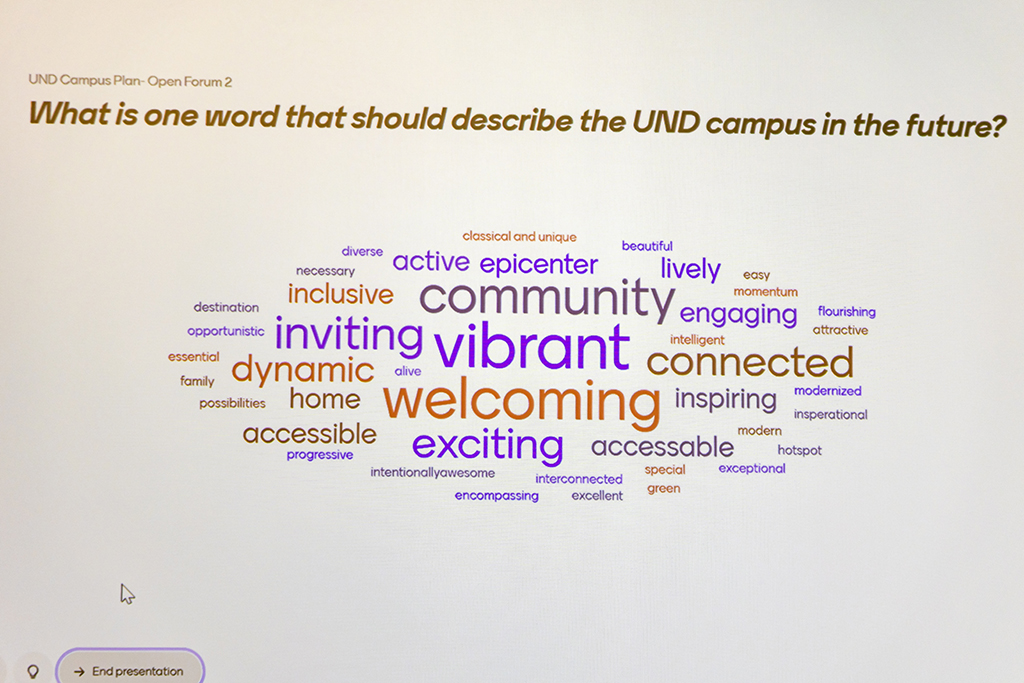
“Community,” “inviting,” “vibrant,” “dynamic,” and “active and engaging.”
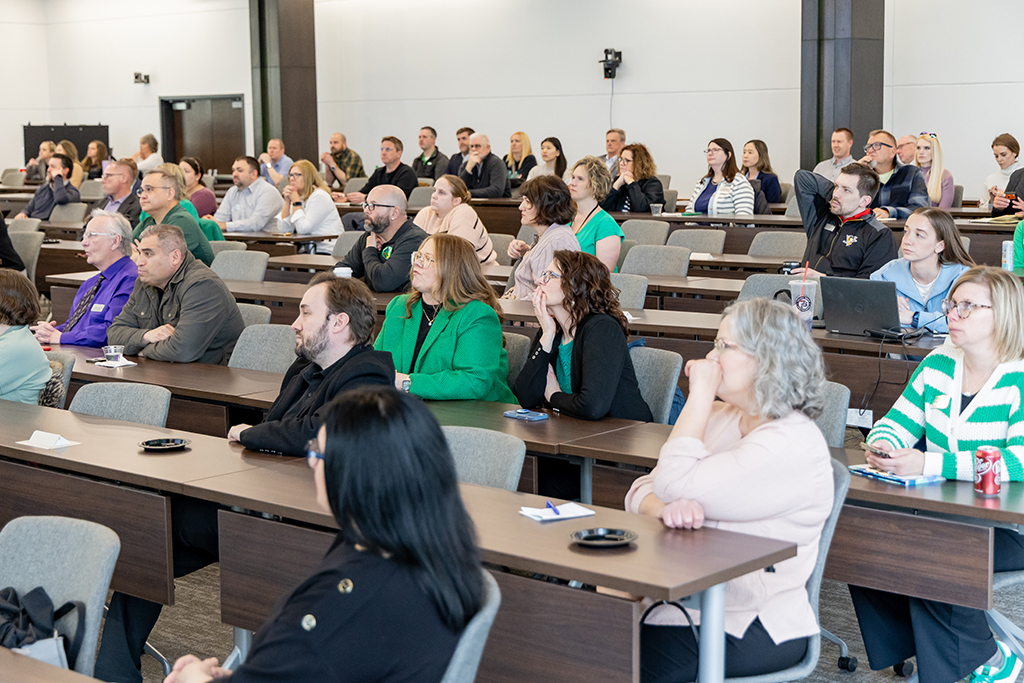
Those were just some of the words participants of the most recent campus planning event suggested could be used to describe the future of UND’s grounds, facilities, research spaces and beyond — with these words being generated through the use of a real-time poll attendees could access through their smart phones at the event’s conclusion.
And while one might argue those words could be used to describe the University as it is today, it was clear those concepts were on attendees’ minds on April 16. The date marked the start of the “Ideate” phase of UND’s campus planning process, a process that looks to shape the future of the University’s physical campus.
Held in the Nistler College of Business & Public Administration, participants filled the Barry Auditorium to help campus leaders and external partners adapt and refine data gathered during the process’s Discovery phase, which was held in February.
President Andy Armacost, campus working group members and consultants from planning partners at Perkins & Will shared what they’ve learned so far and outlined how that information will shape the next steps.
“This is the time where we get to get creative, try to understand what the campus needs and figure out the next steps toward building that future,” said Armacost.
Strong participation shapes planning
The planning process has drawn significant engagement from across the UND community.
A recent survey alone generated nearly 2,900 responses — a level of participation Armacost described as “absolutely stunning.”
That feedback adds to a wide range of outreach efforts, including leadership interviews, forums and building tours.
“We have gone through the documentation, uncovered all of the utilization and looked at the physical infrastructure,” said Jill Vowels with Perkins & Will. “Now is the time where we’re taking all of that information, and pulling some key ideas forward for what this campus needs to be successful and competitive.”
Deeper understanding guides next steps
Over the past decade, UND has removed 1.7 million square feet of space, allowing the University to reinvest in more modern and effective facilities.
“That has created resources for the University to reinvest in facilities that are better suited to their purpose,” said Paul Ward with Perkins & Will.
As part of the planning process, teams are evaluating which facilities should be upgraded, repurposed or eventually removed.
According to the data, the majority (33%) of UND’s buildings are in “fair” condition, with 32% being labeled “satisfactory,” 30% are in “good” condition with the remaining 5% needing either significant work or demolition.
“What we’re really seeing is there’s a series of legacy academic and research buildings that could benefit from upgrade for modern teaching, learning and research,” said Sarah Freidel with Perkins & Will.
The consultants also noted a surplus of space in areas such as classroom, office and class lab space, with deficits in research lab and recreational spaces.
Coming to that understanding is all part of the process, as the consultants and campus working groups take a deeper dive into the data and continue to solicit feedback from the campus and greater community.
A vision centered on students and connection
Feedback gathered during the Discovery phase has been synthesized into key themes that will guide future planning. Those themes are:
- Making the campus a place of possibility, one which inspires students, faculty and staff to arrive and feel a sense of belonging and confidence.
- Putting students at the center, by making their experience central to a network of learning, support and student life spaces.
- Living here — and then staying here, by expanding and integrating housing support recruitment, retention and maintaining a vibrant campus community.
- Keeping campus connected all year long, by creating a cohesive, accessible campus with unified districts and improved mobility.
- Powering discovery and impact by advancing next-generation research infrastructure and advancing competitiveness, partnership and opportunities for all members of the campus community.
- Aligning space with matters most, by using it more effectively to support student success.
“We envision the UND campus as a place of possibility,” Freidel said. “This is centered on students … really looking at the campus through the students’ eyes, through the students’ experience.”
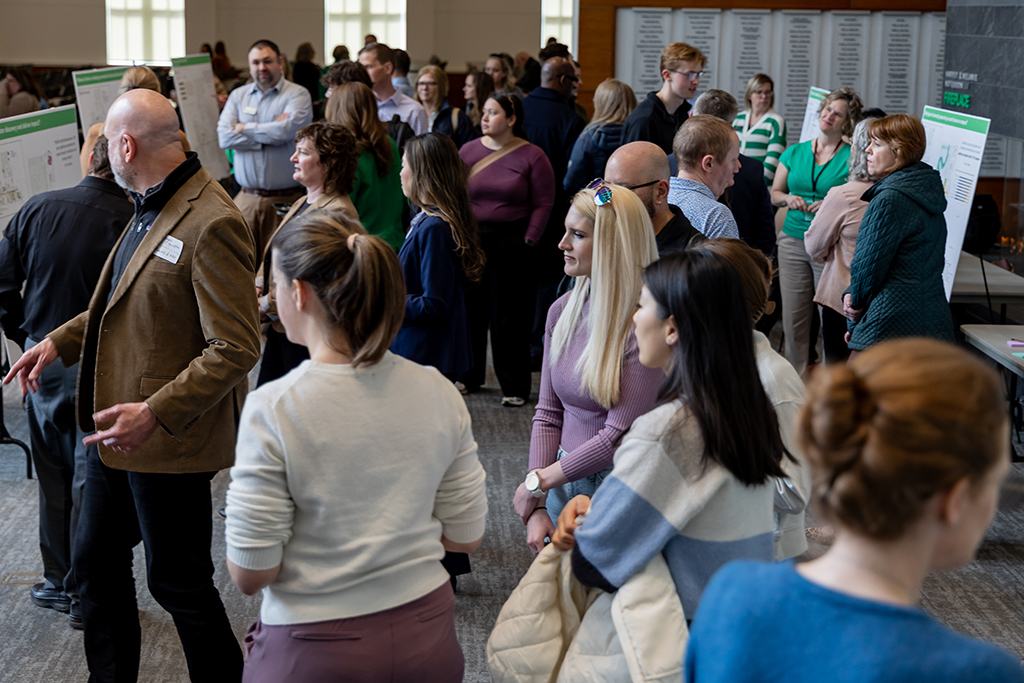
Photo by Adam Kurtz/UND Today
Continuing the conversation
Organizers emphasized that community input will remain central as the process continues.
“We want to hear your ideas,” said Vowels.
The campus planning effort will continue through upcoming phases, with working groups and campus stakeholders helping refine ideas and shape a long-term vision for UND.
This round of campus engagement included a series of in-person workshops designed to gather targeted input from different groups.
“In this time on campus, we have four working group workshops and one steering committee workshop,” Christenson said.
The working groups include faculty, staff and leadership focused on teaching and research, as well as groups centered on campus services, external partners and student experience.
Project leaders noted that these groups will continue to play a role throughout the planning process, with additional meetings planned in future phases.
The Campus Planning website is a resource for more information or to provide feedback and ask questions.