At UND, a NASA trailer helping scientists learn how to live on other worlds
Project brings opportunities for students, benefits for North Dakota and better odds for America’s deep-space success
Editor’s note: In the UND LEADS Strategic Plan, the Discovery core value calls on the University to “infuse creative expression, critical inquiry, and innovation across the students’ learning journeys by supporting comprehensive curricular and co-curricular participation in research.”
The story below describes UND graduate students’ full and robust participation in a research project that will have national implications in America’s continuing exploration of space.
This story first appeared in UND Today on June 9.
****
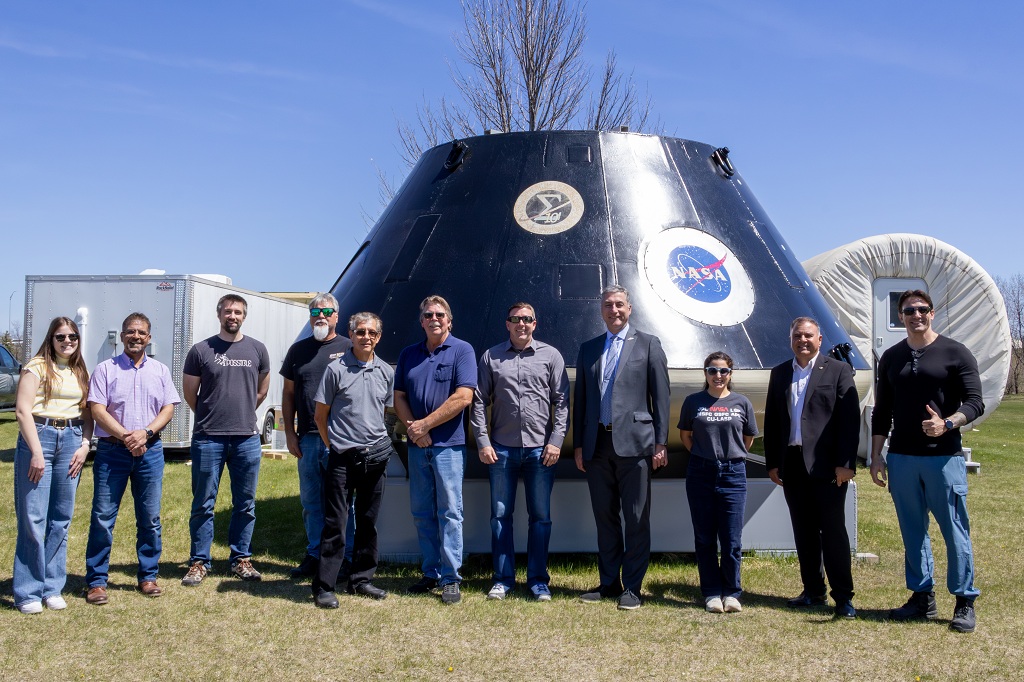
A mobile wastewater treatment system built at NASA’s Kennedy Space Center in Florida that can help prepare for long-duration missions on the Moon and Mars arrived recently at UND. Graduate students at the university will test the technology under conditions designed to closely mimic the challenges of operating on another planetary surface.
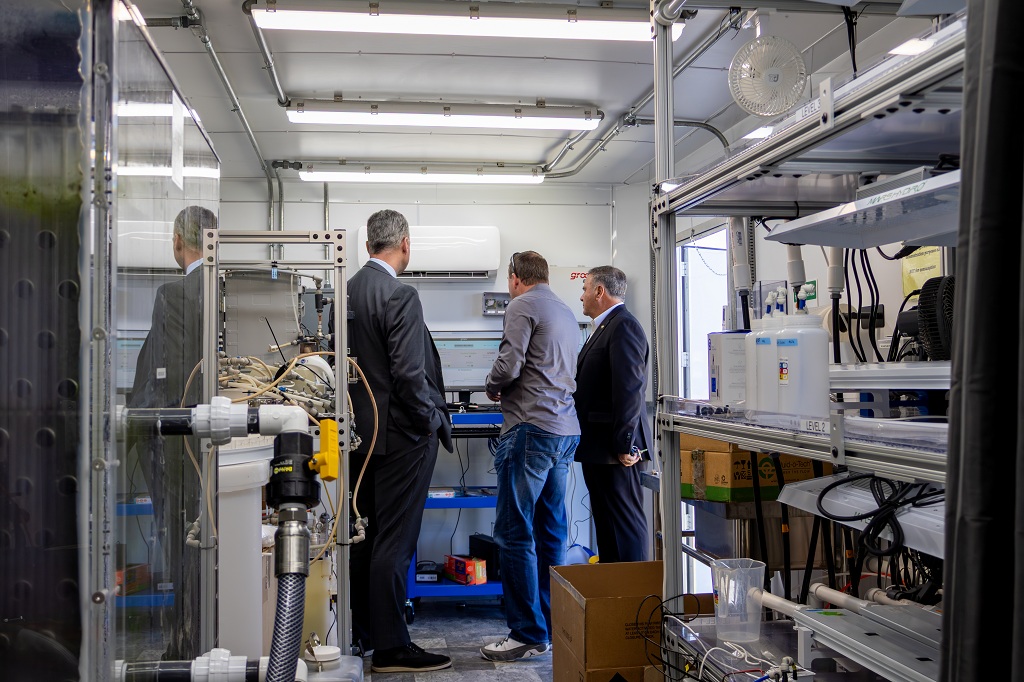
The Divergent Deployable Wastewater Treatment Facility is designed to turn crew wastewater into useful resources, which future explorers will need every day. At UND, teams will integrate this new wastewater system with the university’s Integrated Lunar/Martian Analog Habitat. Student operators and NASA researchers will study how the facility performs when connected to a habitat-like environment and exposed to the kinds of operational limits crews could face on another planet.
“NASA’s Artemis program is laying the groundwork for a sustained human presence on the Moon, where habitats will need to operate far from the steady resupply chain that supports astronauts in partial gravity,” said Luke Roberson, surface water systems lead within the Mars Campaign Office at NASA Kennedy. “To solve that challenge, we are developing the future of sustainable lunar surface systems to process wastewater into nutrient feedstocks for plants and biomanufacturing.”
How treatment system works
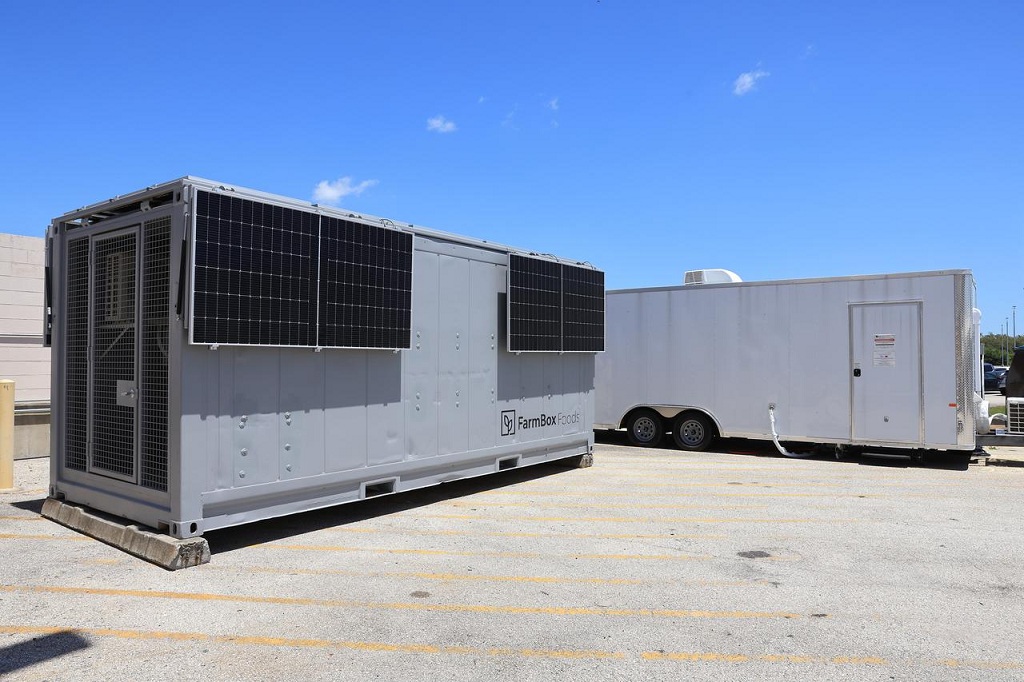
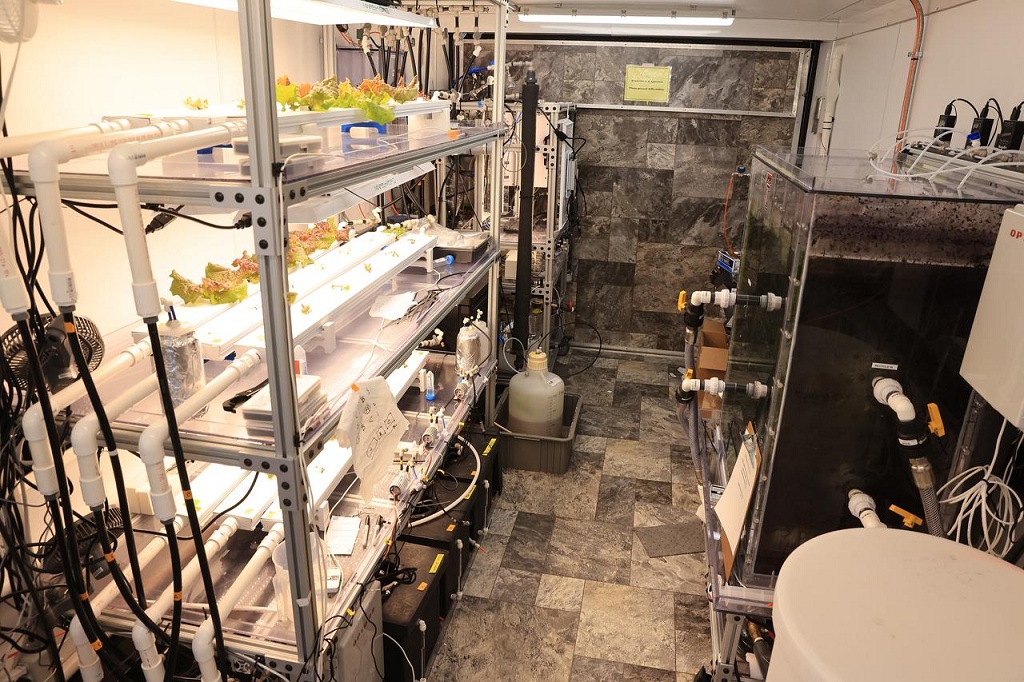
Housed inside an 8.5-by-24-foot trailer, the facility brings together three biological reactor systems, a vertical garden, water-polishing hardware, environmental monitoring, autonomous control software, and safety systems. The trailer was outfitted at NASA Kennedy to function as a deployable laboratory and to travel between at least two simulation test sites as the technology matures.
Unlike wastewater systems on Earth, this facility keeps waste streams separate. That approach is important for small crews, because wastewater from four to eight people can be highly concentrated. Urine, hygiene water, laundry water, fecal waste, and food waste each contain different levels of salts, solids, carbon, nitrogen, phosphorus, and other compounds. Treating them separately allows each stream to be processed by the reactor best suited for the job.
To do that, the system uses three different bioreactors to treat waste streams. The Anaerobic Phototrophic Membrane Bioreactor processes fecal and food waste and converts it into a nutrient-rich wastewater that can support plant growth. The Suspended Aerobic Membrane Bioreactor processes urine and flush water. The Membrane Aerated Biological Reactor treats graywater from hygiene and laundry activities. Collectively, the bioreactors process nutrients to feed the facility’s vertical garden and prepare the water for reuse.
Inside that garden, crops will grow hydroponically, or without using soil, by using nutrient solutions derived from the bioreactors. Researchers will compare crop performance with plants grown using standard hydroponic nutrients.
The work at UND
The research team is led by Ali Alshami, associate professor of Chemical Engineering at UND, in collaboration with Pablo de León, professor and chair of Space Studies; Luke Roberson from NASA’s Kennedy Space Center; and Gary Stutte from SyNRGE, an R&D and consulting firm focusing on space agriculture.
At North Dakota, under a NASA EPSCoR (Established Program to Stimulate Competitive Research) grant, the facility was connected to the Integrated Lunar/Martian Analog Habitat through a bathroom interface that includes a urine-diverting toilet. The setup will allow different waste streams to be separated at the source and sent to the correct treatment systems.
In parallel, Ali Alshami’s team is developing novel membrane-based separation technologies intended for future integration into the divergent wastewater facility to improve water recovery efficiency, contaminant rejection and overall system resilience for long-duration habitation missions.
“The tests will help NASA evaluate real-world operation, crew training needs, system reliability and how wastewater simulants compare with actual human metabolic waste in an analog mission environment,” said Alshami.
These efforts are focused on advancing compact, energy-efficient treatment approaches capable of handling complex wastewater streams generated in closed-loop extraterrestrial environments.
“The testing campaign at UND supports the facility’s technology maturation from laboratory-scale validation toward demonstration in a relevant Inflatable Lunar/Martian Analog Habitat environment,” said De Leon.
Benefits for North Dakota
Students from engineering, space studies, sciences and other STEM disciplines will gain hands-on experience working alongside NASA scientists and affiliated personnel on mission-critical technologies involving water recovery, environmental control systems, sustainable habitation and advanced materials development. These experiences are expected to help prepare the next generation of highly skilled STEM professionals needed to support the growing aerospace and technology sectors within North Dakota and across the nation.
Lessons learned could inform future tests, including potential integration with NASA’s next generation of yearlong simulated Mars missions via isolation analogs at the agency’s Johnson Space Center in Houston.
And beyond its scientific objectives, the project is expected to provide significant benefits for North Dakota. The expansion of the research infrastructure strengthens UND’s position as a national hub for space-habitation and sustainability research, while creating new opportunities for undergraduate and graduate students to participate directly in space-related research activities, project leaders say.
Along with giving UND students hands-on experience, the facility will expand the University’s ability to conduct outreach activities benefiting K–12 students, educators, and communities throughout the state by increasing public engagement in space exploration, sustainability and advanced technology research.
Through demonstrations, educational programming and future analog mission campaigns, the project will provide unique opportunities to inspire broader public interest in STEM education and future careers in science, engineering and aerospace-related industries.
Technology for helping Moon base succeed
The work is part of NASA’s broader Bioregenerative Life Support Systems effort, which is developing biological approaches to reduce dependence on Earth-supplied consumables. In future lunar or Martian habitats, systems like the wastewater treatment facility could help close life support loops by recovering water, recycling nutrients, supporting crop production, and reducing the amount of waste that must be stored or discarded.
NASA researchers also are exploring how wastewater-recovered resources could support in-space manufacturing. One effort is studying how nutrient-rich water from bioregenerative wastewater systems could feed microbes that produce lactic acid, which can be turned into polylactic acid. The material could one day serve as a binder for 3D printing with lunar or Martian regolith, the loose, fragmental surface material, or could be used for replacement parts, extending the value of recovered waste beyond water and food systems.
“By sending the facility from NASA Kennedy to North Dakota, the agency is moving a key part of that circular economy out of the lab and into a real-world test,” said J.J. Edelmann, surface systems domain lead for the Mars Campaign Office at NASA Headquarters in Washington. “The work may begin with wastewater, but its goal is much larger. We want to help future crews live sustainably on the Moon, learn how to operate farther from Earth, and carry those lessons forward to Mars.”
****
>> Questions or comments about the UND LEADS Strategic Plan? Your thoughts are welcome! Please contact Ryan Zerr, associate vice president for Strategy & Implementation, or Brandon Wallace, senior financial accountant, the co-chairs of the UND LEADS Implementation Committee. You also may offer your thoughts by visiting the UND LEADS Strategic Plan home page and clicking on the “Provide your feedback” link.
Thank you for your support of the UND LEADS Strategic Plan!