At UND Multicultural Conference: ‘We are each other’s harvest’
UND’s third biennial Multicultural Conference in Higher Education explores how access, belonging and shared responsibility can shape higher education
When poet Gwendolyn Brooks wrote, “We are each other’s harvest, we are each other’s business, and we are each other’s magnitude and bond,” she put words to an idea that would carry through the third biennial Multicultural Conference in Higher Education.
On Sept. 16 and 17, students, faculty, staff, administrators and community members gathered in the Memorial Union to explore what that responsibility can look like across higher education. Across keynote addresses and breakout sessions, conversations ranged from suicide prevention to accessibility and individual responsibility in building belonging.
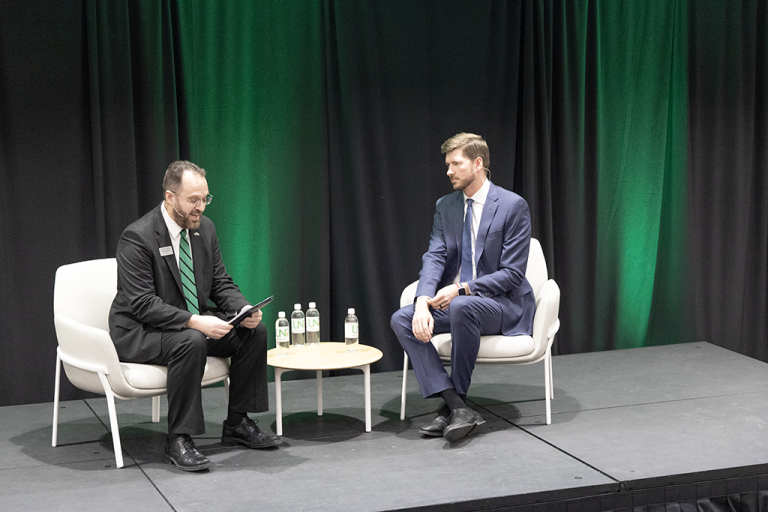
Tamba-Kuii Bailey, associate vice president at the Office of Community & Belonging, opened the conference by describing it as a space for sharing practices, policies, theories and research around building community and creating more inclusive spaces.
“Access to higher education must be seen through an open door, and not through a keyhole,” said Bailey, challenging attendees to consider the barriers that can restrict access for students.
The Harvest
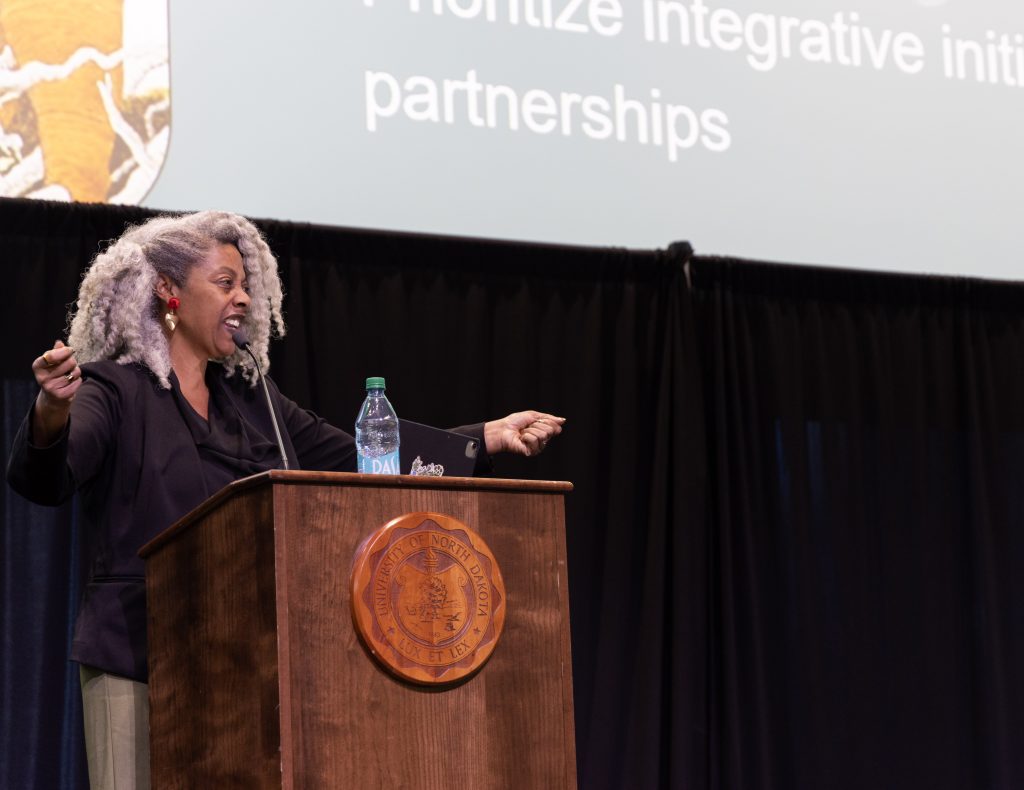
Sekile Nzinga carried that idea into the conference’s opening keynote, “We Are Each Other’s Harvest.” Drawing from Brooks’ words, Nzinga said the poem offered a reminder of the collective purpose behind the conference.
“It felt like a very grounding place to remember why we are all here together,” she said.
For Nzinga, that very purpose is rooted in her own path to education. Now Vice President of Campus Enrichment and Community Engagement at the School of the Art Institute of Chicago, Nzinga grew up in public housing in Rhode Island. She described her childhood as “economically under-resourced, but culturally rich,” and surrounded by classmates from a wide range of cultural, religious and economic backgrounds.
Growing up, she relied on free breakfast and lunch at school, resources she credits with helping her become the person standing on the stage.
“Those nutrients from breakfast and lunch…gave me, my body and my brain what I needed so that I could thrive as a student,” Nzinga said. “I stand before you as an example of what can happen when educators choose to believe in all their students’ brilliance.”
Those experiences followed Nzinga into her own career as an educator. When she became a professor, she ordered two copies of every book she assigned and placed them in the school library — ensuring that there was an option for each of her students.
Tending to the soil
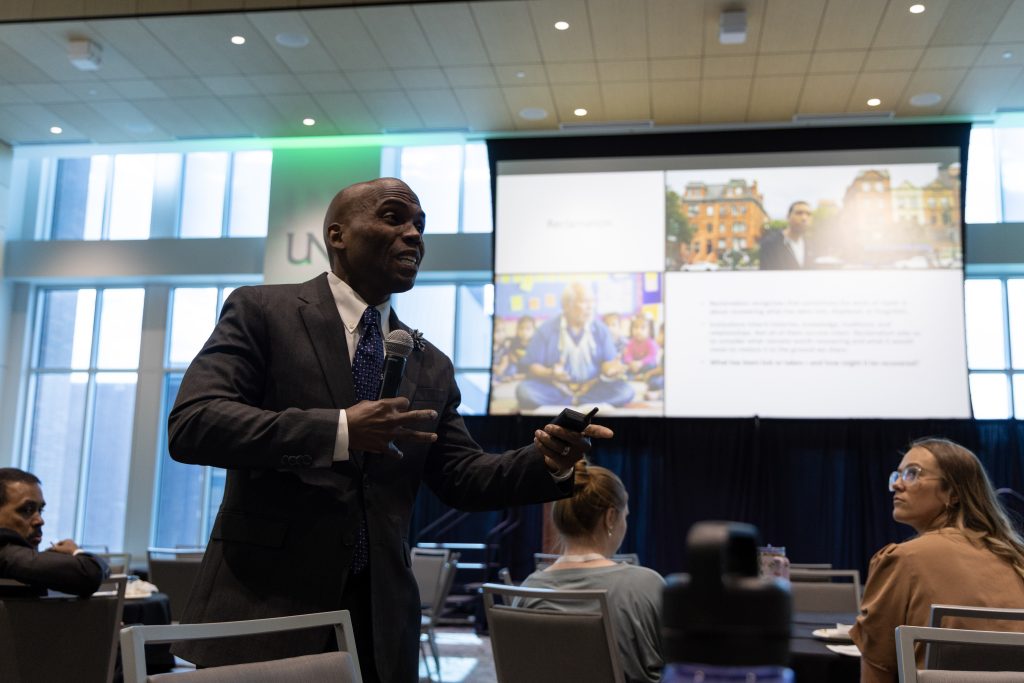
That idea of growth and what it takes to create the conditions for it continued into the conference’s next keynote. Yohuru Williams turned the audience’s attention to the ground beneath them.
Williams, a historian and founding director of the Racial Justice Initiative at the University of St. Thomas, framed his keynote, “Tending the Ground,” around lessons he learned long before entering higher education, lessons from his grandfather’s garden.
As a child, Williams remembered being captivated by the packets of seeds his grandfather would take him to see. He wanted everything: watermelon, cucumbers and all the colors he could find. His grandfather, however, guided him to pay attention to the soil.
Years later, Williams said those lessons changed how he thought about institutions and the work required to sustain inclusive spaces within them. Higher education, he explained, is built around growth. Universities like UND want students to learn, discover and challenge themselves while preparing for what comes next. But, he emphasized that bringing students into an institution is different from creating an environment in which they have room to grow.
“You can begin with a perfectly good seed and plant it with the best of intentions, but if the soil is depleted, compacted, contaminated or simply exhausted, the seed is going to struggle,” Williams said. “Sometimes the problem is the very ground that you’re planting it in.”
Williams carried the gardening metaphor through five principles of “soil repair,” encouraging attendees to first consider what might be missing. Just as Nzinga placed responsibility for creating opportunity in the hands of more than one person, Williams added that belonging could not be assigned to a single office or program.
“Belonging is not the responsibility of one office or program, not one individual, not one collective,” Williams said. “It’s institutional.”
Williams ended by returning once more to the garden, this time asking attendees to think not only about what they hoped to grow but what they would leave behind.
“Institutions, like gardens, are inherited,” he said. “What is passed down becomes theirs to cultivate and, eventually, to pass along in better condition to those who come next.”
Making room to grow
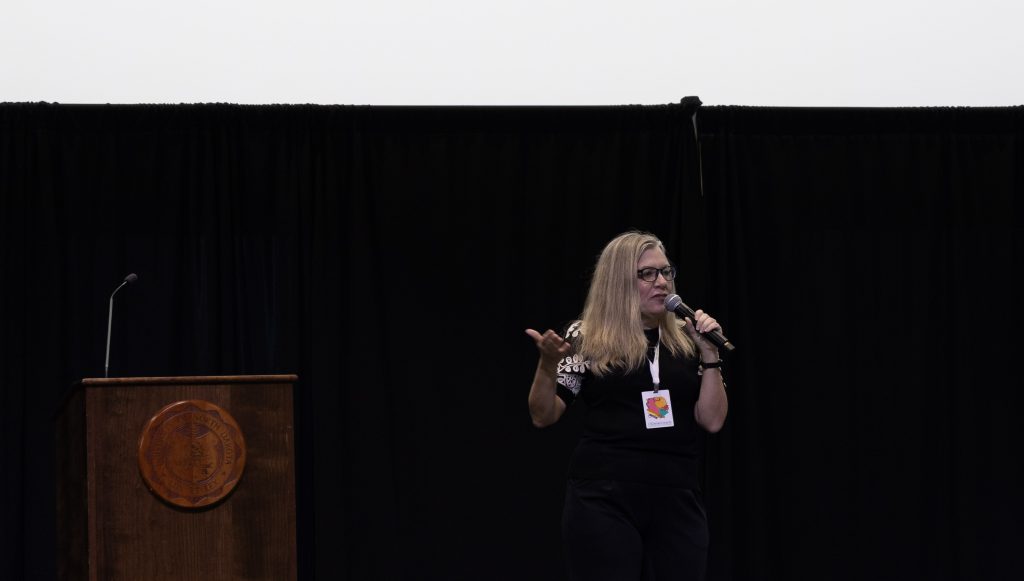
“Creating spaces where students feel supported can also mean reconsidering how those spaces were designed in the first place,” Kirsten Behling told attendees.
As the Associate Dean for Student Accessibility and Academic Resources at Tufts University, Behling brought that idea to life with a story about sledding — something we know all too well here in North Dakota.
To illustrate Universal Design for Learning, Behling asked the audience to imagine a familiar childhood experience: a day of sledding. Everyone in her family, she explained, had a different idea of what made that day enjoyable. Her son wanted to go as fast as possible. Her husband hated the cold. Her father preferred a traditional wooden sled. Behling wanted to go head-first. Still, the family piled together into one inner tube and headed down the hill.
Behling’s plan illustrated the idea at the center of her keynote. People arrive with different abilities, preferences and ways of engaging, but they are often asked to navigate the same path.
“The way that we get to that goal doesn’t always have to be through one sled, or one avenue,” Behling said.
Behling offered what she called the “plus-one approach”: know the goal, identify a pinch point, add one strategy and see what happens. The goal, Behling said, is to consider how spaces can be created where people can bring their individual experiences and differences with them and still feel included.
UND President Andrew Armacost joined the podium following her keynote, noting that the principles she described extend well beyond a university classroom.
“Understanding differences in how people think, process information and experience the world is equally important in everyday interactions with neighbors and others throughout the community,” he said.
Beyond the keynote stage, breakout sessions gave attendees opportunities to explore what building community and belonging can look like in practice, including something as familiar as sharing a meal.
In “Why Food Is More Than a Meal,” Hilyard Center Director Stacey Borboa-Peterson, graduate assistant Kalie Chambless and Student Support Engagement Specialist Shelby King explored the role food can play in creating connection among students.
As they brought students around the table, the meals created opportunities for connection beyond the food itself. The presenters discussed research connecting shared meals with stronger social relationships and a sense of belonging, as well as the Hilyard Center’s intentional use of food-based programming to bring students together.
“Something as simple as sitting down and eating together can help transform strangers into acquaintances, and then eventually into friends,” Chambliss said.
A seat at the table
As the conference came to a close, Bailey returned to the responsibility that had threaded through the previous two days.
“This can’t be the only space that we do this work,” he said.
He encouraged attendees to carry the questions they had asked and the ideas they had encountered beyond the Memorial Union.
“Take that into tomorrow. Take that into next week. Take that into your classroom. Take that into your interactions with your colleagues,” Bailey said.
The work of creating belonging, he reminded the room, does not belong to any one person, office or conference. We all play a role in this work.