Taking back the night, one voice at a time
CVIC at UND’s 30th Take Back the Night rally brings together campus community to confront sexual and relationship violence
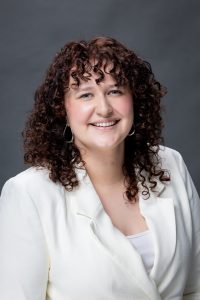
For years, Victoria Hamilton thought empowerment meant being strong enough to handle things on her own. After experiencing childhood abuse, the now UND sophomore struggled with memories, shame and self-doubt. Support from family, friends and teachers helped her understand that finding her voice did not mean finding it alone.
“For me, empowerment means learning that what happened to me does not determine whether my voice matters, and that I don’t have to find my voice alone,” Hamilton said.
Hamilton, the 2026 recipient of the Dru Sjodin Memorial Scholarship, shared her experience before students, University leaders and community advocates at UND’s 30th Take Back the Night rally on Oct. 7.
“My community has been the biggest reason that I am here today,” she said. “The people who helped me didn’t fix my past. They didn’t tell me how I was supposed to feel, or what I was supposed to do. They simply gave me somewhere safe to put the things I had been carrying.”
For 30 years, Take Back the Night has brought UND and Grand Forks community members together to confront sexual and relationship violence. In the Community Violence Intervention Center anniversary article, Kari Kerr recalled early rallies where survivors shared their experiences at open microphones and participants marched down University Avenue carrying candles.
Over time, the gatherings expanded to pair that solidarity with education, helping students understand how to support survivors and prevent violence. This year’s rally continued that work, bringing personal experiences into a conversation about the choices students can make in their own campus community.
This year’s event featured remarks from university leadership and students, along with a panel discussion on campus prevention efforts. Caleb Eilts, the event organizer with CVIC at UND, said bringing those perspectives together was intentional for a night like this.
“When we talk about the importance of taking action to prevent interpersonal violence on campus and in our community, the responsibility does not fall on any one person or group,” Eilts said. “Everyone has a role to play in changing the culture and making it clear that interpersonal violence is not tolerated in our community.”
The responsibility to act
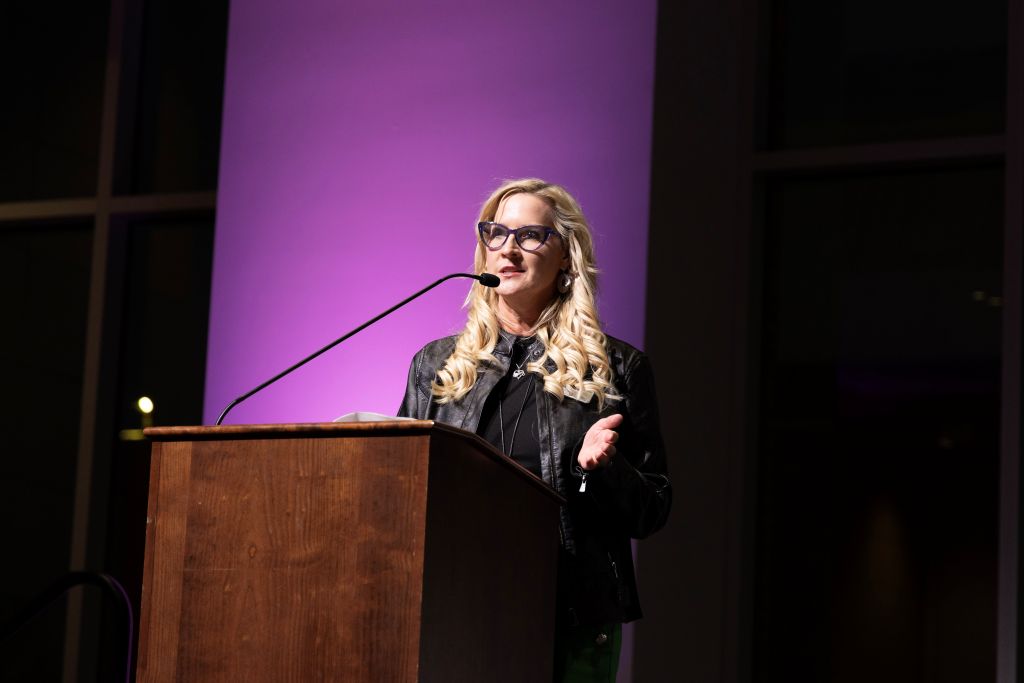
Senior Associate Vice President for Student Affairs Cassie Gerhardt challenged attendees to consider how their everyday decisions influence campus culture.
“What kind of community do we want UND and Grand Forks to be?” she asked the crowd. “We can imagine a campus community where everyone feels safe, respected and valued, but creating that community requires more than believing sexual violence is wrong.”
Gerhardt said students have considerable freedom to determine who they want to become during their time at UND. But, with that freedom comes a responsibility to consider how their choices affect others.
“You decide how you treat people,” she said. “You decide what you stand for. You decide what you laugh at, what you walk away from, what you challenge, what you allow to go unchallenged, when you act and when you don’t act.”
Those decisions, as she explained, extend to the organizations students join and the people they surround themselves with. Supporting Greek life, an athletic team or student organization does not require defending every action of its members. Instead, Gerhardt encouraged students to recognize accountability as an expression of loyalty to the values those organizations represent.
“Campus culture is not created only by the worst things someone does,” she said. “It is partly created by what the rest of us are willing to accept.”
Gerhardt also reflected on how conversations about violence prevention have changed since she was a college student. Where earlier messaging often focused on what potential victims should do to protect themselves. She said prevention education has increasingly emphasized consent, bystander intervention and accountability for harmful behavior.
“You don’t need a title. You don’t have to be the loudest person in the room. You don’t have to have all the answers. You simply have to care enough about another person and about your community to do something,” she said.
Following Gerhardt’s remarks, Coiya Tompkins Inman, president and CEO of CVIC, praised UND’s commitment to preventing violence and supporting survivors.
“UND is incredibly special, and what you are building here matters far beyond this campus,” she said. “You are the people who notice. You are the people who believe. You are the people who speak up, step in, and refuse to look the other way.”
Prevention in practice
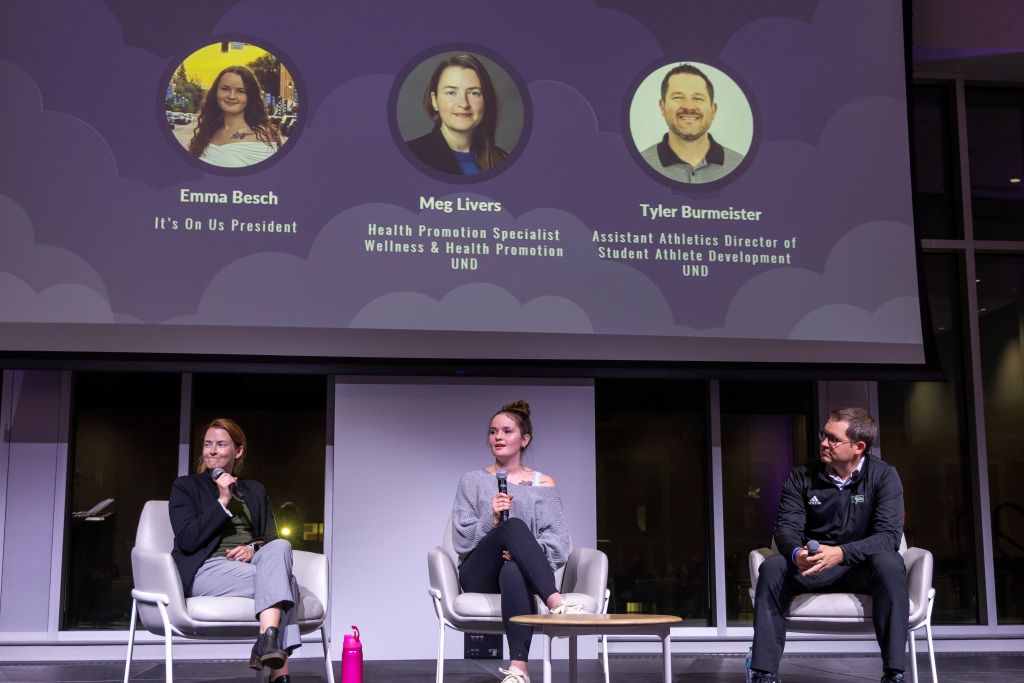
A panel of representatives from UND Athletics, campus wellness and It’s On Us brought that responsibility into familiar settings: the teams students play on and the campus they walk through.
Tyler Burmeister, assistant athletic director for student-athlete development, spoke about the influence student-athletes have within the campus community.
“They’re visible. Having them realize that their platform can carry quite a ripple is really important,” he said. Adding that incoming student-athletes receive bystander intervention training, and all student-athletes participate in CVIC’s One Love training on healthy and unhealthy relationships.
Meg Livers, UND health promotion specialist, emphasized that students also can intervene by supporting someone after an incident.
“Bystander intervention doesn’t just include stepping directly into a situation. It can also be showing up for your friend, checking in with them, making sure that they feel supported,” Livers said.
Panelists discussed recognizing warning signs, connecting peers with available resources and creating opportunities for students to learn about healthy relationships and prevention.
Those efforts are part of a broader partnership between UND and CVIC. Since the launch of CVIC’s Safer Tomorrow’s Road Map in late 2017, the campus partnership has grown from reaching a little more than 500 students, faculty and staff to more than 3,800 individuals annually, Inman said.
For Eilts, the rally’s 30th anniversary offered an opportunity to reflect on the people who helped build that commitment.
“Learning about how the event began and seeing how it has evolved over the years highlights the long-standing commitment to ending interpersonal violence, not only from the Community Violence Intervention Center, but from students at the University of North Dakota and the community as a whole,” Eilts said.
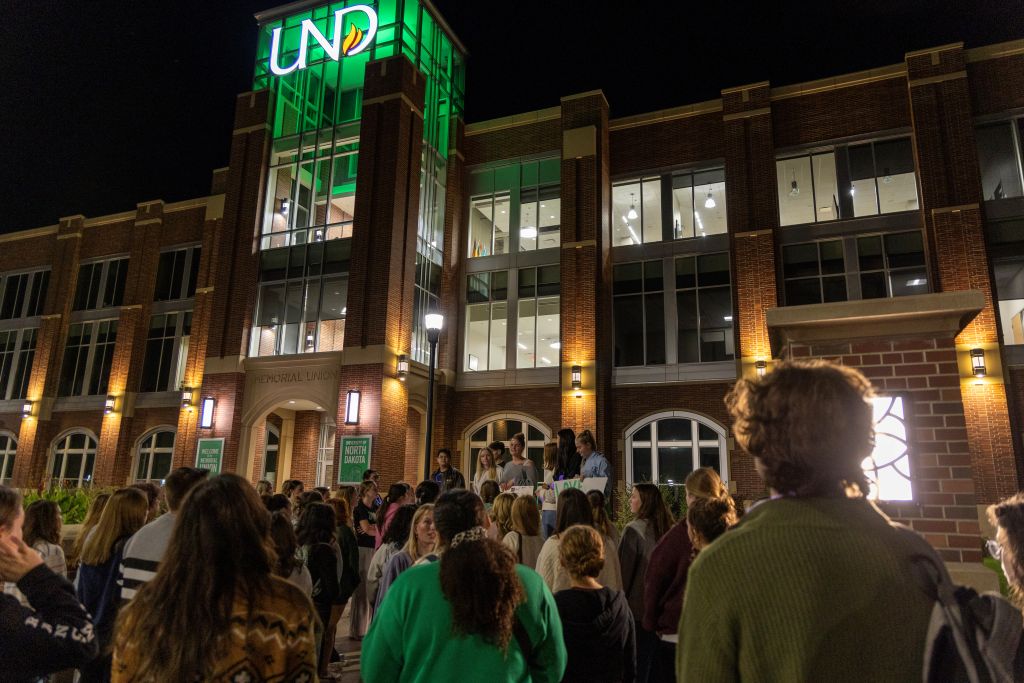
Taking back the night
Hamilton returned to the importance of community throughout her remarks. She spoke about her mother’s experience with domestic violence and her determination to ensure her children had the support and opportunities she had not always received. Hamilton also credited her stepfather with helping her navigate difficult moments and showing her what it means to have someone standing beside her.
“My mom taught me that I deserve to have a voice, and she never ever made me believe that I have to be smaller for anybody else,” she said. “And together, that has shown me that empowerment does not mean never needing anyone, but instead, it means having somebody to stand beside you while you find your own strength, and that is what a good community can do.”
The scholarship Hamilton received honors Dru Sjodin, whose life was taken by violence. For Hamilton, receiving the award brought a new understanding of the responsibility that comes with having a voice.
“We cannot change what happened to Dru. We cannot change what happened to me. We cannot change what happened to the countless survivors before us. But we can decide what happens next,” she said. “We can decide that survivors should be met with support instead of silence.”
The evening also recognized Shelby Middaugh, vice president of philanthropy for Alpha Chi Omega, with the 2026 UND Change Maker Award, presented by CVIC at UND.
Middaugh was honored for her efforts in educating peers about available resources, promoting prevention initiatives and encouraging others to become involved in creating a safer campus
After the program, students took to the streets for a solidarity walk led by UND’s It’s On Us chapter and facilitated by UND Police. Walking side by side, they continued a tradition that has brought people together at UND for 30 years to stand against sexual and relationship violence.