UND students help put Wold Papers to work
Special Collections project sends more than 6,400 pages to nonprofit searching for missing service members
Among the thousands of documents preserved in UND’s Chester Fritz Library are records of Americans who went missing during the Korean and Vietnam wars. Some contain details about where and when they disappeared, others include reports of possible sightings afterward.
Now, those decades-old records could help investigators searching for answers about service members who never came home.
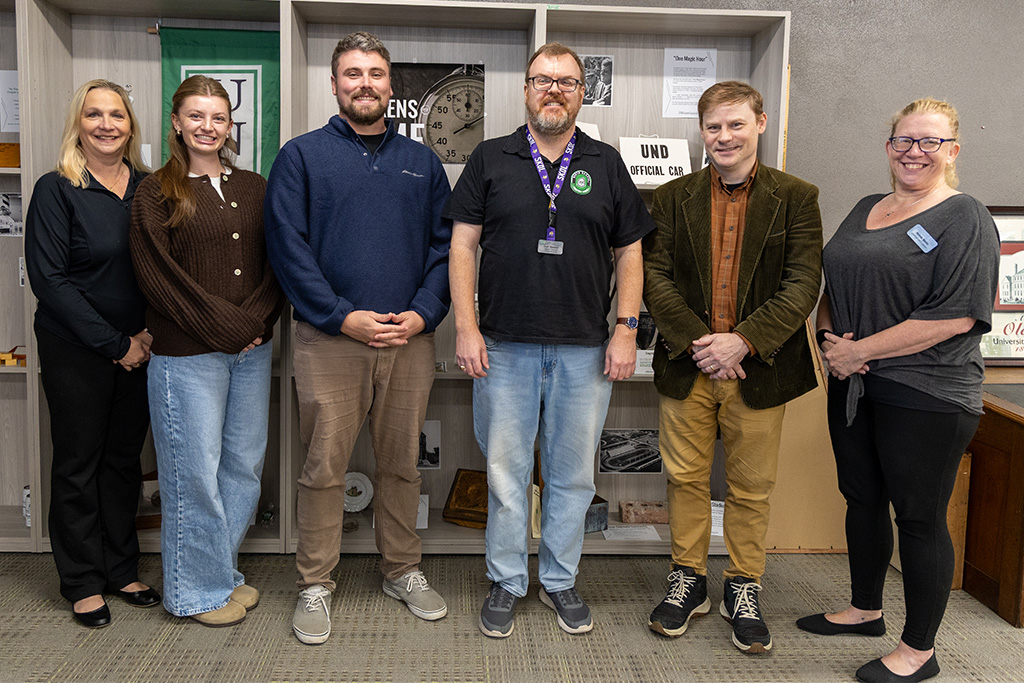
In September and October, more than 6,400 pages from UND’s James Wold Papers were digitized and sent to Tours of Duty, a nonprofit that works with veterans and families seeking answers about missing U.S. service members and civilians.
The project, a partnership between UND’s Elwyn B. Robinson Department of Special Collections, Veteran & Military Services and Tours of Duty, has also given two military-affiliated students an opportunity to contribute to that mission.
For Trevor Taylor, a Commercial Aviation student and veteran, the opportunity to help the families of missing service members was enough to draw him in.
“I just feel honored to have what little part I could have,” he said. “Even if it’s just the man-hours putting in scanning documents, to be a veteran myself and to be able to help bring back other people who sacrificed their lives. It’s just an honor.”
A collection finds a new purpose
The records come from the papers of James Wold, a UND Law graduate and attorney who served as deputy assistant secretary of defense for POW/MIA affairs and director of the Defense POW/Missing Personnel Office. His work included efforts to account for Americans missing from the Korean and Vietnam wars.
Earlier this year, Mike Luehring of Tours of Duty contacted UND Special Collections about digitizing a large portion of the collection.
Curt Hanson, head of the Elwyn B. Robinson Department of Special Collections, said the project was something of a first for the department. Although staff regularly help researchers access archival materials, they had never enlisted people from elsewhere on campus to help scan records for a patron.
Luehring’s search for additional help eventually led him to Angie Carpenter, director of UND Veteran & Military Services, who arranged for Military Affiliated Peer Support student workers Taylor and Bella Hammer to participate. They connected with Special Collections and started the project in September.
Hanson and Brian Baier in Special Collections handled much of the scanning, while the students helped work through the remaining material.
For Hanson, the project illustrates one of the most rewarding and unpredictable sides of archival work: Records preserved for one reason may find entirely new uses years later.
“Our users bring value to the collection,” he said.
Hanson believes the Wold Papers had seen relatively little use before Tours of Duty expressed interest. Knowing that the materials may now help an organization searching for missing Americans has been particularly gratifying.
“I love the fact that the Wold Collection is being used for this purpose,” he said.
Thousands of pages, scanned one at a time
Turning thousands of pages of archival materials into digital files can be painstaking work.
Loose documents can be scanned relatively quickly, but bound journals and other delicate records require much more care and attention. Each page must be turned individually and handled carefully to avoid damage.
“There’s a lot of documents,” Taylor said. “Some of his personal journals took a little bit more time than others to scan, just because you have to flip every page.”
Taylor spent several hours working through the collection and initially believed the project might take months. When he returned to Special Collections a couple of weeks later, he was surprised to discover that Hanson and Baier had completed most of the remaining work.
Even while working through the documents, Taylor caught glimpses of the history they contained. Among the records that stood out to him was Wold’s correspondence with Vietnamese military officials in the years following the Vietnam War.
The contents of the collection are particularly relevant to Tours of Duty’s mission.
Hanson said some records contain detailed information about service members whose remains were never recovered, including the circumstances of their disappearance and, in certain cases, reports of possible sightings afterward.
For investigators trying to reconstruct events that occurred decades ago, such details can be incredibly valuable pieces of a much larger puzzle.
Building the bigger picture
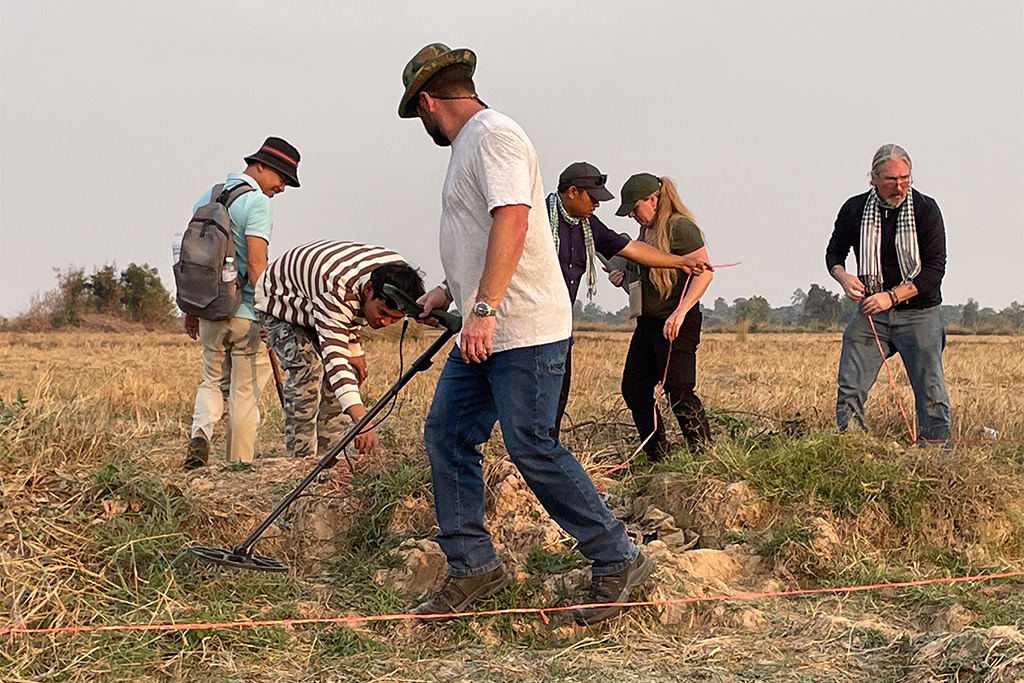
Tours of Duty has been gathering and digitizing records related to POW/MIA investigations, working to bring together information collected over several decades.
Luehring said the value of the Wold Papers is not necessarily tied to any single document. Rather, the collection gives their investigators another source of information to compare against records obtained from other sources.
The organization uses an artificial intelligence system to help identify potential connections among those materials, though Luehring emphasized that technology is only one part of the process. He and other Tours of Duty investigators also conduct interviews and travel overseas as part of their work.
And while the organization was still working through UND’s materials when UND Today spoke with them, Luehring said the first documents received have already demonstrated the collection’s potential value.
“What I’ve seen so far is completely unique to what else I’ve seen out there,” he said.
That is precisely the sort of outcome Hanson hopes for when researchers turn to UND’s archives: historical materials finding relevance in work happening today.
A new way to serve
For Hammer, a social work student and member of the Air National Guard, helping with the Wold Papers marked her first experience working with archival materials.
She has worked in UND Veteran & Military Services since 2024, answering questions and supporting other military-affiliated students. She hopes to become a clinical social worker for the U.S. Department of Veterans Affairs, and the project offered another opportunity to contribute to the veteran community.
“I think it’s just extremely rewarding, even being affiliated with it and getting asked to help,” Hammer said. “It’s going to be so cool to say that I was some part of this, and I hope that it helps.”
Luehring said the involvement of UND students has been one of the most exciting aspects of the partnership.
Tours of Duty includes veterans who served in Iraq and Afghanistan, and the organization is particularly interested in creating opportunities for younger veterans to become involved in efforts to account for those who served before them.
That work can take many forms. Some investigators travel overseas to interview witnesses and search for information. Others help by examining records that have spent years tucked away in archives.
For Taylor and Hammer, it meant spending hours at a scanner in UND’s Chester Fritz Library, helping move historical documents into the hands of people still searching for answers.
“One purpose of Tours of Duty is to give folks a shot to participate in the mission,” Luehring said. “The mission could be overseas, but it also could be in a library.”