As John Hauser Act advances, UND supports pilot mental health
Five years after student’s death, legislation and UND initiatives aim to remove barriers that discourage students and pilots from seeking help
When Lydia Schock began visiting aviation classrooms to introduce UND’s UpLift peer support program, students were apprehensive at first.
Would their conversations be private, or could reaching out for help put their flight training or career on hold?
Schock, a senior commercial aviation major and UpLift’s chair, understood their apprehension. In the world of aviation, certain mental health diagnoses and treatments can complicate the medical certification required to fly, jeopardizing careers in which students have invested a lot of time and money.
Now, five years after UND aviation student John A. Hauser died by suicide, legislation bearing his name is advancing through Congress with the aim of addressing those longstanding concerns.
The bipartisan John A. Hauser Mental Health in Aviation Act, which passed the U.S. Senate unanimously in September, would direct the Federal Aviation Administration (FAA) to modernize its mental health regulations and reduce barriers that have discouraged pilots and air traffic controllers from seeking treatment.
At the John D. Odegard School of Aerospace Sciences, those concerns have spurred national advocacy, the creation of new mental health resources and efforts by students such as Schock to help their peers feel more confident asking for support.
A tragedy spurs national action
Beth Bjerke, associate dean of the Odegard School, said UND began confronting the problem during the COVID-19 pandemic, when faculty and staff noticed trends in students’ mental health.
The school formed a working group of faculty, students, aviation staff and mental health professionals to examine the particular challenges faced by aviation students and identify the best ways to help.
Hauser’s death in October 2021 underscored the urgency of that work and the need to involve others beyond campus.
“We need to have a bigger conversation outside of just the university,” Bjerke recalled.
Two months later, UND organized an aviation mental health summit in Chicago with assistance from United Airlines. It brought together the FAA, other collegiate aviation programs, industry and mental health professionals, along with Hauser’s parents, Anne and Alan Hauser.
Those conversations continued through more symposiums and national collaborations. Bjerke also served on the FAA’s Mental Health and Aviation Medical Clearances Aviation Rulemaking Committee, which issued recommendations in April 2024 intended to reduce barriers to care while maintaining aviation safety.
The John Hauser Act, currently awaiting further action in the House, would require the FAA to implement those recommendations as appropriate, improve medical certification procedures and provide resources to help the agency review cases more quickly.
Bjerke also credited UND alumnus Tyler Hardy, deputy chief of staff for Sen. John Hoeven, with helping navigate the legislation’s progress.
In a statement following the Senate vote, Hauser’s parents welcomed the bill’s potential to help others seek care, saying they were “proud and humbled that it now bears our son John’s name.”
Changing the culture at UND
The John Hauser Act also calls for a public education campaign to reduce stigma, raise awareness of mental health resources and improve trust between pilots and the FAA.
Hired in the wake of Hauser’s death, embedded psychologist Sky Overbo works directly with UND aviation students. Although students have become more comfortable discussing mental health, she said, many remain apprehensive about seeking professional treatment.
“Almost every time a student pilot comes into my office, they’re like, ‘What’s getting reported? What’s going to be in my medical records?” she said.
Overbo helps students clarify FAA reporting requirements, understand confidentiality protections and discuss treatment options. That work extends beyond her office through classroom visits and other outreach.
Her appointment schedule is now full, Overbo said, with students increasingly seeking her services while referring friends and classmates. UND is working to hire another embedded clinician to meet the growing demand.
Her work also extends to UpLift, where she trains peer supporters and provides guidance when they have questions about supporting a student.
Established in 2022 with support from the John A. Hauser Mental Health in Aviation Initiative Fund, the student-led program is modeled after peer support programs used by major airlines. Students can request support without providing their names and speak privately by phone with trained peers who understand the pressures of flight training.
But earning students’ trust wasn’t easy.
“It took a really long time to build the trust we have now within the aviation department,” Schock said.
She said requests for assistance have increased considerably since she joined the program, with the number of cases doubling each year. She sees that growth as encouraging and wants students to reach out before their problems become more difficult to manage.
“I would rather you call like right after you’ve failed an exam than after you’ve failed six,” she said.
Olivia Farnsworth, UpLift’s vice chair and a senior majoring in commercial aviation and aviation safety and operations, said learning about aviation’s “culture of silence” motivated her to get involved with UpLift.
“What can I do to help these people who are my peers, my colleagues?” Farnsworth remembered thinking. “These people are part of my community.”
She added that the value of peer support programs such as UpLift comes down to having someone who can understand what their fellow students are experiencing.
“I’m not trying to solve it. I’m not trying to tell you that you need to do this or that,” she said. “I’m just here with you in this situation and in this moment.”
A new generation of aviation mental health advocates
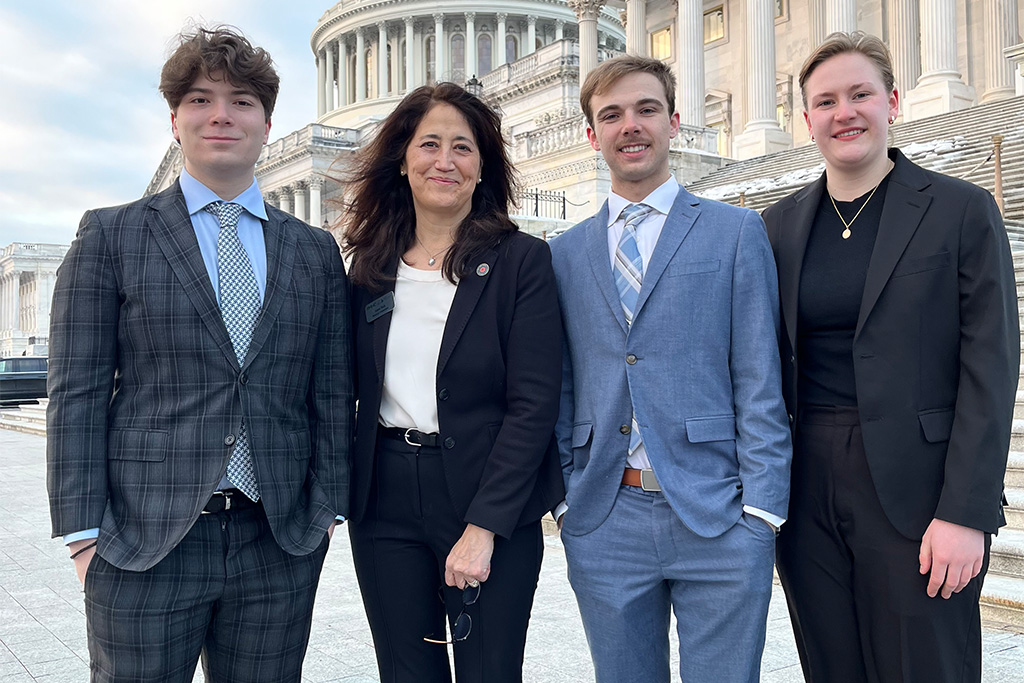
Schock and Farnsworth have also taken their advocacy beyond campus, each attending the Pilot Mental Health Campaign’s Advocacy Day in Washington, D.C., in different years.
Farnsworth described finding common ground with people whose reasons for advocating included losing a friend, colleague or family member.
“I think it speaks to a shift that we’re seeing in the industry and the general mindset surrounding mental health,” she said.
Schock said aviation’s medical standards serve an important purpose, but said that the mental health needs of pilots should be accounted for.
“I think now this act is going to make aviation safer by allowing for people to get the help that they need when they need it,” she said.
“Allowing humanness in that standardized system is very important,” she added. “You can be a pilot, but you’re still a human.”