College of Nursing & Professional Disciplines drafts blueprint for civility in academia
College hosts workshop on how civility’s effects reach beyond classroom
Like a house that’s stood too long without care, the foundation of a workplace or classroom can weaken over time. Small cracks can come not from catastrophic events, but from neglect — minor lapses in respect, patience or empathy that spread until the structure itself feels unstable.
For those in health and human services, this fragility can carry real consequences. Nurses who can’t communicate respectfully risk patient safety. Social workers who respond without empathy can lose the trust of their clients. Dietitians who dismiss a client’s concerns can undermine care before it begins.
Susan Luparell, a Montana State University professor and fellow of the Academy of Nursing Education, said the connection between behavior and outcomes begins long before students enter the workforce.
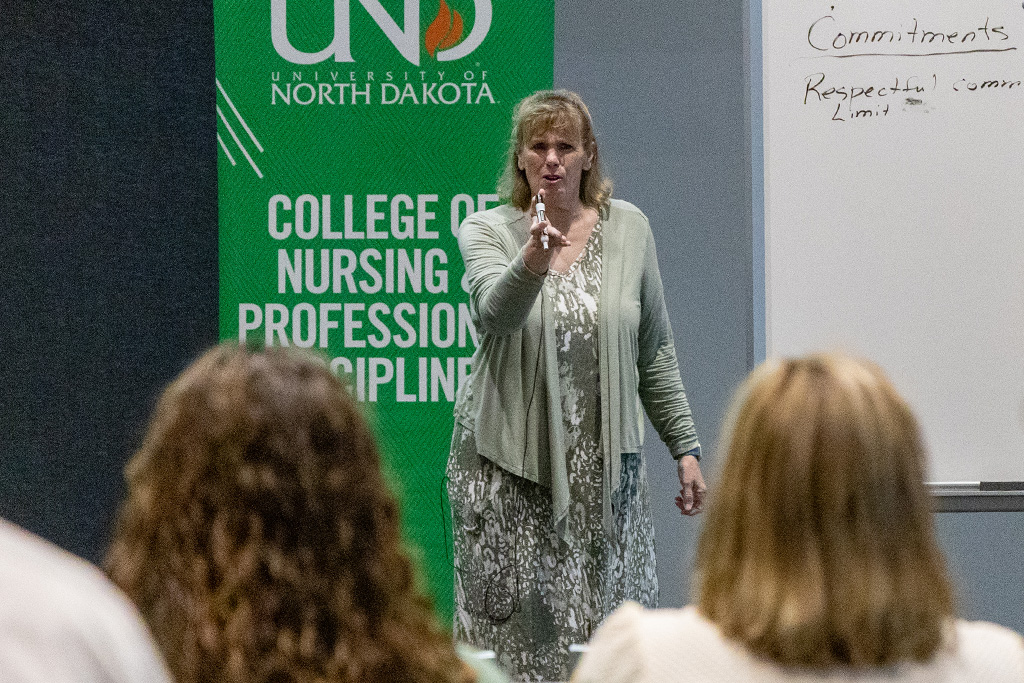
Luparell was on the UND campus to speak to faculty, staff and students from the College of Nursing & Professional Disciplines about the importance of civility in educational and professional settings, and how her concept of civility extends beyond classroom decorum.
Civility, a ‘safety skill’
“If students learn to be dismissive or disrespectful here, they’ll carry that with them when they graduate,” Luparell told CNPD at the workshop. “How we model and address behavior in the classroom directly influences how our students behave as professionals.”
Her point is more than a theory. In a 2019 national study she co-authored, Luparell found that the habits students form in the classroom often follow them into practice — sometimes with damaging results.
Published in “Nursing Education Perspectives,” the study reported that more than one-third of nurse educators had seen a once-uncivil student become an uncivil nurse, and that 71 percent had graduated at least one student in the past year who, in their view, should not have graduated after all, because of unprofessional conduct.
“Civility isn’t a soft skill,” Luparell added. “It’s a safety skill.”
That belief served as the North Star for the half-day workshops for the College’s faculty, staff and students, where Luparell led UND faculty and staff in conversations about how classroom culture shapes the kind of nurses, social workers and dietitians their students will become.
The workshop was a part of a larger, proactive effort by CNPD to set faculty, staff and students up for success, said the College’s dean, Maridee Shogren.
“In 2023, the CNPD launched a strategic planning process as part of the broader University of North Dakota UND LEADS initiative,” Shogren said. “As part of our Learning and Affinity core value goals, we committed to hosting workshops relevant to our three disciplines to address the critical role of civility in academic and professional environments.
“In a college of health professions, where we recognize the importance of civility between faculty, staff, students and the clients we serve, we felt this was the perfect time to come together for this important conversation.”
‘The culture that we build’
“The culture that we build is the culture that we get,” Luparell told the faculty and staff representing the College’s diverse disciplines. And with that, she posed a question to the group.
“What are your goals for yourself as an educator?”
“Empower them.” “Inspire them.” “Challenge their thinking.” These were some of the answers that came from the audience of faculty and staff. And these goals, Luparell said, are possible when a learning environment is built on the foundation of civility.
But, these goals are equally threatened by incivility, Luparell said.
Eye-rolling, sarcasm, gossip or disengagement can all be forms of incivility, she noted. Each has a corrosive effect that can derail the instructors’ goals.
“When civility breaks down, it steals our joy for the work,” she said. “And once that happens, everything else begins to suffer.”
Civility, Luparell reminded attendees, is more than decorum. It is the ethical backbone of professions such as nursing and social work — the structure that supports trust between professionals and those they serve.
“It can be intentional — it’s often unintentional — but that’s what we’re trying to build,” she said. “Helping students learn how to be intentional about their interactions.”
To illustrate, she showed a photo of an old, collapsing farmhouse — its roof caved in, its foundation gone. She called it her metaphor for health care today.
“When I look at this, I see something broken and unsafe — something that’s lost its foundation,” she said. “But I also see potential.”
And creating civil learning environments, Luparell said, is one way to give students the tools to fix it.
Building a culture of civility together
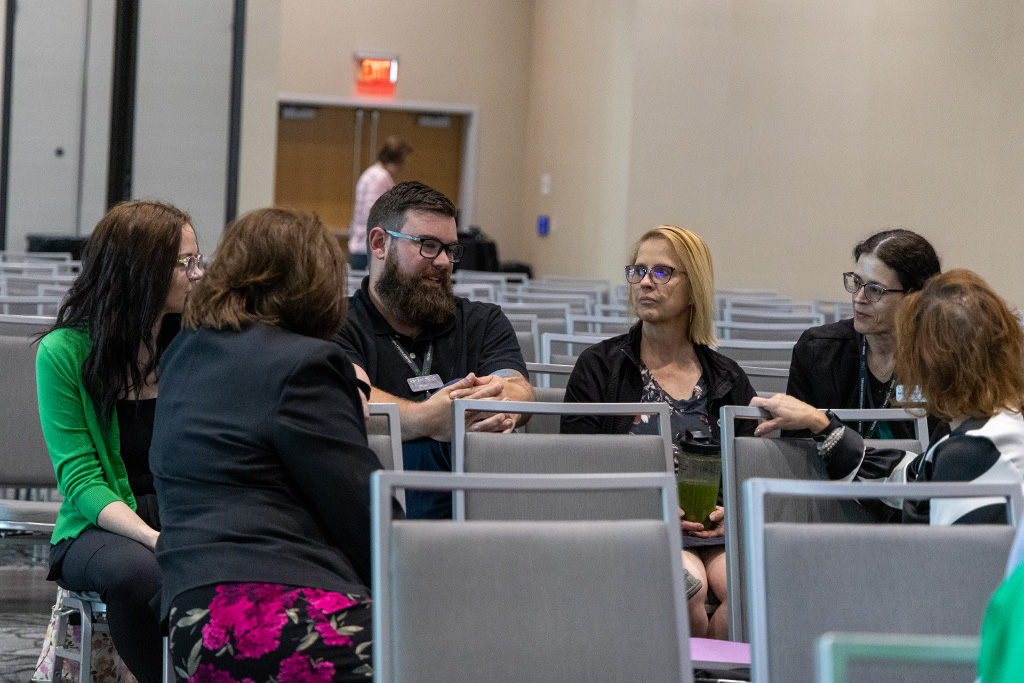
Luparell’s approach to creating healthy learning environments centers on shared ownership — the kind of collective maintenance that keeps a structure sound. Early in a semester, she asks students to describe the classroom culture they want. Together, they identify their expectations for the semester and hold each other accountable for maintaining them.
“We have students talk about what they need from each other so everyone can thrive,” she said. “When they say it out loud, they begin to own it.”
She encouraged CNPD to try this as well, and to see how it shapes their semesters and outcomes for their students.
“It’s not about rules,” she said. “It’s about ownership. When students help set the tone, they see that they’re responsible for maintaining it.”
That philosophy also shapes how she gives feedback. On the first day of class each semester, she asks how many students want to become safe, competent professionals. When every hand goes up, she reminds them that feedback in class — especially the hard kind — is part of that journey.
“Do you remember when you said you wanted to be safe and competent? This is part of getting there,” she said. “It’s not about scolding — it’s about supporting growth.”
These conversations, she said, can transform tense or awkward moments into learning opportunities — a chance to rebuild and repair and keep the walls from buckling under day-to-day stresses,
Carrying civility into the future
Luparell’s central message was that, like the fixer-upper house in her metaphor, civility doesn’t come ready-made — it’s built and maintained. In this case, CNPD’s faculty and staff are the architects and contractors responsible for keeping the house not just standing, but safe and solid.
For CNPD and its students, the metaphor also extends beyond the classroom. Luparell said that the civility learned in classes follows students as they graduate and begin their professional journeys.
Hospitals, clinics and community agencies — like any structure under stress — can be breeding grounds for tension and animosity, and this is especially true for the high-stakes work these students will go on to do. But CNPD, she said, can give students the foundation they need to carry civility with them to their future workplaces.
As dean of CNPD, Maridee Shogren agrees with this perspective.
“We are taking a proactive approach,” Shogren said. “Dr. Luparell’s message reinforces what we already know: civility isn’t something that happens by accident. It’s something we have to intentionally cultivate in ourselves, our classrooms and our communities.
“As a college, we’re committed to creating environments where respect, empathy and accountability are not just values we talk about, but skills we teach and model every day.”