UND education researchers collaborate with immigrant youth through photovoice exhibit

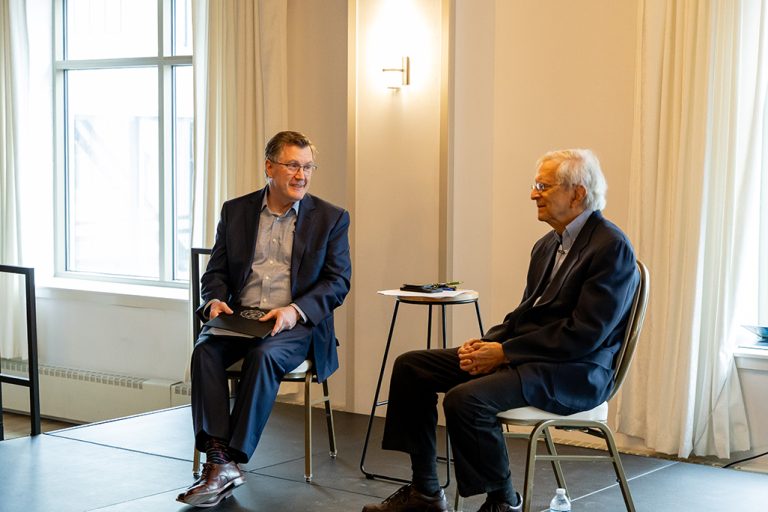
Pempho Chinkondenji, assistant professor in the College of Education & Human Development, and Ph.D. student researcher Giovanni Whyte recently hosted a powerful community event as part of an ongoing research project exploring the educational and social integration of refugee and asylum-seeking youth in North Dakota.
The exhibition took place on April 9, 2025, at the College of Education & Human Development.
Using a Community-Based Participatory Action Research approach, the research team employed photovoice — a visual, arts-based methodology — to better understand the challenges and strengths experienced by immigrant students as they navigate new schooling environments and adapt to life in North Dakota. The researchers worked with 20 immigrant youth from different countries including Mexico, Afghanistan, Venezuela, Liberia and Somalia.
This project comes at a critical time. As of June 2024, the United Nations High Commissioner for Refugees reported over 122.6 million people have been forcibly displaced worldwide, nearly half of whom are school-aged children. Many of these children have experienced disrupted education and trauma, making the transition into schools within host countries particularly complex.
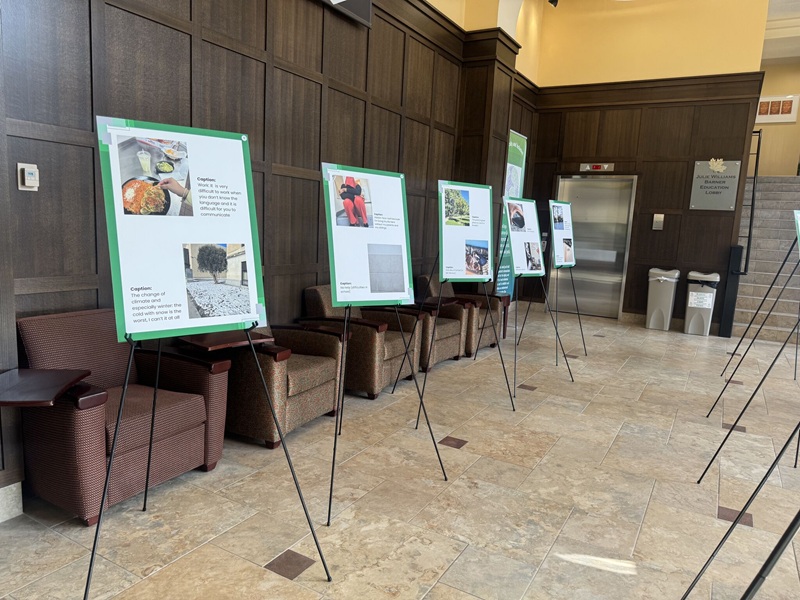
Through guided photography, focus groups and interviews, the youth participants served as co-researchers, documenting their journeys, highlighting personal and systemic struggles and identifying sources of resilience. The project culminated in a photovoice exhibition, which brought together more than 60 stakeholders, including representatives from the University, public schools, the city, and community members.
Attendees engaged directly with the photo displays, reading the captions participants provided to describe each image, and discussing key issues raised by the youth — ranging from food insecurity and limited transportation to difficulties with language. The event served as a platform not just for awareness but for action, with stakeholders working collaboratively to begin shaping a responsive framework to support immigrant students throughout the state.
As the data collection phase concludes, the research team is now turning toward report writing and deeper stakeholder engagement, with the goal of co-developing sustainable strategies that address the unique needs of students affected by forced displacement.
This initiative reflects UND’s commitment to inclusive, community-driven research and its role in fostering equity and belonging for all students, both in and beyond the classroom.