New clinical specialization to strengthen UND Social Work program
North Dakota needs mental health professionals, and UND’s new Master of Social Work specialization in clinical social work can help
By Jen Koller
Editor’s Note: Applications for the Clinical Social Work Specialization will open pending curriculum approval. Interested students should contact the Department of Social Work for more information.
The growing demand for mental health professionals is one of the most pressing challenges facing North Dakota and the nation. From rural towns to urban centers, communities need trained clinical social workers to provide essential mental and behavioral health care.
The University of North Dakota’s Department of Social Work is answering that call by expanding its Master of Social Work (MSW) program with a new specialization in clinical social work, set to launch in the fall of 2026.
The addition marks a significant milestone for UND’s MSW program and builds on more than a century of leadership in social work education.
UND’s MSW program currently prepares students for advanced generalist practice. “The simple explanation of advanced generalist practice is that they are prepared to be a jack of all trades,” said H. Stephen Cooper, chair of the Department of Social Work. “Advanced generalist practice is a perfect fit for those who will practice in a rural context, as they are well-prepared to tackle a variety of social issues, across systems and in various settings.”
According to the U.S. Bureau of Labor Statistics, demand for mental health professionals is projected to rise by 7% by 2033, a challenge that’s felt acutely in rural and underserved areas across North Dakota. The new clinical specialization is designed to meet that need head-on, offering students specialized preparation to diagnose and treat mental, emotional, and behavioral health conditions.
And while the advanced generalist practice path can work for many, Cooper said, a clinical social work curriculum is a better fit for those who know they want to pursue this area of practice. “We believe that offering such a specialization meets a very real need. It also offers an opportunity for program innovation and growth.”

A Legacy of Service in North Dakota
Social work education at UND has deep roots. The first courses were offered in 1905, with the undergraduate program formally established in 1939 and accredited in 1974. UND’s MSW program, the oldest in North Dakota, has been accredited by the Council on Social Work Education (CSWE) since 1991.
“The addition of a clinical social work specialization is a logical next step in pursuit of our MSW program’s mission to prepare social work professionals to serve as transformative leaders in their communities in North Dakota, the region, and beyond,” said Cooper. “We’re proud of our history, and excited to build upon on it in a way that helps to meet the needs of our students, residents, and communities.”
Strengthening the Workforce
The Department of Social Work expects the new specialization will help address North Dakota’s ongoing shortage of licensed clinical social workers (LCSWs). These professionals are qualified to diagnose and independently treat mental and behavioral health conditions.
“Earning the MSW degree is the first step in this process,” said Cooper “and an MSW degree with a clinical focus provides the best preparation for this pathway.”
Recent data from the 2025 UND School of Medicine & Health Science’s Biennial Report shows that while the total number of licensed social workers in North Dakota has grown by more than 21.5% over the past six years, the distribution remains uneven. Nearly 70% of the state’s social workers are located in urban areas, while rural regions have seen a 9.5% decline in their numbers.
“In addition to addressing the overall workforce shortage in North Dakota, we expect that this specialization will also address the shortage of social workers in rural areas, especially those with clinical training,” Cooper said.
Expanding Access and Opportunity for Students
For students entering the MSW program, the new clinical specialization means expanded focus, online access, and enhanced career opportunities.
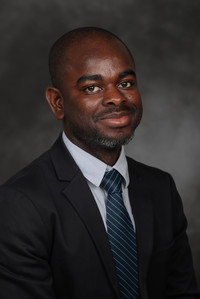
“There is going to be more dedicated coursework designed to prepare students for clinical practice,” said Isaac Karikari, UND’s MSW program director. “Our advanced generalist program has until now been the primary option for students seeking entry into clinical practice. The new clinical social work specialization expands the UND Social Work program as a whole – it presents the prospect of increased enrollment and optimizing courses and resources to support career development in behavioral health and clinical practice.”
The addition also builds on UND’s legacy of innovation in online and distance learning.
“Historically, we were one of the first programs to pioneer distance learning,” Karikari noted. “The synchronous course offerings grant students the wonderful opportunity for the development of the practical and professional skills needed for practice. The option of online education caters to North Dakota social workers who are already in practice by offering them an opportunity to continue to serve our state while seeking their advanced degree.
“It is especially important for social workers who reside in rural or remote areas of the state in that it provides an avenue to further develop their ability to build the capacity of their communities to address challenges.”
Meaningful Field Experiences and Community Partnerships
Experiential learning has long been a cornerstone of UND’s approach to social work education, and that will remain central to the new specialization.
“Our field office, led by Dr. Jennifer Schlinger, utilizes a tailored and collaborative approach with a commitment to making the field experience truly experiential and meaningful,” said Karikari. “We have close community partnerships with agencies covering various facets of human, health, and government services.” For UND social work students, this translates to providing opportunities to engage in diverse forms of practice not only in the direct practice sense but also in specific settings like local government, integrated community health, and rural health, often right where those needs are most critical.
The clinical specialization will also play a vital role in advancing care for Tribal communities by supporting access to culturally attuned, community-rooted care, says Karikari. “It also complements the
ongoing efforts of partners across the state, including the Human Service regions and the North Dakota Addiction Training Coalition, to strengthen the mental health and substance use workforce.”
Looking Ahead
The new specialization aligns closely with UND LEADS, the University’s strategic plan, particularly in the areas of Learning and Equity. This expansion directly supports the goal of creating more pathways to degree attainment for students of all backgrounds. “Offering this opportunity in an online format extends this to residents across the state and assists with accessibility to many groups, especially those who are place-bound,” said Cooper.
Karikari added that the initiative represents more than just program growth. It’s a thoughtful evolution of UND’s long-standing mission.
“We will be able to open our doors to more students. We are also able to support human service professionals seeking to formally transition into social work practice, as well as social workers seeking to upgrade or advance their knowledge and skills.”
About the author:
Jen Koller is Marketing & Communications Coordinator for the College of Nursing & Professional Disciplines at UND.