UND’s ‘Grand Journey’ guides students into undergraduate research
Immersive, step-by-step experience helps students explore research opportunities, connect with faculty and build career skills
For undergraduates of decades past, research could feel distant. It was something reserved for graduate students or faculty, and separate from the goal of earning a degree.
But UND is determined to change that perception. And one of the ways it’s doing so is through the Undergraduate Research & Scholarly Activity Grand Journey, an event that organizers turned into something students could literally walk through.
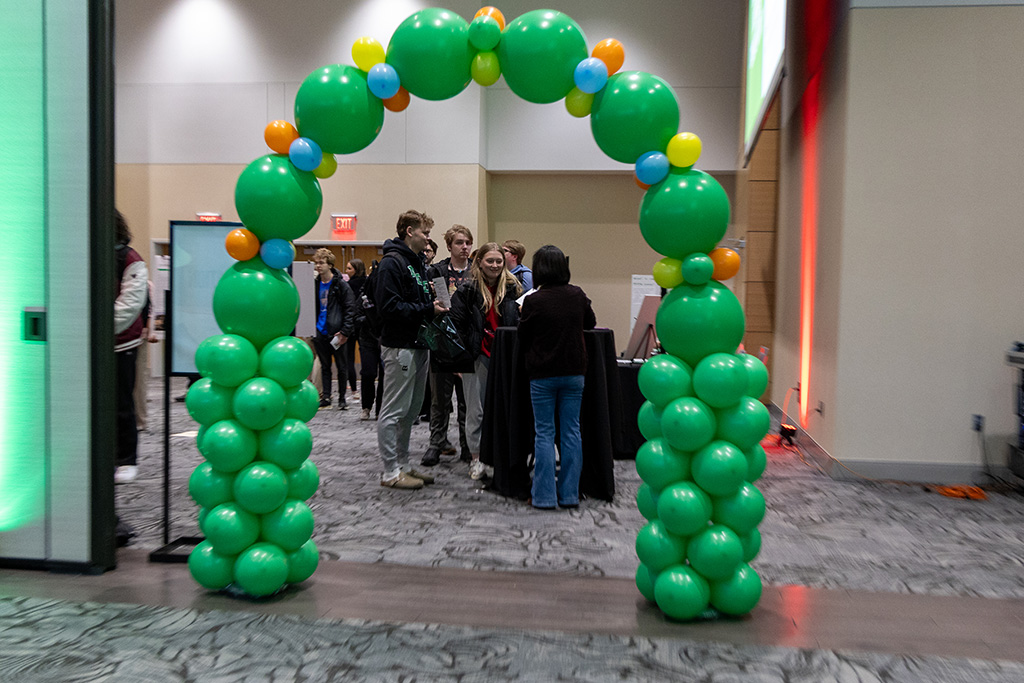
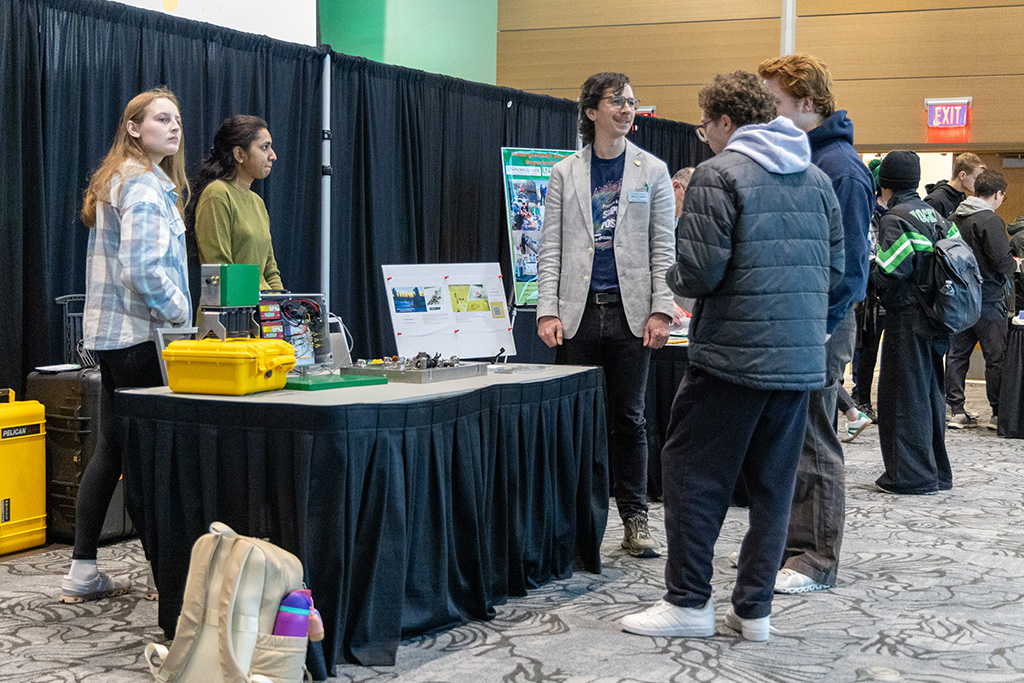
Designed as an immersive experience — part guided hike, part road trip — the Grand Journey invited students to follow a mapped path of four “interest points”: Destination Drive, Preparation Point, Exploration Road and Discovery Junction. Each stop represented a different stage in the undergraduate research process.
But instead of starting at the beginning, the path worked backward.
“We wanted to demystify it,” said Shari Nelson, UND’s experiential learning coordinator. “Research showcases are great, but they can also be kind of intimidating. You walk in and see this amazing research going on and think, ‘How am I going to get there?’”
By beginning at Destination Drive — where students presented research in progress — attendees first saw the end goal. From there, they moved step by step back through the process, learning how to get involved and where to go next.
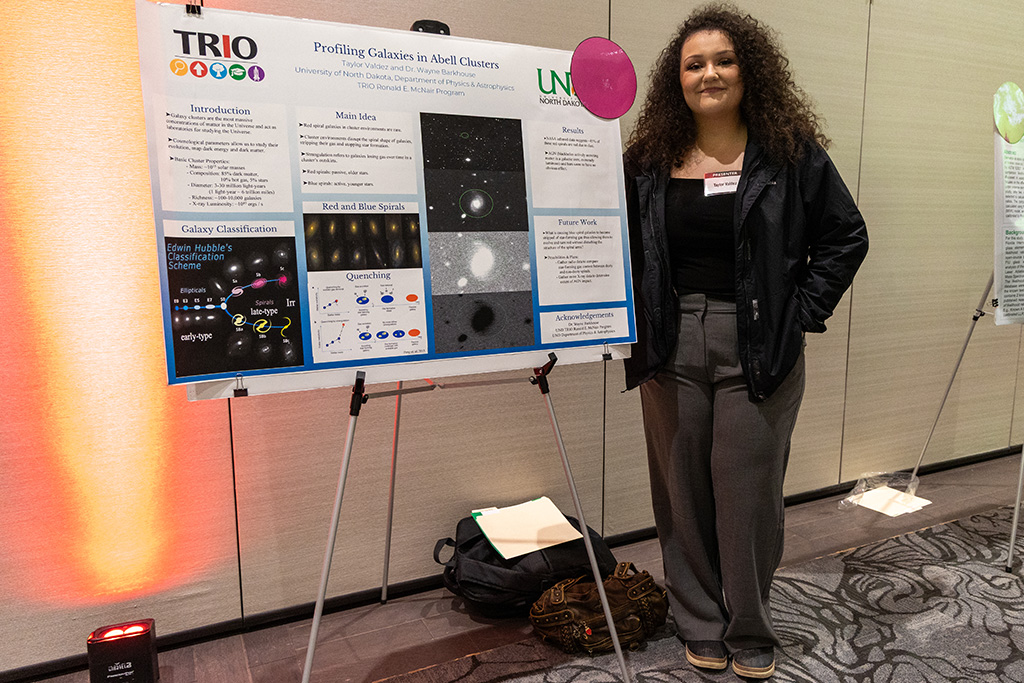
At the first stop, students gathered around poster displays, talking directly with their peers about projects already underway before continuing on to the next stage.
Rather than simply observing research, students were encouraged to see themselves in it.
“We want them to understand that research isn’t this unreachable thing,” Nelson said. “It’s something they can step into, one piece at a time.”
Building skills for the future
That step-by-step approach also highlights something central to URSA’s mission of emphasizing research as a way to prepare students for the workforce.
“Employers are looking for students who can think critically, solve problems and communicate effectively,” said Chelsea Mellenthin, director for Career Engagement. “Research gives students a chance to practice all of those skills in a really tangible way.”
By connecting each stop on the journey to real-world skills — from forming questions to presenting findings — the event showed that research is a natural extension of the skills honed in the classroom.
“You start to see how what you’re learning actually matters,” said Alexander Samardzic, a recent UND graduate presenting his work on breast cancer cell research. “It’s not just theory anymore; you’re part of something that could help people.”
Samardzic, who will attend the School of Medicine & Health Sciences later this year, said working in a lab helped him better understand the value of what he was learning.
“At first, it feels intimidating,” he said. “But once you get into it, you realize it’s something you can actually do. It makes what you’re studying more meaningful because you can see how it applies outside the classroom.”
Finding a place to start
Samardzic’s experience is common among students taking their first steps into research — and that starting point was a central element of the Grand Journey experience.
Rather than focusing only on polished final projects, the event encouraged conversation. Students were invited to speak with presenters, faculty and staff, using prompts on their maps to help get those conversations started.
For Taylor Valdez, who presented astrophysics research focused on stellar phenomena, that starting point came from a long-standing interest in space that gradually became something more structured.
“I’ve always been interested in it,” Valdez said. “Research gave me a way to actually explore those questions and see what it’s like to work through them.”
As organizers encouraged attendees to do, Valdez began her own research journey by introducing herself to professor of astrophysics Wayne Barkhouse and asking to get involved.
“I just jumped down and I was like, ‘I want to do research with you,’” she said. “It’s been three years now, and he’s still my mentor.”
Not every student takes that direct path. Many of those presenting said they didn’t know what kind of research they wanted to pursue until later in their academic careers — something Nelson said is entirely expected.
“There’s no one way to get started,” Nelson said. “We want students to see that wherever they are, there’s a next step they can take.”
Seeing the path to research in new ways
By the time students reached the final stop — Discovery Junction — the goal was for research to feel less like a distant endpoint and more like an ongoing and evolving part of their university experience.
Nelson described the layout as “backwards,” but it helped break the journey to research down to a step by step series of decisions: find a topic, connect with a mentor, ask questions and build skills through research.
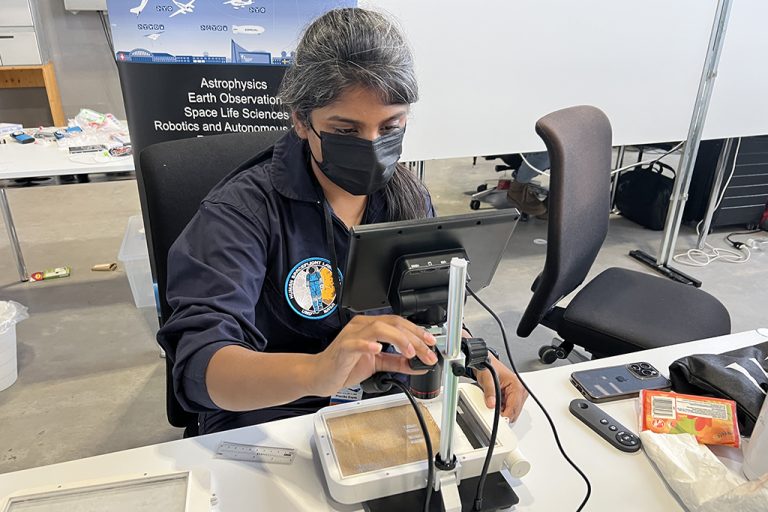
The final two rooms — Discovery Junction and Exploration Road — offered plenty of accessible ways to interact with hands-on displays and activities — including opportunities to experiment with equipment such as drones and learn about research-adjacent UND programs. The idea was that research starts with an interest.
This, Valdez said, is one of the best parts of undergraduate research and exactly why she recommends other students getting involved.
“It helps you figure out what you actually enjoy doing,” she said. “You’re not just learning it — you’re experiencing it.”
For Mellenthin, this takeaway was their goal.
“Research isn’t just for students who are planning to go into academia,” she said. “It’s for anyone who wants to think critically, adapt and communicate — skills that are valuable in any career.”