INMED program, Shawnda Schroeder honored at conference
Dakota Conference on Rural Health presents awards for for ‘outstanding advocacy of rural heath’
By Jessica Rosencrans
UND’s Indians Into Medicine (INMED) program and Shawnda Schroeder, assistant professor and director of curriculum and course design at the UND Department of Indigenous Health, were honored at 2026 Dakota Conference on Rural Health for their outstanding advocacy of rural heath.
The conference took place June 3-4 at the Alerus Center in Grand Forks, and the awards were presented at the conference’s Awards Banquet.
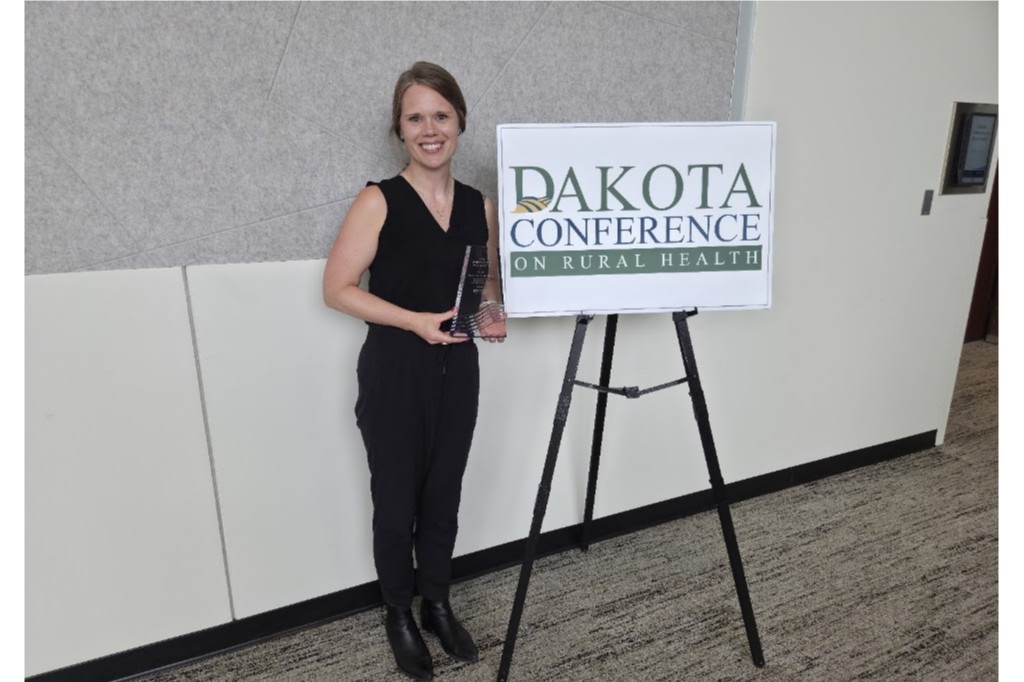
Shawnda Schroeder
Shawnda Schroeder received the Outstanding Rural Educator/Mentor award. This award recognizes a professional who has made outstanding contributions to the education, development, and placement of new health care professionals in rural North Dakota communities.
Schroeder has built a model of graduate mentorship that directly strengthens the rural public health workforce. Regarding doctoral students, she has chaired eight to successful graduation and currently is chairing 12 more, nine of whom are expected to graduate this summer. The students she has advised now work in or alongside tribal communities, many in rural and reservation-based settings including Indian Health Service, tribal public health programming, rural evaluation contracts, and tribal health liaison roles.
Within her department, Schroeder has been instrumental in shaping the world’s first doctoral program in Indigenous Health. Additionally, she consistently guides her students through the complex research methodologies in the program, ensuring they are equipped to address the specific health disparities facing rural and tribal populations, the award recognizes.
“Dr. Schroeder has dedicated more than 15 years of her professional career to serving and advancing rural communities across North Dakota,” said KariKari. “Her mentorship is not theoretical; it produces rural health professionals who serve where the need is greatest.”
Through her innovative teaching methods, deep passion for education, and genuine investment in people, Schroeder has distinguished herself as an extraordinary mentor, Karikari said. She inspires everyone around her to pursue excellence, and her compassionate approach fosters a respectful and inclusive learning environment.
Her work is characterized by a deep respect for community-voiced needs and a passion for fostering the next generation of rural health professionals.
Indians into Medicine
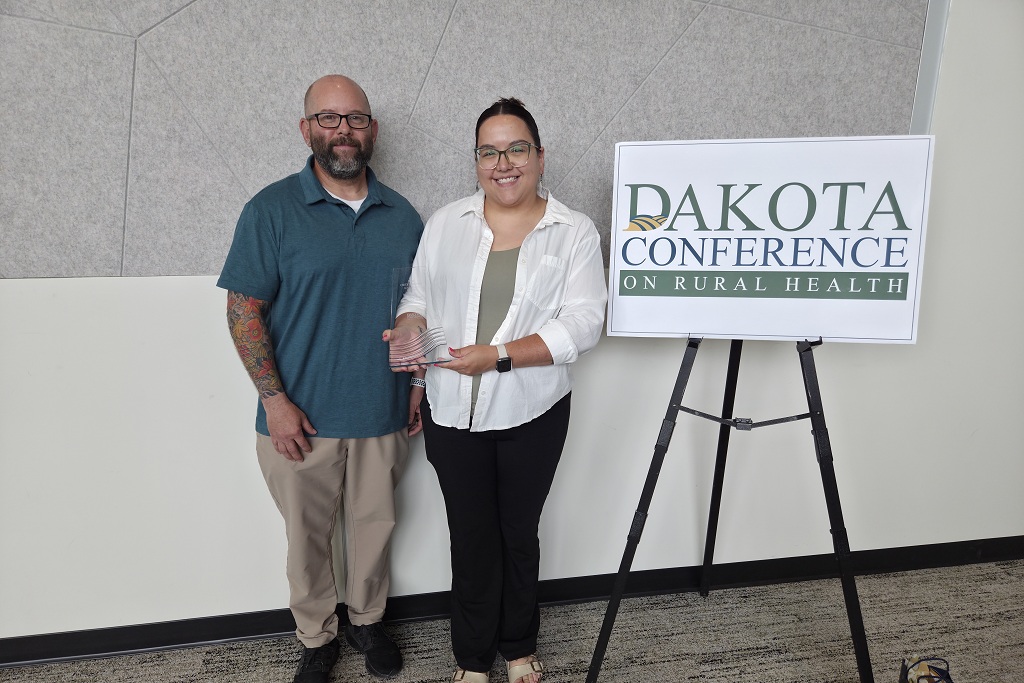
The INMED program received the Outstanding Rural Health Program award. This award is presented to a program that delivers services in innovative ways through collaborative partnerships to improve the access and quality of care to rural North Dakota residents.
INMED has been active at the UND School of Medicine & Health Sciences since 1973. Funded by the Indian Health Service, INMED has created an innovative rural and tribal health workforce pathway for Indigenous physicians and allied health professionals.
INMED supports students as early as seventh grade, and continues this support through graduate school and professional training, including summer camps and a six-week Summer Institute. The camps and institute provide intensive STEM coursework and hands-on exposure to health careers.
Rural and tribal communities continue to face significant workforce shortages, compounded by severe underrepresentation of American Indian and Alaska Native physicians nationally. INMED addresses this gap by growing the workforce from within the communities that most need care, as the award notes. Indigenous physicians are more likely to return to serve rural and reservation communities, making this model not only strategic but essential by increasing both workforce supply and culturally responsive care.
“INMED’s combination of early exposure, academic preparation, and financial support represents true innovation in rural workforce development,” said Grace Karikari, assistant professor of Indigenous Health at UND. “By preparing culturally grounded health professionals, the program supports trust, engagement, and continuity of care in rural and reservation settings.”
Since its founding, INMED has supported the graduation of 264 Doctor of Medicine graduates and 360 allied health professionals, and has served 2,690 Summer Institute students representing 159 tribes. INMED’s outcomes represent one of the most significant and sustained contributions to the rural Indigenous health workforce in the nation, analysts say.
About the author:
Jessica Rosencrans is a communication specialist at the UND Center for Rural Health.