‘Strive for 85’ seeks to meet accessibility goals
Panel and remarks at kickoff event highlight importance and necessity of meeting upcoming ADA requirements
Editor’s note: In the UND LEADS Strategic Plan, the Learning core value calls on the University to “enhance physical and virtual learning spaces to ensure faculty and students have the tools and resources necessary for productive and enriching educational experiences.” This story reports on the University’s ongoing Digital Accessibility project, an effort to make sure the University’s “productive and enriching educational experiences” are available to all.
####
On Monday, Aug. 18, with the fall semester around the corner, the conversation in O’Kelly Hall among faculty and staff was looking ahead to spring.
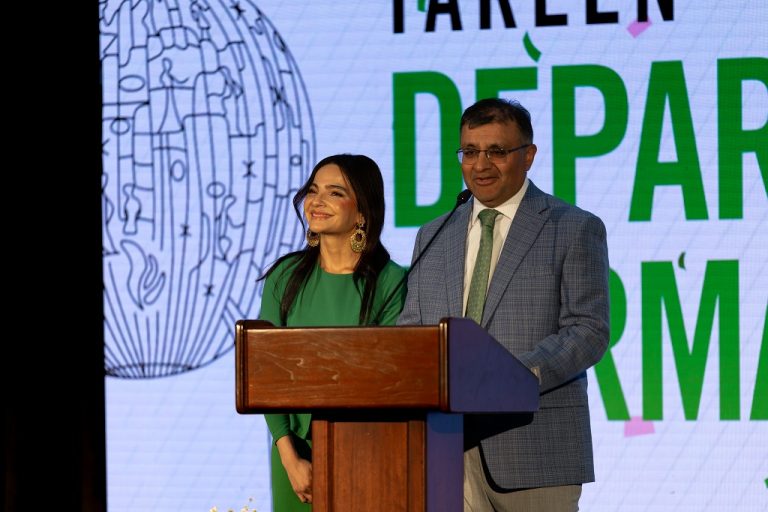
Dozens gathered on campus for the fall kickoff of UND’s “Strive for 85” initiative, a campaign to have all courses in Blackboard Ultra reach an 85%-or-better accessibility score by the start of the spring semester.
Attendees were there to learn about the “why, who, when and how” of digital accessibility, and how it will impact their work going forward.
The campuswide effort is taking place against the backdrop of regulation changes coming in April 2026 for Title II of the Americans with Disabilities Act. Under that section of the ADA, the University (and essentially all public universities and public-serving institutions) need to meet specific digital accessibility standards.
As shared in previous UND Today coverage, the standards in question are the Web Content Accessibility Guidelines, or WCAG, 2.1 Level AA.
And “Strive for 85” is merely the latest step taken by the University’s Digital Accessibility Steering Committee and its working group to raise awareness among the campus community and make good-faith efforts to reach full compliance with federal law.
For those who weren’t able to attend, a recording of the event is available to watch online.
Doing what’s right
Speaking to the “why” of these efforts, Donna Smith, UND’s assistant vice president for Equal Opportunity & Title IX, said that beyond the legal ramifications of compliance are UND’s values and mission.
Smith’s comments also reflected on the University’s shift from reactive to proactive as it relates to meeting new ADA requirements.
“Regardless of how this is prioritized at the federal level, this is the right thing to do,” Smith said to attendees. “It’s what we strive for as a university. It sends a message to campus.
“Every time someone is on a website with proper structure, a document that’s accessible, a video that has captions, it sends a message of, ‘You belong here. We’re here to support you. And everyone deserves opportunities for a full experience at UND.’”
President Andy Armacost echoed this sentiment in his recent State of the University address, during which he credited Smith and the Digital Accessibility Steering Committee.
“This team is crafting a plan, a series of steps, that we will follow as a campus to ensure that we are compliant with federal law,” Armacost said. “But most importantly, it’s not just about the compliance piece. It’s about doing what’s right for citizens, students, staff and those who need this type of support.”

‘All of our responsibility’
Also speaking at the kickoff event was Eric Link, provost and vice president for Academic Affairs, who offered remarks pertaining to “who” is involved when it comes to making full compliance a reality.
“It’s all of our responsibility,” Link said. “These discussions and the work of the committee started a year ago, and TTaDA (the Teaching Transformation & Development Academy) has done a lot of leg work getting things started this fall. But it’s going to take everyone here, and across campus, to realize the vision.”
To the question of “when,” Link encouraged faculty to start working on active courses for spring, then cascade efforts into eventually reaching 100% in the eyes of ADA Title II.
After the event, Link sat for a Q&A with UND Today to offer more of his thoughts on the topic of digital accessibility. The Q&A is being published in tandem with this story.
To attendees at the kickoff, he said, “When we engage in this work, there are ripple-effects: beneficial consequences. Providing these measures, making sure the materials are accessible to all, will eventually impact all students and stakeholders at UND.”
How to get started
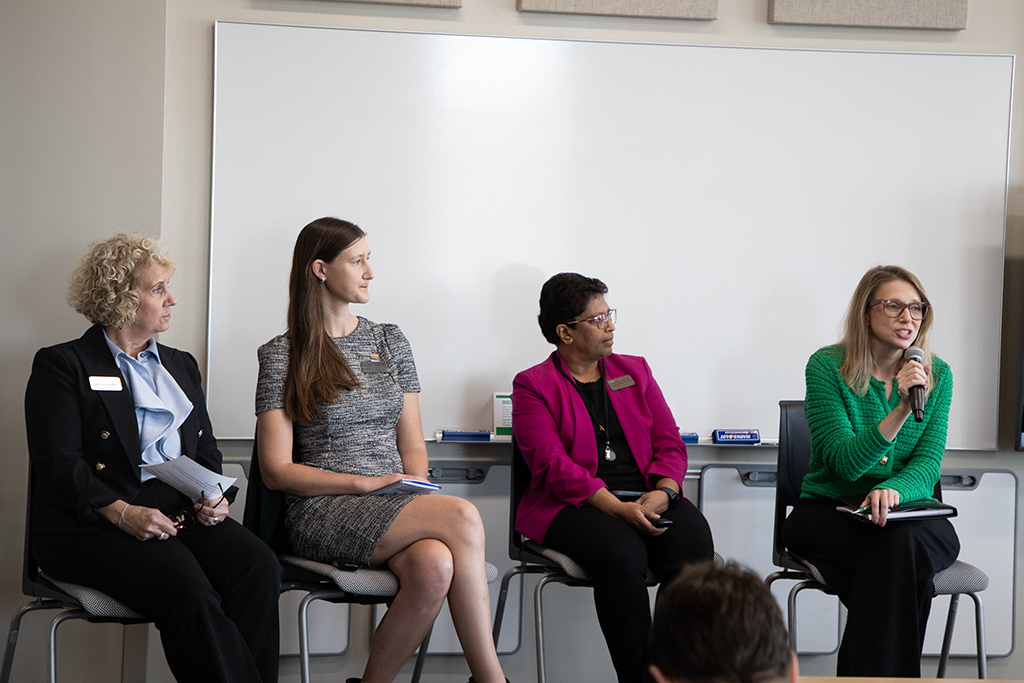
A panel hosted by Randi Tanglen, vice provost for Faculty Affairs, got into some of the “how” of digital accessibility through a question-and-answer period and a demonstration of Blackboard Ultra’s Ally tool. The demonstration was led by Kristi Embry, an instructional designer with TTaDA.
Joining Tanglen were Lynette Krenelka, director of TTaDA; Madhavi Marasinghe, chief information officer; Beth Valentine, equity compliance and education manager; and Lee Ann Rawlins Williams, clinical assistant professor of Education, Health & Behavior Studies, all of whom also represented the Digital Accessibility Steering Committee and working group.
At one point, Williams was asked why faculty should prioritize accessibility measures as they’re thinking about their courses.
“Disability is the one group you can join at any time, regardless of who you are,” she said. “For me, looking at Blackboard Ultra and all we have going on, as a faculty member, I myself have asked ‘Why?’”
Williams acknowledged that starting the digital accessibility journey is a challenge — going from limited awareness to fluency requires an ongoing dialogue between faculty members to then share ideas and hold accessibility as a quality standard in their profession.
She advised her peers to “keep it simple” and focus on personal strengths or curiosities to take the goals of “Strive for 85” one step at a time. She added that she’s learned a great deal about PDFs, as an example, given how often she uses the file type in her courses.
Krenelka urged faculty to check out available resources through TTaDA, including how-to articles and “short and sweet” videos that can help with learning best practices for accessible content.
Deque University is another option the University opened to all faculty and staff this summer. Deque teaches digital accessibility principles in short, self-paced courses on several content areas and file types.
Editor’s note: The Accessible UND webpage has several links to guidance on document types, website content and other media.
Speaking on behalf of University IT, Marasinghe shared that Adobe enterprise licenses have been rolled out to all staff and faculty, including Adobe Acrobat Pro, which is a tool that can be used to make PDFs fully accessible.
She also indicated that UIT is investigating other possible solutions — external to UND — that faculty and content creators can use to accomplish the “big lift” of meeting Title II compliance.
“We are trying to find resources that we can keep in our back pocket for when we need it, then we can put it into action, because spring is around the corner,” Marasinghe said. “But we’re doing our best to make sure you will have the resources you need.”
Marasinghe also said that the University is on track to install assistive technologies in all classrooms — a project that has been ongoing since last fall.
Foundation for accessibility
Also, during the panel, Tanglen asked Valentine, “Why 85?”
As mentioned above, “Strive for 85” refers to UND’s goal of achieving a Blackboard Ally score of 85% or higher for spring 2026 course content by the start of the spring 2026 semester.
“We picked 85 because it utilizes an existing tool,” namely Blackboard Ally, responded Valentine. “It’s not perfect. No automatic checker is. But it establishes a foundation and gets us started on the work.
“By getting course documents to 85%, your course is going to be more accessible than it was. We’re looking to start the journey, build upon progress and get to where digital content is accessible for all students, regardless of ability status.
“This is a good steppingstone.”
She also assured faculty that now is the time to get familiar with Ally and to get into the habit of checking accessibility scores.
“Don’t panic thinking you have to fix everything between now and next Monday at 4 p.m.,” Valentine remarked, referencing the official start of fall classes.
####
>> Questions or comments about the UND LEADS Strategic Plan? Your thoughts are welcome! Please contact Ryan Zerr, associate vice president for Strategy & Implementation, or Anna Marie Kinney, coordinator of the University Writing Program, the co-chairs of the UND LEADS Implementation Committee. You also may offer your thoughts by visiting the UND LEADS Strategic Plan home page and clicking on the “Provide your feedback” link.
Thank you for your support of the UND LEADS Strategic Plan!