From chemical signatures to forensic solutions: Darshil Patel’s research at UND
By Mason Clobes
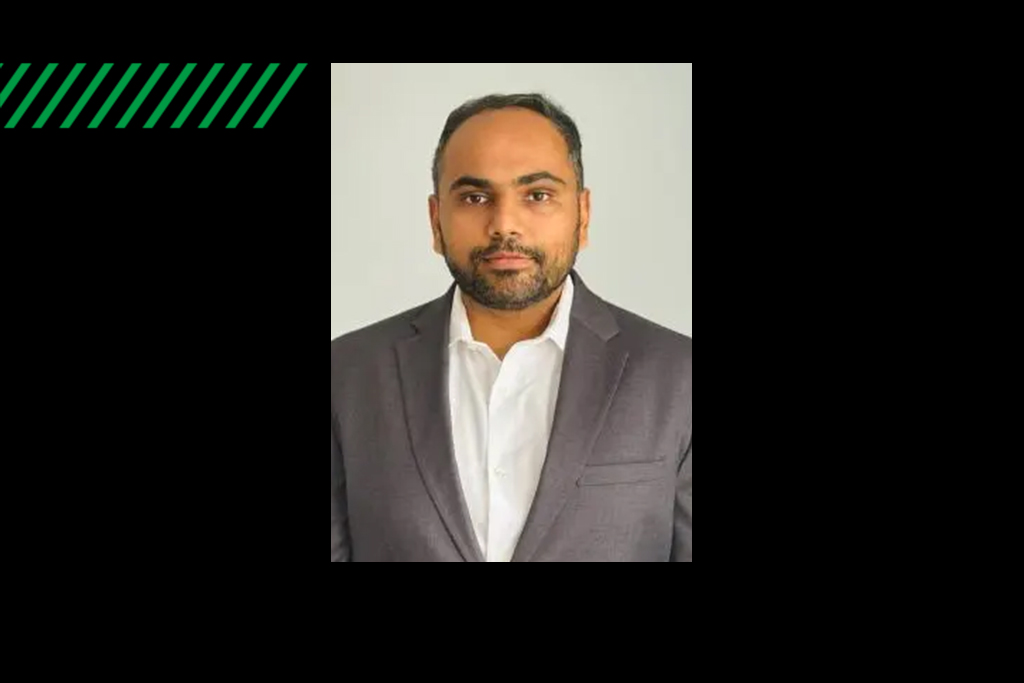
Darshil Patel, assistant professor in the Department of Criminal Justice at UND, believes forensic science is often about finding answers in places where they are not immediately visible. Patel brings an interdisciplinary research background to UND. His work has taken him from specialized human-remains research facilities in Australia and Canada to the development of a new research laboratory at UND where students are becoming involved in projects that apply analytical chemistry to real-world forensic and environmental questions.
Much of Patel’s research focuses on the chemical signatures produced during decomposition. Early in his career, he studied the chemicals released during the first 96 hours after death and how those signatures could be used to locate human remains in challenging environments. His research has examined a variety of environments including air, soil, water, burials and submerged remains. The goal is to understand which chemical markers can indicate the presence of human remains.
The work is particularly challenging because human decomposition is far less predictable than a typical chemical reaction. Unlike controlled laboratory reactions, decomposition can occur in many ways depending on the composition and environment of the body. Patel describes the process as nonlinear, making the ability to capture and interpret its chemical signatures a complex analytical problem.
At UND, Patel is expanding this research while establishing his laboratory. One current project examines persistent organic pollutants in snow, comparing samples from agricultural and urban environments. The project brings together researchers from forensic science, chemistry and biology and uses a solvent-free extraction approach to investigate pollutants present in snow. His students are also taking on research projects of their own. Patel currently advises two graduate students, each working on questions that connect analytical chemistry with practical forensic applications.
One student is developing methods to analyze different types of ink without damaging the original document. The research could help distinguish sources of ink and provide preliminary chemical signatures, useful when examining questioned documents or potential forgeries. As a nondestructive technique, documents can remain available for additional analyses.
A second graduate student is investigating the use of hydrogen rather than helium as a carrier gas in gas chromatography-mass spectrometry. Helium is widely used in analytical laboratories, but its cost and availability can make it challenging to rely on. The project examines whether switching to hydrogen changes mass spectra and, importantly, whether analytical results remain defensible when compared with existing spectral libraries.
For Patel, these projects are about more than producing research results. They are opportunities for students to develop the fundamental skills that allow them to adapt to new problems and career paths.
“What if I only show you how to do a drug analysis, but you never get a job in a drug lab? You will feel much less than enough, and your sense of security will diminish immediately. But if you teach someone to fish, they can fish anywhere they would like.” Patel remarked.
His teaching philosophy emphasizes understanding the underlying principles of analytical techniques before moving into specialized forensic applications. Students who understand how an instrument works, how extraction occurs, and how chemical compounds behave can apply those skills to a wide range of samples and industries.
Too often, a student’s first job does not follow the exact path they initially envisioned. Patel wants students to leave UND with skills that can transfer from forensic laboratories to environmental laboratories and other analytical settings.
His research environment reinforces that philosophy. At UND, Patel is already collaborating across chemistry, biology and forensic science while his analytical techniques provide opportunities to approach questions from multiple perspectives. His longer-term goal is to build additional collaborations with researchers in Canada and Australia as his laboratory becomes more established.
Patel said he measures the value of his research not only by what it reveals, but by where it can take his students. He is motivated by the possibility that his work could help identify even one missing person or make a difference in one person’s life. Increasingly, however, he sees his students’ development as an equally important measure of impact. His research is a way to give students the tools to move forward, whether that means continuing in forensic science, entering another analytical field or applying their knowledge to questions that have not yet been asked.