December Wellness Spotlight
Winter Travel Safety

Winter in the Midwest can bring the most beautiful snowfalls that unfortunately can lead to some dangerous travel conditions. Each year thousands of accidents occur due to snow, ice, and reduced visibility. According to the U.S. Department of Transportation, more than 116,800 people are injured in vehicle crashes on snowy, slushy or icy pavement annually. Preparing for these conditions ahead can mean a safer way home for you, your passengers, and the people we meet out on the road.
When a blizzard is in the forecast, the safest choice is often to stay home and wait for conditions to improve. Driving in sever weather when it isn’t absolutely necessary not only puts yourself at risk but other drivers and the first responders who may need to assist you. If you must travel during hazardous conditions, be sure to take extra precautions to protect yourself and others.
Preparation Before You Leave
Before you hop in the car, make sure to check the road conditions ahead so you are well prepared. Notify someone of where you are traveling and approximately what time you plan on arriving. Its also important to allow yourself enough time to get to your destination. Rushing to your destination can leave more room for errors on the road. Clear off all snow from all windows and side mirrors. Make sure to fill up your gas tank before you hit the road. If you become stranded, having plenty of fuel will allow you to safely run the engine to stay warm. Pack emergency supplies with you in the vehicle and fully charge your phone before heading out on your drive. While driving, it is important that you break and accelerate slowly. Never use your cruise control and reduce your speed for the road conditions.
Stuck in the Ditch
If you do find yourself in the ditch, it is important to remain calm and assess the situation. Call 911 and do your best to tell them where you are. If you are in a low visibility area, it is important to remain in your vehicle with your seatbelt on. If you are in a ditch with deep snow, you may need to clear snow away from your exhaust pipe to prevent carbon monoxide poisoning. Exiting your vehicle in a low visibility area can cause you to become disoriented in the blizzard. Low visibility also may mean that passing cars might not be able to see you. Turn on your vehicle’s flashers or use an orange safety flag to alert others. If you do have to step out of the vehicle, it is important that you don’t stand directly in front or behind the vehicle in case there is another car approaching. While outside of the car, use high visibility clothing or material. This could be a constructions vest or any clothing that is bright red or orange.
When weather gets bad, it may take first responders or tow trucks extra time to get to you. To keep you warm while also conserving fuel, it is recommended to run your vehicle for 10 minutes every hour. Keep water and non-perishable snacks in car that are easily accessible. It can be hard to keep bottle of water from freezing in your car. To avoid this, you can store water in insulated water bottles or store them in an insulated cooler. Sports drinks such as Pedialyte or Gatorade have a lower freezing temperature than water and may be easier to store. Storing these items in the trunk does not make them easily accessible and may require you to leave the vehicle to retrieve them. Think about storing these items closer to you.
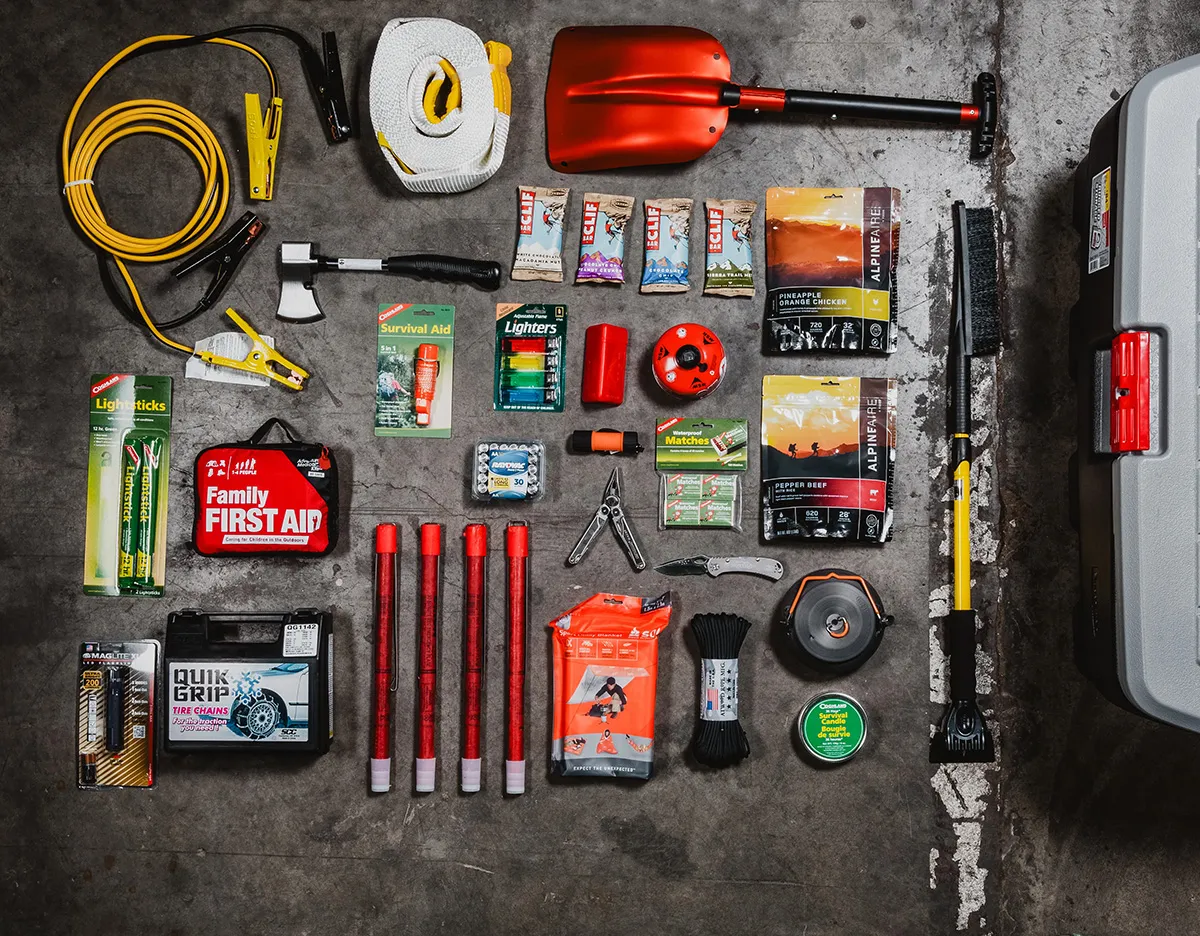
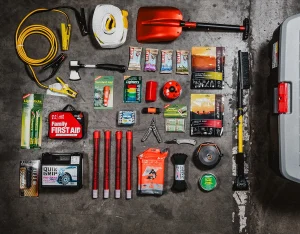 “Do it Yourself” Winter Survival Kit
-
-
- First Aid Kit
-
- Water and Snacks
- Boots, Hat, Gloves
- Blanket
- Flashlight and Extra Batteries
- Cellphone Charger
- Shovel
- Ice Scraper
- Jumper Cables
- Tow Rope
- Cat Litter
- Orange Vest, Cone, or Flag
Get Home Safe
Winter weather can be unpredictable. Remember, although you may feel confident with your ability to drive in the snow, we aren’t able to account for those we meet on the road. Taking a few extra precautions before heading out can help ensure you and your loved ones get to your destination safely.