PHOTOS: A day in the life at CEM
Editor’s note: The following photo collection will be featured in the 2026 UND ENGINEERING Magazine. A link to the magazine will be included here once the digital copy is available.
What does a day in the life at the College of Engineering & Mines look like?
It looks hands-on, dynamic and rooted in work that makes a real impact. Whether in one-of-a-kind labs, vibrant campus spaces, or on national stages, the CEM community unites and excels — embodying what it truly means to be #UNDproud.
This small photo collection captures those defining moments. The range of experiences reflects a college where learning is active, challenge fuels growth, and every day brings fresh opportunities to connect and excel.
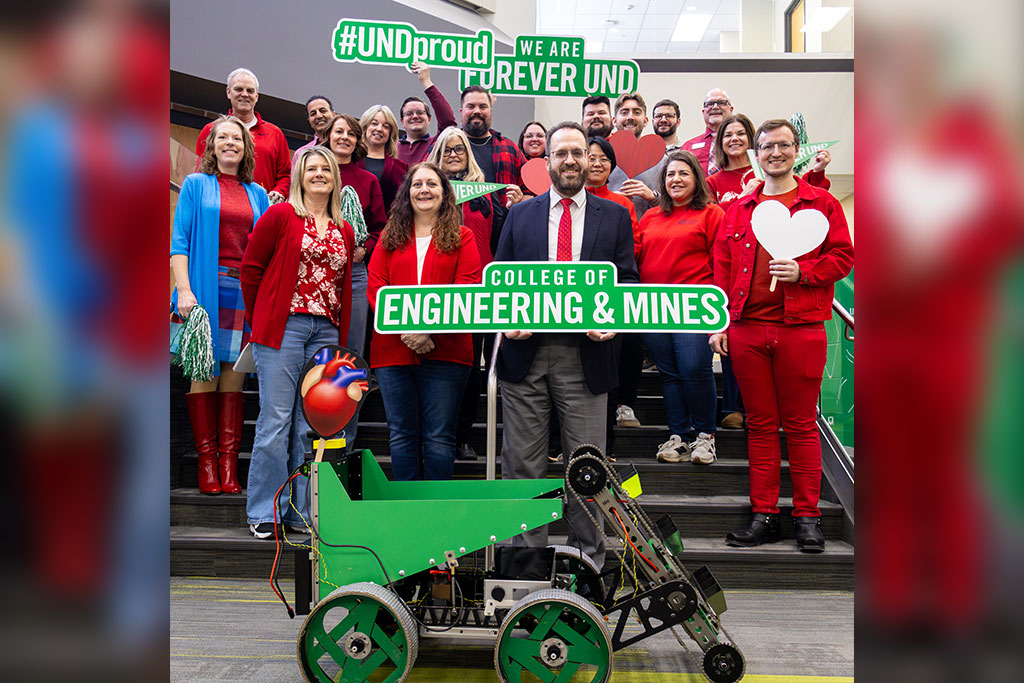
CEM swaps green for red on Wear Red Day
Faculty, staff, and students come together to participate in Wear Read Day. Celebrated on the first Friday of February, the day raises awareness that cardiovascular disease is the number one killer of women. The college group photo won second place in the “School Spirit” category during a campus-wide call for team photos.
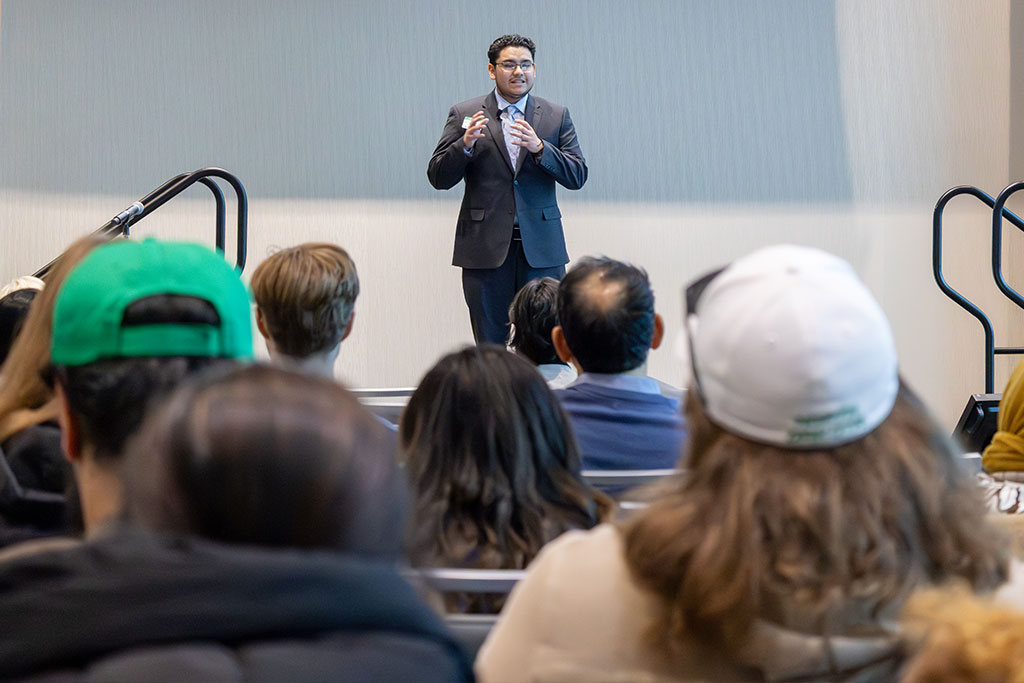
Championing UND’s Three Minute Thesis
Imagine compressing years of research, countless lab hours and stacks of data in the same way the earth makes diamonds: under pressure, in a manner that burns away the excess and leaves only the tightest, purest components as a result. Then present those components in 180 seconds. That was what was asked of students participating in the School of Graduate Studies’ annual Three Minute Thesis (3MT) competition, an event which asks students to translate complex research into accessible presentations that anyone can understand — using only their voice, body and a single PowerPoint slide. Taking first place was Environmental Engineering graduate student Johan Dominguez Lopez, who presented research on a hot-button issue: “forever chemicals.”
CEM contributes to the UND Community Quilt project
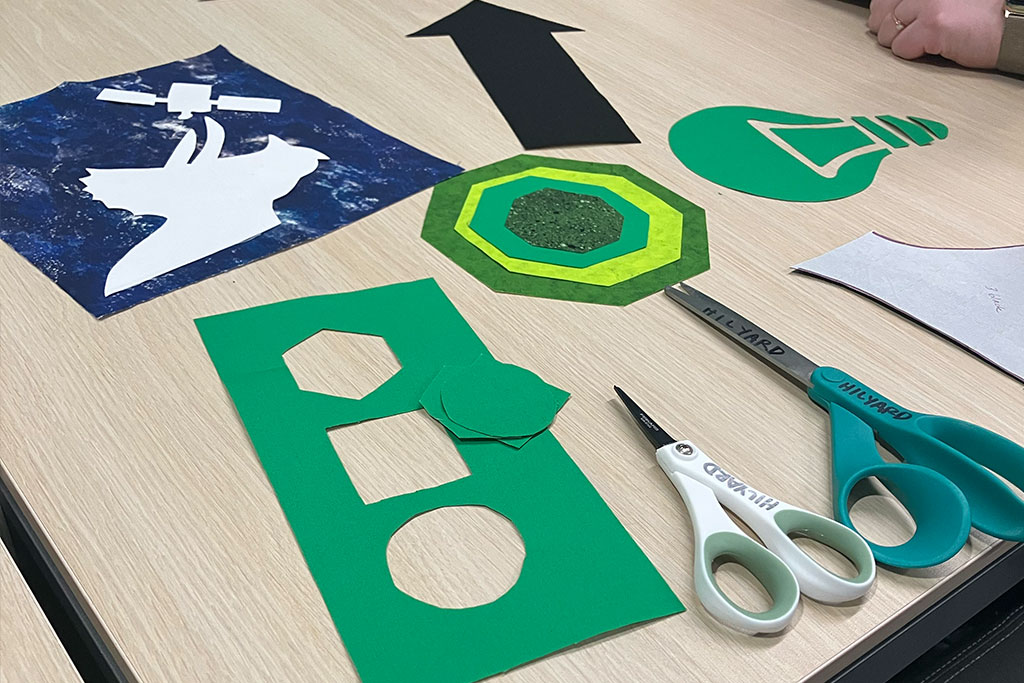
Through May 2026, departments across campus are collaborating to design 144 squares telling the story of UND. CEM has contributed six squares to the quilt, each created through the ideas and input of students, faculty, and staff. Shown in the photo above are the squares mid-assembly, including one in the upper-left corner, which was entirely designed by online Geology student Zach Klein. In his design submission, Klein describes what it means to him: “A dinosaur regarding a satellite in the night sky — symbolizing the connection between our knowledge of the past and our advancement into the future.”
Hypersonics research leads to unique opportunities
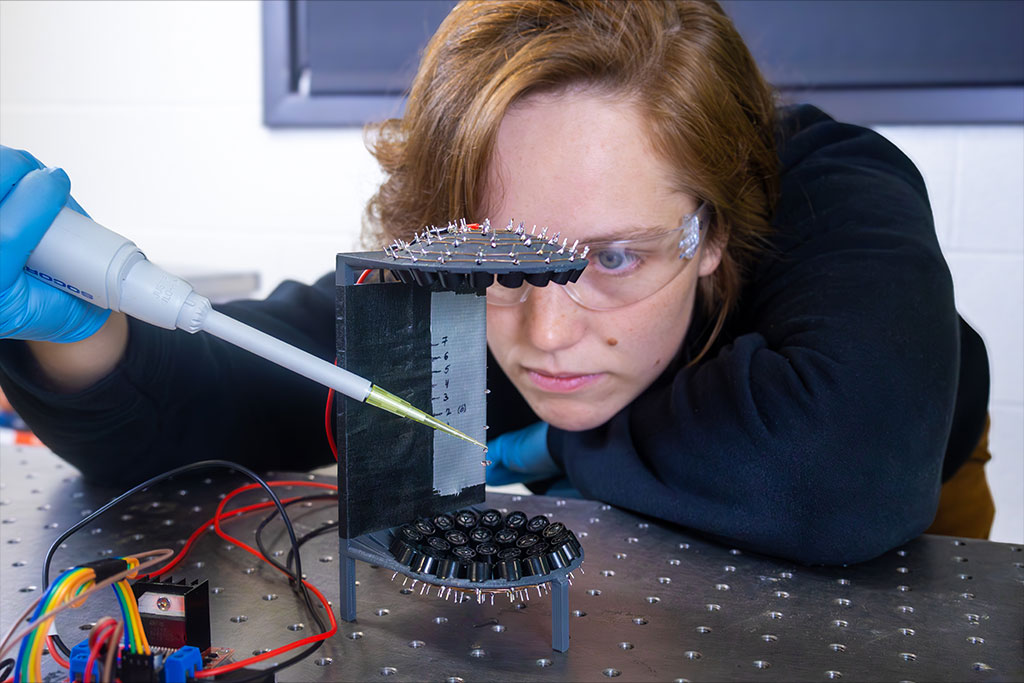
With the skies and celestial bodies above as the center stage for some of our greatest challenges and adventures, UND and North Dakota are playing a major role in hypersonics research. “At UND, we’re tackling an important challenge in hypersonic flight: how weather and atmospheric particles interact with vehicles traveling faster than Mach 5,” explained Hallie Chelmo, a leader in hypersonics research at UND and an assistant professor of Mechanical Engineering. “By combining ground testing with new experimental instruments we’re building ourselves, we’re uncovering fundamental physics that will help make future hypersonic systems safer and more reliable.” Look closely — shown in the photo, a student conducting hypersonics research under Chelmo demonstrates droplets suspended and levitating in the air.
Putting the dino in dino-mite
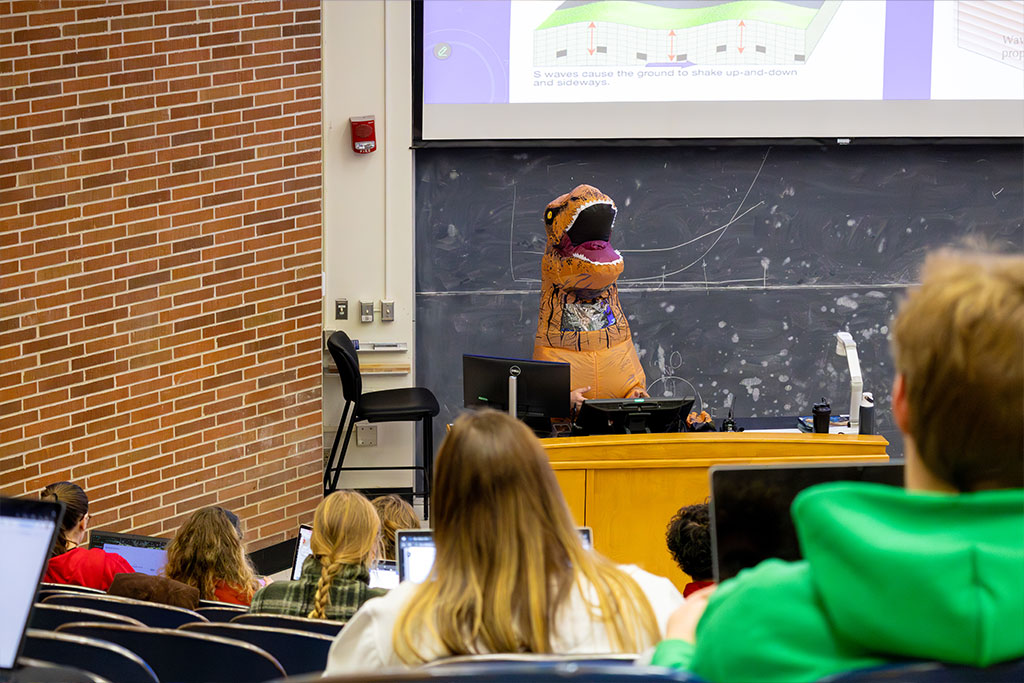
Anna and Josh Crowell, faculty of the Harold Hamm School of Geology & Geological Engineering, raise awareness of UND’s Geology program and paleontology classes in a way that turns heads. On Halloween, the pair donned dinosaur costumes and went around campus, handing out candy to unsuspecting students. Spontaneous discussions ensued when the Crowells asked students if they knew about the Triceratops that resides in Leonard Hall, leading to suggestions of classes and community activities in the Harold Hamm School of Geology & Geological Engineering. Shown in the photo, Josh conducts his regular lectures — in a less-than-regular fashion — in the Leonard Hall Lecture Bowl.
Launching into high altitudes and higher standards
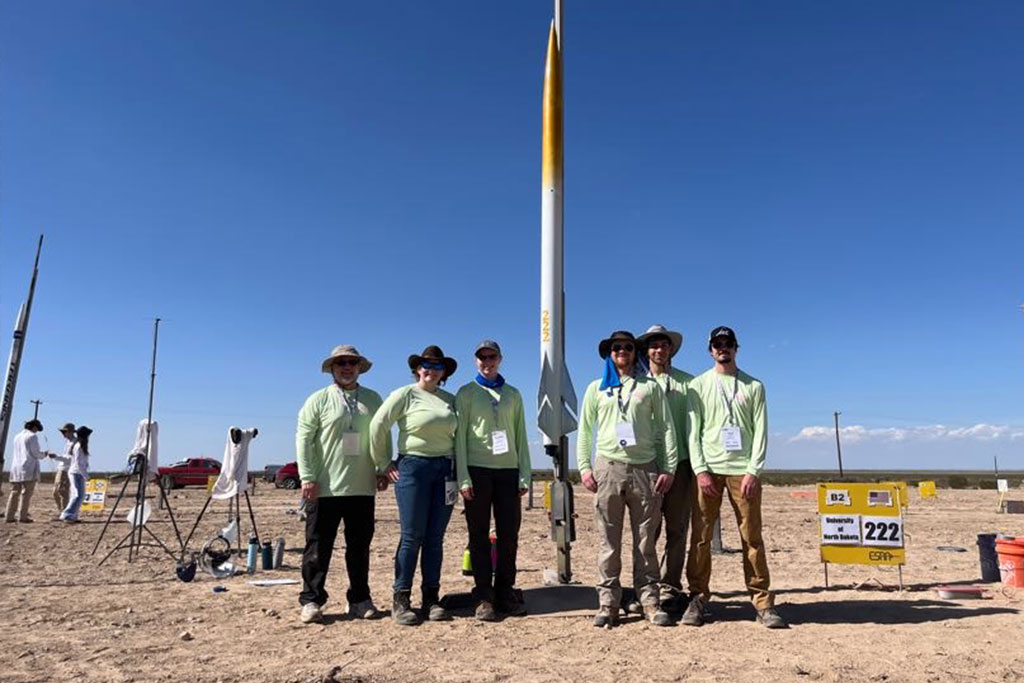
The UND Advanced Rocketry Club doubled down on innovation at the world’s largest rocket engineering competition in Midland, Texas. The desert skies roared to life in June as collegiate rocketry teams from across the globe converged for the 2025 International Rocket Engineering Competition (IREC), drawing in 2,000 students from 143 universities in 22 countries. Among them was the University of North Dakota’s Advanced Rocketry Club (ARC). “Our team chose to enter the 2025 IREC to pursue a higher standard of engineering design, build, and testing,” said Club President Kristian Haugen, a double major in Aerospace and Mechanical Engineering. “This is the world’s largest rocket engineering competition, bringing over 2,000 students from all over the world together to share knowledge and experience in their rocket engineering endeavors.”

Shining bright at the 2026 Winter Olympics
For the first time in its history, UND had a current student competing at the winter games. Paige Jones, a distance student majoring in Biomedical Engineering, competed for Team USA in the sport of ski jumping. “I made the finals for all my events and was also selected for our mixed team, in which we placed seventh,” she recently told UND Today. “This was the goal going into the games, and with all the added pressure that comes with the Olympics, I was proud of tying my best World Championship result (23rd).”
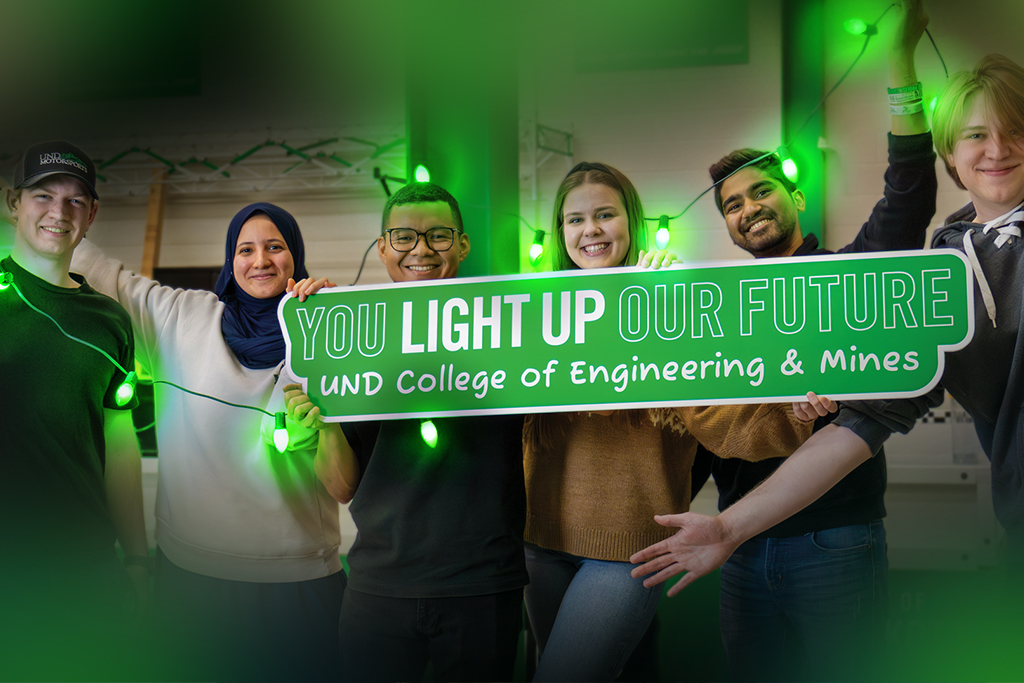
Donors “light up” student futures
Showing gratitude for donors, students came together to say “thank you” in a group photo included in a letter of gratitude.
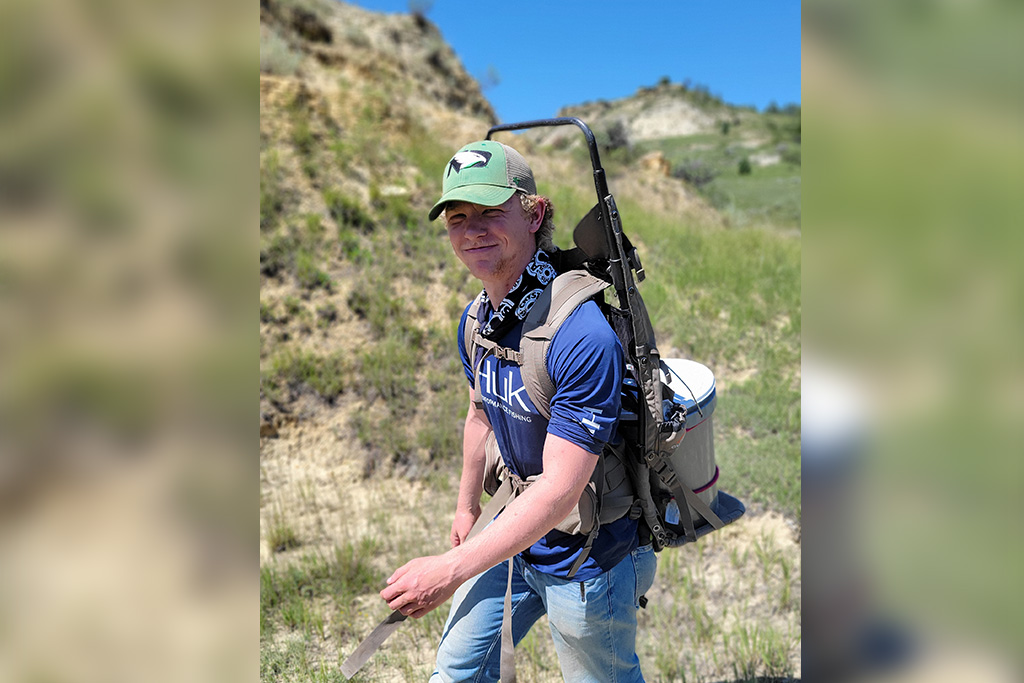
On the lookout for North Dakota’s crocodiles
In early August, the Harold Hamm School of Geology & Geological Engineering ventured into Western North Dakota to dig up crocodile fossils. During the dig, it was discovered that one of the adventurers — who had been involved in similar activities with UND’s paleontologists throughout high school — would be a UND student in the fall semester, taking GEOL 101. “Slick terrain as well as steep ascents and descents made the journey very interesting and memorable,” said Jace Steinberger, a double major in Aerospace Engineering and Mechanical Engineering, who also joined the trip. As shown in the photo above, a task during the trip involved hauling five-gallon buckets of important sediment (needed for lab work) from the site to vans a mile away.
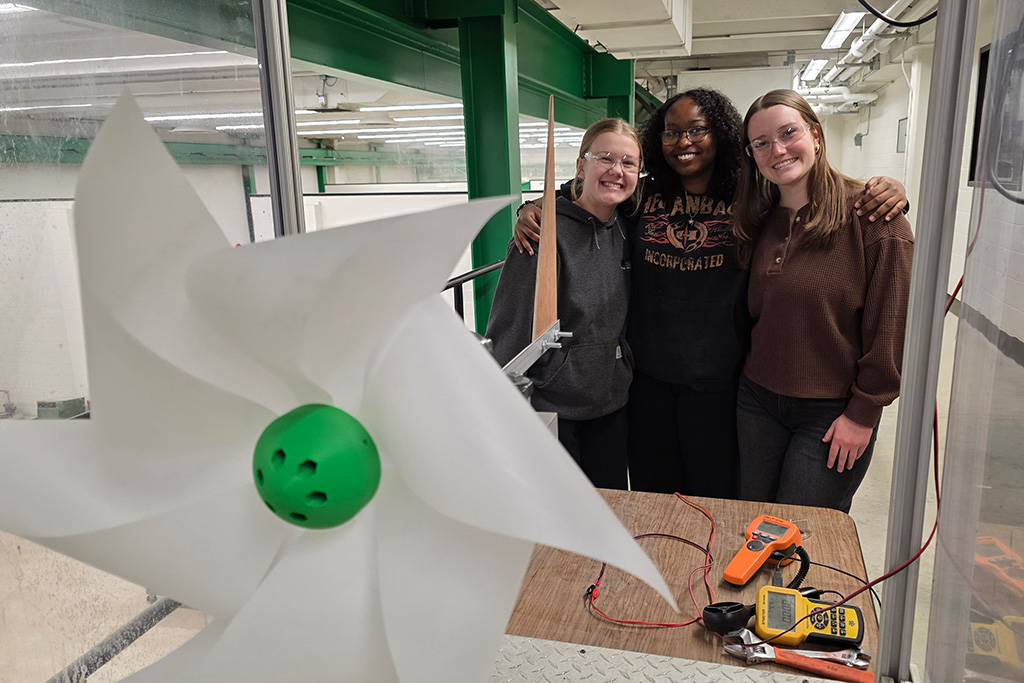
An introduction to mechanical engineering
During ME101 Introduction to Mechanical Engineering — taught by Andrew Dahlen — students design, build and test a small-scale wind turbine. In the photo above, a student group tests their wind turbine in the wind tunnel for the ME101 final project.
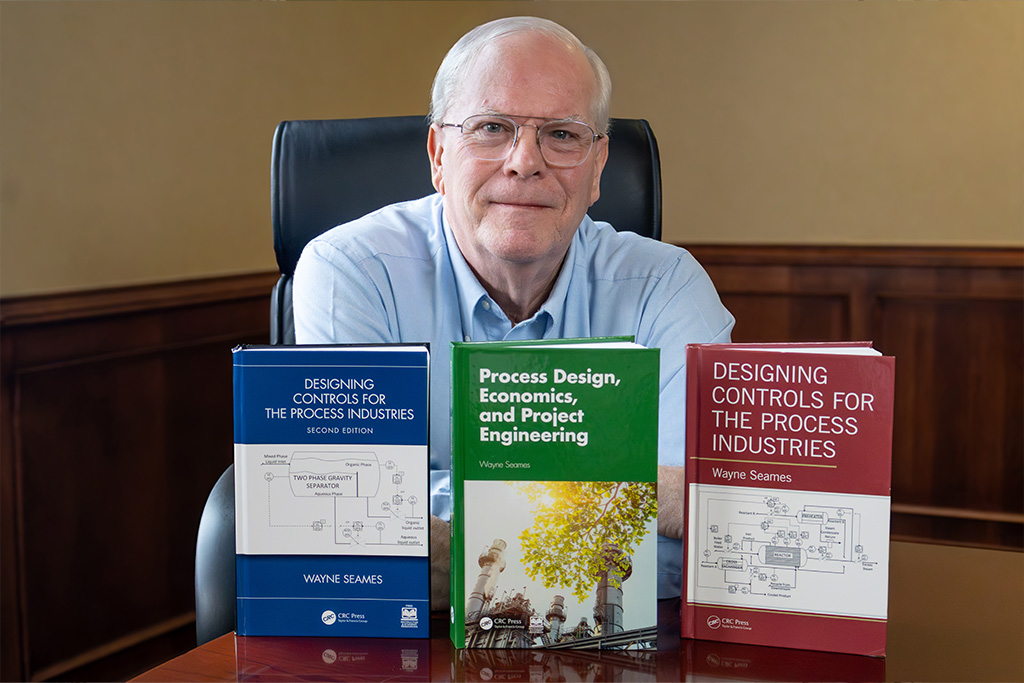
Seames publishes second academic textbook
If you were a UND student in the Department of Chemical Engineering who completed your senior year after 2002, your capstone design courses were taught by Chester Fritz Distinguished Professor Wayne Seames (or by a substitute using his material). He has now organized the contents of those materials into a textbook.
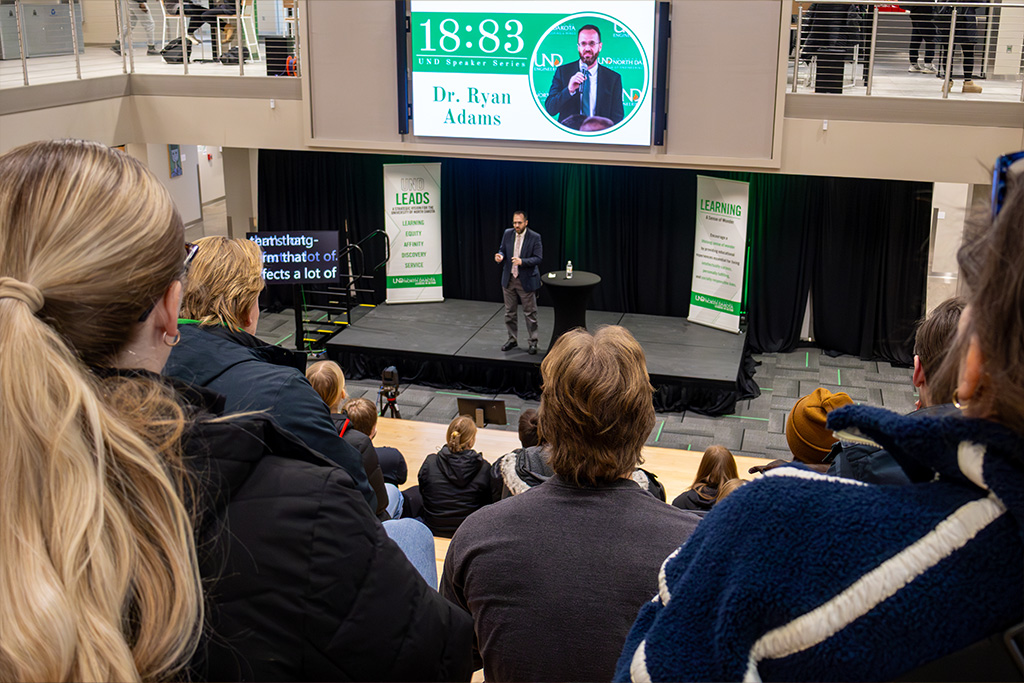
From Newton to iPhones: How collaboration works
Imagine a problem — something major and long-term that affects the world — and think: can it be solved by a single discipline? Ryan Adams, dean of the College of Engineering & Mines, opened with a simple answer: no. For his time on stage at the 18:83 Speaker Series, Adams spoke about the necessity of multidisciplinary collaboration in not only enhancing educational outcomes at places such as UND, but in solving today’s and tomorrow’s problems.
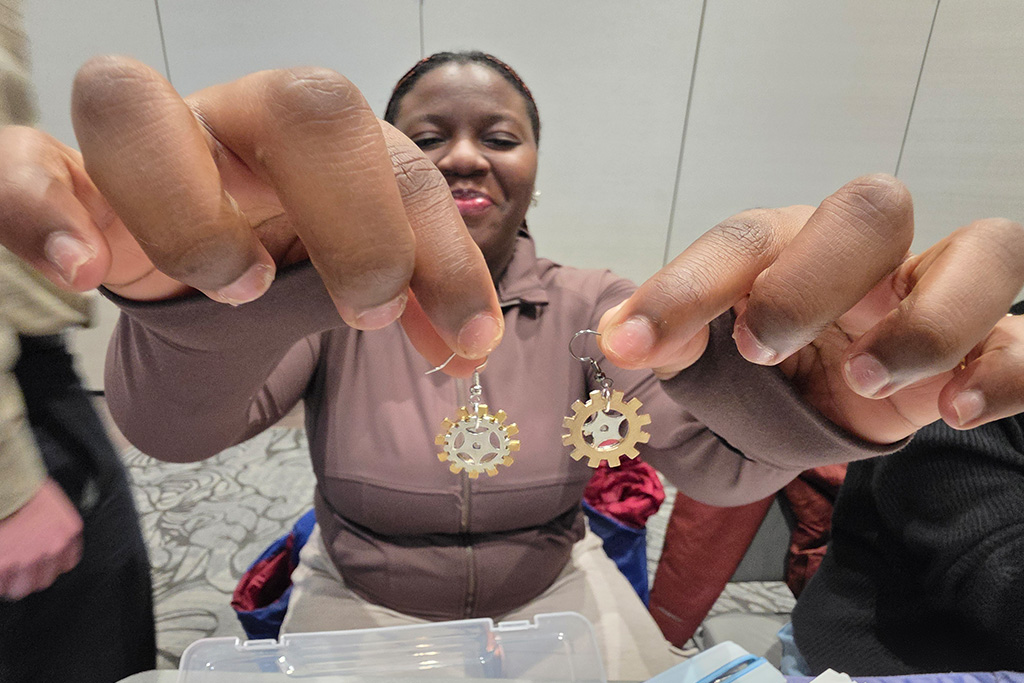
All “gear”-ed up for Engineers Week
CEM student organizations came together to host a carnival to kick off the start of Engineers Week (E-Week) — a national week of recognition for engineers. Organizations set up carnival booths at the UND Memorial Union for all UND students to attend, encouraging awareness and community for those interested in STEM. Shown in the photo, the Society of Women Engineers (SWE) organized a table where students could try their hand at creating the iconic “gearring” — a beloved tradition, described in a special interview with SWE members during E-Week.
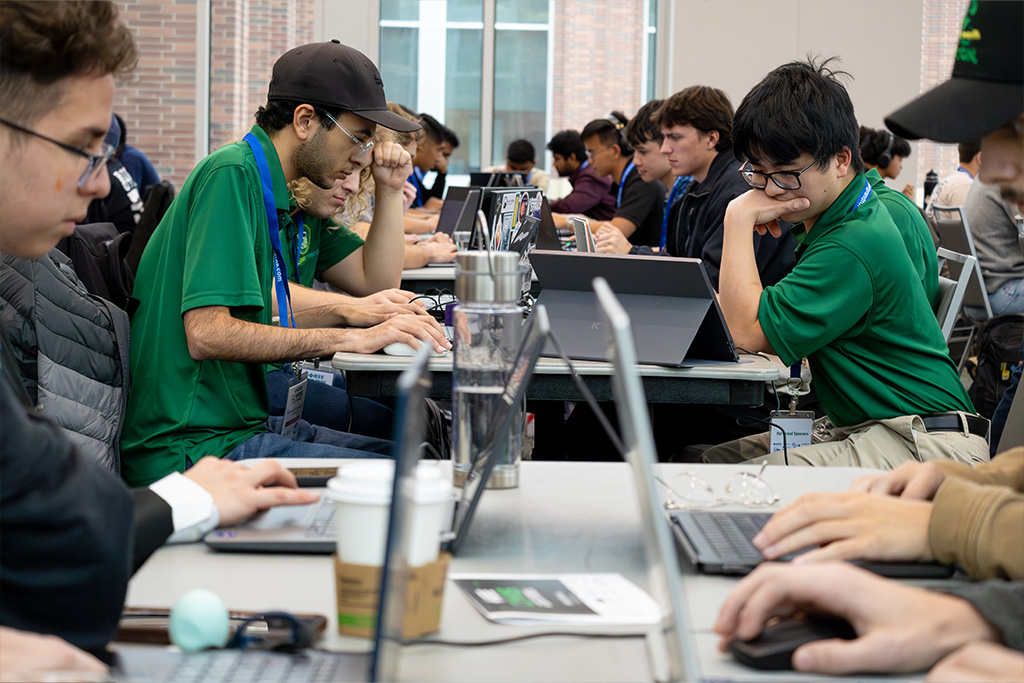
A cyber race to “capture the flag”
The IEEE Cyber Awareness and Research Symposium (CARS) is a premier annual event bringing together researchers, industry leaders, and students to explore cutting-edge cybersecurity challenges and advancements. Organized by the college’s Center for Cyber Security Research, CARS provides a unique platform for collaboration, knowledge sharing and hands-on learning in the evolving landscape of cybersecurity, artificial intelligence, and critical infrastructure protection. With high-profile presenters, workshops, networking and hiring events, and even a cybersecurity Capture-The-Flag (CTF) championship, there’s something for every cyber-minded individual. In the photo above, middle school, high school, and college students compete in the CTF championship.
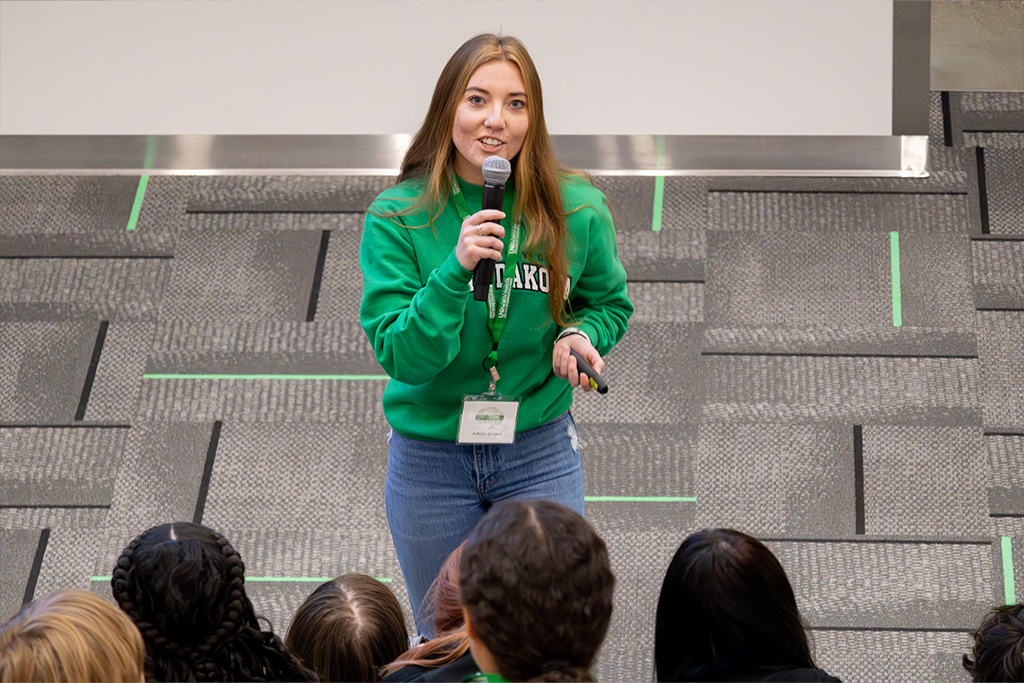
A voice for representation in STEM
On Oct. 9, the Memorial Union social staircase felt like a pep rally for curiosity. Seventh-graders spilled onto campus, ready for BrainSTEM — a full day of hands-on workshops across the University of North Dakota. By day’s end, they’d have extracted DNA from strawberries, programmed light sequences on microcontrollers, built and load-tested spaghetti bridges, explored how robots “see,” and learned why an airplane wing works. In the photo, Civil Engineering student Autumn Bergum speaks to students during the welcoming ceremony in the UND Memorial Union. By sharing her own experiences and stories about finding belonging in STEM, she encouraged students to engage with their interests and connect with others who shared their passions.