How to prepare computer science students for the AI era
UND-led regional discussions inform how the School of Electrical Engineering & Computer Science prepares students for a changing field

What should a computer science graduate know in the 2030s?
That question brought university leaders and industry representatives together for a regional effort initiated by the University of North Dakota. As artificial intelligence changes how people write code and solve problems, educators across five states have been examining what those changes mean for their students, curricula and graduates’ careers.
The effort was launched through the Mountains & Plains University Innovation Alliance (MPUIA), a regional collaboration of universities across North Dakota, South Dakota, Montana, Wyoming and Idaho working together to address complex challenges through shared innovation and partnership.
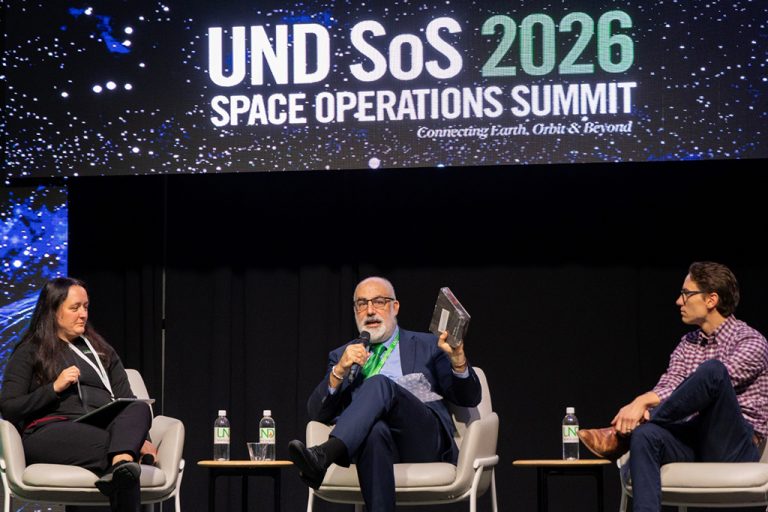
Called “Computer Science of the Future,” the collaboration began with an in-person summit hosted by UND in October 2025. It connected the institutions across five states to explore shared concerns about computer science education.
Moh Rasouli, director of UND’s School of Electrical Engineering & Computer Science, said the effort grew from concerns about declining enrollment, changing perceptions of computer science and AI’s rapid influence on the field.
“We wanted to better understand what a computer science graduate should know in the 2030s and how our programs may need to evolve in response to AI, changing employer expectations, and student perceptions of the field,” Rasouli said.
A recurring theme in the discussions was the continued importance of strong computer science fundamentals — alongside the ability to work thoughtfully with AI.
Students need to understand how to use AI tools, evaluate and test their output, identify errors and determine whether a proposed solution fits the problem. Those abilities require students to reason about code and systems, even when AI helps produce them.
“One recurring theme was that students will still need strong fundamentals, but simply being able to write code may no longer be enough,” Rasouli said.
Employers also continue to emphasize problem-solving, communication and adaptability, he added. For educators, that raises questions about both what students learn and how they demonstrate their understanding.
Following the summit, participants continued through virtual meetings and working groups focused on introductory curriculum, advanced curriculum, and marketing and perceptions of computer science. Their discussions addressed AI integration, curriculum modernization, assessment, industry expectations and hands-on learning.
UND helped coordinate those conversations and shared meeting outcomes and notes.
Learning Across State Lines
The collaboration brought together representatives from UND, North Dakota State University, Valley City State University, Dakota State University, South Dakota Mines, the University of Wyoming, Montana State University, Montana Tech, the University of Idaho, Boise State University, Idaho State University, Brigham Young University–Idaho and Northwest Nazarene University, among others.
The effort was a collaborative regional initiative, rather than a separately funded project with a fixed timeline. Its value, Rasouli said, came from connecting institutions facing similar questions about enrollment, workforce needs and program modernization.
“Working together allows us to compare experiences, learn from each other and engage regional employers rather than each institution trying to solve the same problems independently,” he said.
The group’s regular monthly meetings have concluded, but the discussions continue to inform UND’s work.
As SEECS reviews and updates its curriculum, faculty are drawing on what they learned about AI use in courses, project-based learning, assessment and industry engagement. Those conversations are helping the School consider how to prepare students for future careers while preserving the foundations of a computer science education.
“The goal has been to help us make informed decisions about where computer science education needs to go rather than simply reacting to AI as it develops,” Rasouli said.
UND is also exploring possible ways to continue the collaboration through research. One preliminary idea would involve one or two Ph.D. students studying the future of computer science education with faculty from multiple institutions. That work has not yet launched.
For now, the regional effort has given UND additional perspectives to guide its curriculum review — and a shared question to keep at the center of that work: What will students need to know to succeed in the decades ahead?
Written by Paige Prekker // UND College of Engineering & Mines