UND selected for inaugural U.S. Department of Energy Genesis Mission project
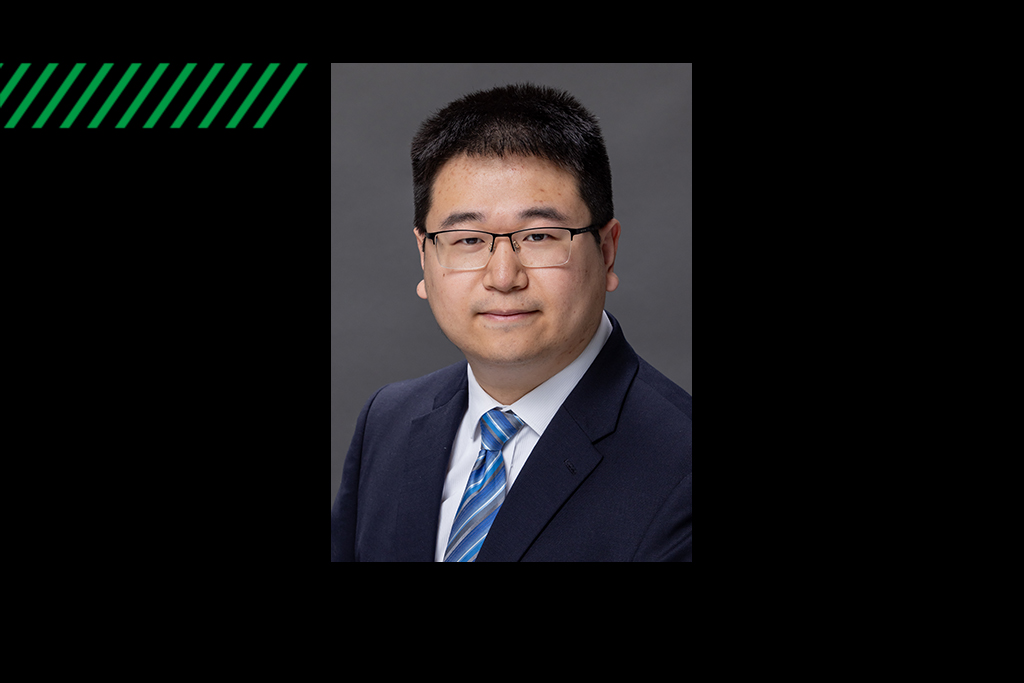
The University of North Dakota has been selected for the inaugural cohort of projects supported by the U.S. Department of Energy’s Genesis Mission, making UND the only institution in North Dakota chosen to participate in the national initiative.
The project, led by Jielun Zhang, assistant professor in the College of Engineering & Mines’ School of Electrical Engineering and Computer Science, will develop new methods to improve the security and reliability of artificial intelligence models used in battery management systems and other energy science applications. Jueming Hu, assistant professor of mechanical engineering at UND, serves as co-principal investigator.
The Genesis Mission is a historic national initiative led by the U.S. Department of Energy that is building the world’s most powerful integrated science discovery platform. By uniting government, industry, academia and philanthropy, it is accelerating breakthroughs in energy, scientific discovery and national security through a new platform that combines artificial intelligence, supercomputing, quantum systems and advanced scientific instruments.
“Our researchers are tackling complex challenges that have the potential to improve lives and strengthen critical infrastructure,” said Vice President for Research and Economic Development Scott Snyder. “Selection for the inaugural Genesis Mission reflects the quality of research taking place at UND and our commitment to advancing discoveries that serve our state and the nation.”
The project, titled “Adversarial Robustness Framework for AI Models in Battery Management and Energy Science Workflows,” addresses an increasingly important challenge as artificial intelligence becomes more widely used to monitor and manage lithium-ion batteries that power electric vehicles, support the electric grid and provide backup power for critical facilities.
Read more about the project at UND Today.