July Wellness Spotlight
It’s Raining Cats & Dogs!
The summertime brings nice sunny weather, but it also brings thunderstorms. Every year approximately 18-51 people are killed and over hundreds are seriously injured by severe thunderstorms despite advance warning (FEMA, 2018). As summer months approach, rain can turn quickly to turn to a thunderstorm at a moment’s notice. To be safe during the hot summer months it is important to be weather conscious and prepared. The July Wellness Spotlight includes information on identifying a thunder storm and how to be prepared.
Know the Difference between Watch & Warning
A thunderstorm is considered severe if it produces hail at least 1 inch in diameter or has wind gusts of at least 58 miles per hour. If you can hear thunder, you are close enough to be affected by lightning. Every thunderstorm produces lightning, which kills more people each year than tornadoes or hurricanes. Heavy rain from thunderstorms can cause flash flooding, and high winds can damage homes and blow down trees and utility poles, causing widespread power outages. Flash flooding is the most detrimental risk of thunderstorms as more than 75 deaths occur annually (FEMA, 2018).
Severe Thunderstorm Watch
Severe thunderstorms are possible in and near the watch area. Stay informed and be ready to act if a severe thunderstorm warning is issued.
Severe Thunderstorm Warning
Severe weather has been reported by spotters or indicated by radar. Warnings indicate imminent danger to life and property.
Preparing for Thunderstorms & Severe Weather
- Discuss thunderstorm safety and lightning safety with all members of your household and make a plan – planning guide
- Pick a safe place in your home for household members to gather during a thunderstorm. Make sure this area is away from windows, skylights and glass doors that could be broken by strong winds or hail
- Put together an emergency preparedness kit that includes: first aid, blankets, water, flashlights with extra batteries, & non-perishable items
- Make trees and shrubbery more wind resistant around your home by keeping them trimmed and removing damaged branches
- Learn about your local community’s emergency warning system for severe thunderstorms and download weather apps to keep up tabs on the weather at all times
- Enable emergency alerts on your phone – check the settings on your mobile device (may be called “Government Alerts” or “Emergency Alert Messages”)
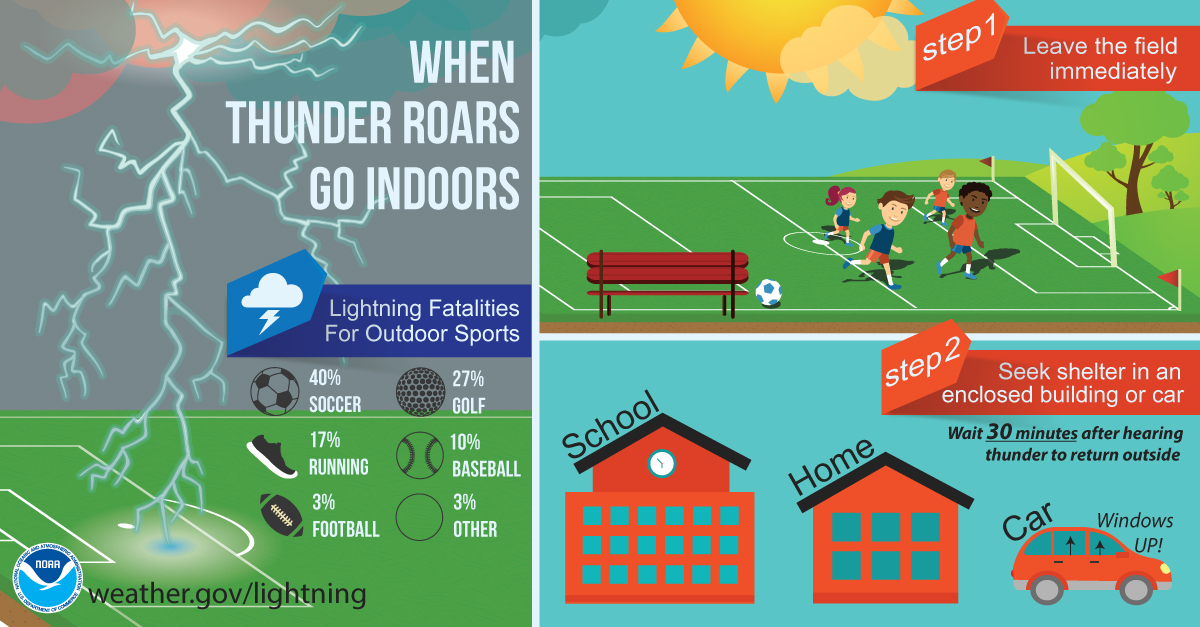
When Thunder Roars, Go Indoors!
- Listen to local news or NOAA Weather Radio for emergency updates. Watch for signs of a storm, like darkening skies, lightning flashes or increasing wind.
- If a severe thunderstorm warning is issued, take shelter right away! If you are in a vehicle close the windows and sunroofs.
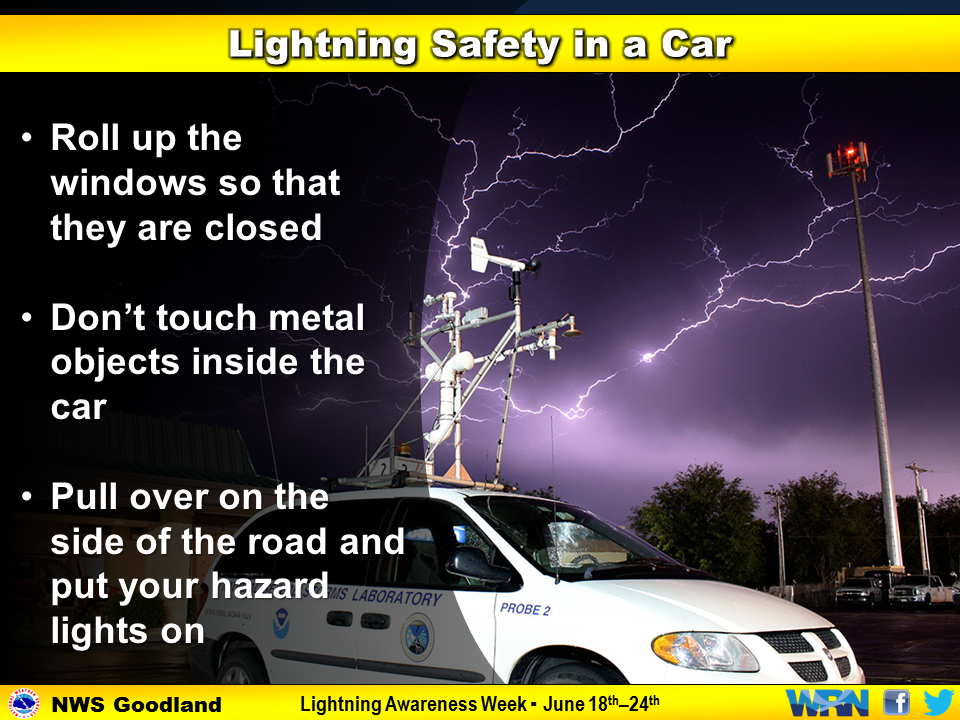
- If you are driving, try to safely exit the roadway and park. Stay in the vehicle and turn on the emergency flashers until the heavy rain ends. Avoid touching metal or other surfaces that conduct electricity in and outside the vehicle.
- Turn Around. Don’t Drown! Avoid driving through flooded roadways. Even 6 inches of fast moving water can knock you down, and 1 foot of moving water can sweep your vehicle away.
- Avoid using electronic devices connected to an electrical outlet
- Avoid running water
- If you are outside and cannot reach a safe building, avoid high ground; water; tall, isolated trees; and metal objects such as fences or bleachers. Picnic shelters, dugouts and sheds are NOT safe.
- After the storm – pay attention to authorities for information on whether it’s safe to go outside. Watch for fallen power lines and trees- report these immediately.
References:
https://www.ready.gov/thunderstorms-lightning


