August Wellness Spotlight
Protect Yourself and Others: Get Vaccinated!
August is National Immunization Awareness Month! Vaccines are one of the greatest success stories in public health, preventing an estimated 3.5-5 million deaths each year (World Health Organization, 2024). Staying up to date on vaccines is essential for protecting individuals and communities from infectious diseases, reducing the burden of illness and mortality, and promoting overall public health. Learn more about staying up to date on vaccines in the August Wellness Spotlight.
How Do Vaccines Work?
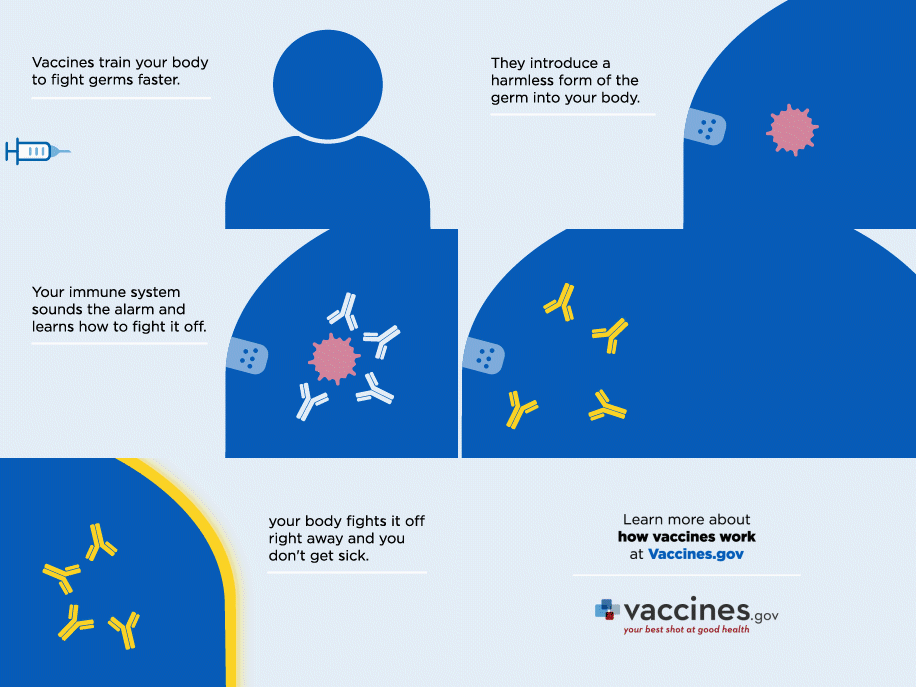
Vaccines provide long-lasting immunity to serious diseases by helping your immune system fight infections faster and more effectively. When you get a vaccine, it triggers your immune response to help your body fight off and remember the germ so it can attack it if the germ ever invades again.
Safety
Before vaccines are distributed to doctors’ offices, they go through rigorous testing to make sure they are safe to use. Vaccines are tested over several years before getting authorized by the Food and Drug Administration (FDA). Once a vaccine is being distributed, the CDC and FDA monitor any possible side effects reported through the Vaccine Adverse Event Reporting System (VAERS) and other vaccine safety systems. If professionals see that a vaccine may be causing a problem, the CDC and/or FDA can:
- Change vaccine labels or packaging
- Issue safety alerts
- Inspect manufacturers’ facilities and records
- Withdraw recommendations for the use of the vaccine
- Revoke the vaccine’s license
Vax Stats
- Vaccines prevent 3.5 – 5 million deaths every year from diseases such as diphtheria, tetanus, pertussis, influenza, and measles
- We now have vaccines to prevent more than 20 life-threatening diseases, helping people live longer, healthier lives
Human Papillomavirus (HPV) Vaccine
- This vaccine has the potential to prevent more than 90% of HPV-attributable cancers
- Since the inception of this vaccine in 2006, rates of HPV cancers and genital warts have decreased 88% among teen girls and 81% among young women
Flu Vaccine
- The effectiveness of the flu vaccine varies each year, depending on how well it matches the flu viruses that are going around
- Getting the vaccine can reduce your risk of visiting a doctor for the flu by 40-60%
- In 2022-2023, the flu vaccine prevented an estimated 31,000 hospitalizations and 2,479 deaths
Diphtheria, Tetanus, and Pertussis (Tdap) Vaccine
- Currently, diphtheria and tetanus are at historic low rates in the United States
- A complete vaccine series has the clinical efficacy of virtually 100% for tetanus and 97% for diphtheria
- In children who get all 5 Tdap doses on schedule, 98% are fully protected within the first year following the last dose and 71% are protected 5 years after last dose
Measles, Mumps, and Rubella (MMR) Vaccine
- Two doses of MMR vaccine are:
- ~97% effective at preventing measles
- ~86% effective against mumps
- ~90% effective against rubella
Why Should I Get Vaccinated?
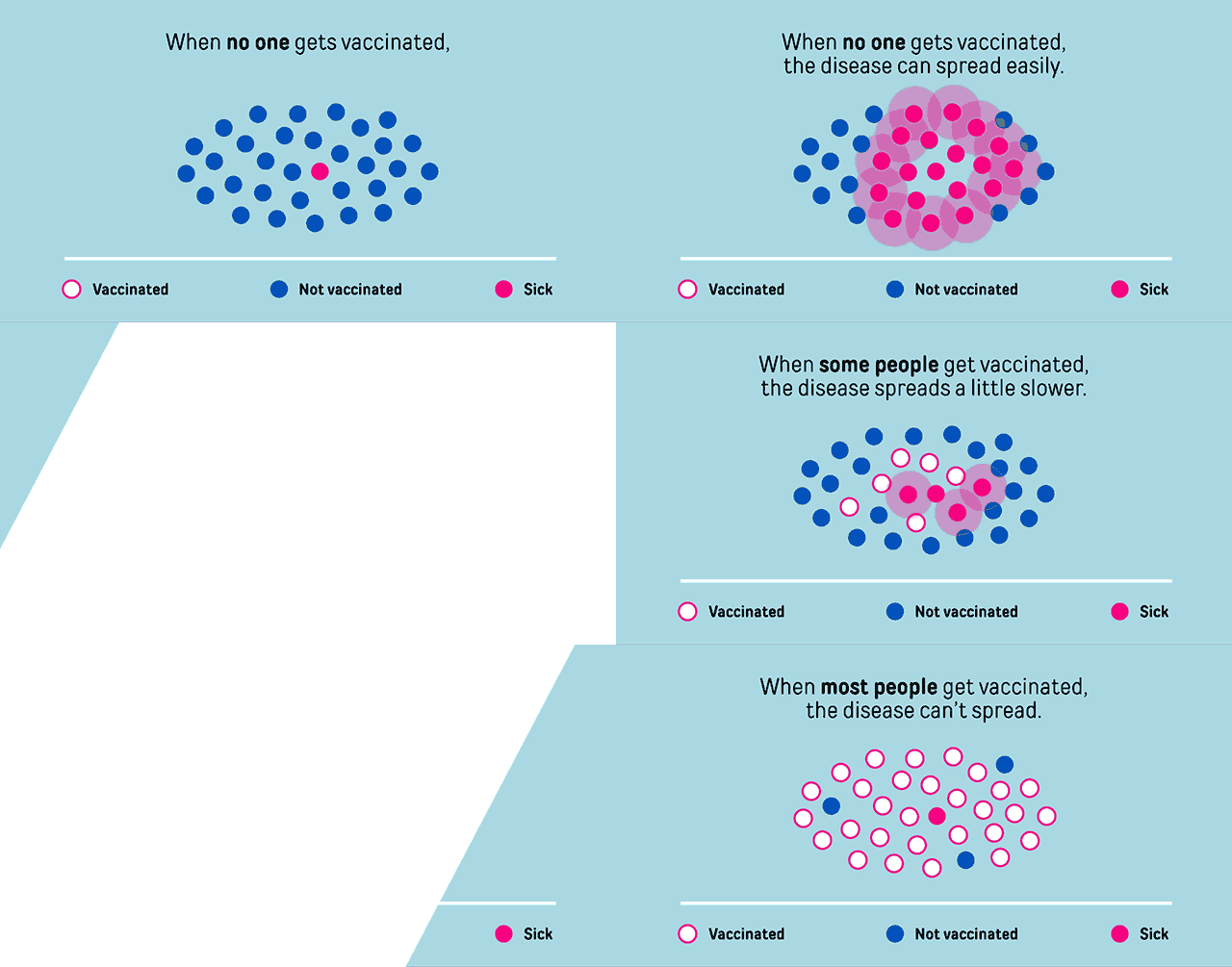
Did you know? Some people, like infants and people with weak immune systems (like people with HIV/AIDS or cancer), may not be able to get many of the vaccines that protect us from serious diseases? The good news is that when you get vaccinated, you are also protecting the unvaccinated people around you – this is called community immunity!
Recommended Vaccine Schedules by Age Group
How to Get Vaccinated & What to Expect
Before you go
- Find your vaccine records – ask previous doctor or log into MyChart.
- Get the facts – During your appointment, your doctor will distribute a Vaccine Information Statement (VIS) that explains the benefits and risks of the vaccine. Ask any questions you may have.
- Some people may not be able to get vaccinated or need to wait. Tell your doctor if you:
- Have any allergies
- Have had serious side effects from a vaccine in the past
- Are pregnant or planning to get pregnant
- Are sick
Side Effects
Most of the time, people will not have any serious side effects from vaccines. The most common side effects are typically mild and include:
- Pain, swelling, or redness where shot was given
- Mild fever
- Chills
- Headache
- Feeling tired
- Muscle and joint aches
If you have any of the above side effects, try the following:
- Drink lots of fluids
- Place a cool, wet washcloth on places where you’re sore
- IF your doctor approves, take non-aspirin pain reliever
- For sore arms, try moving your arm around – it can help with the pain and swelling
References
https://www.hhs.gov/immunization/get-vaccinated/for-adults/index.html
https://www.cdc.gov/vaccinesafety/caregivers/faqs.html
https://www.cdc.gov/flu/fluvaxview/coverage-2223estimates.htm


