November Wellness Spotlight
Mental & Emotional Wellness Through the Holidays

November is the start of the busy holiday season and with that comes some complex emotions. The holiday season brings joyous occasions, family time, and nostalgia. Unfortunately for a lot of people, the holiday season can also mean a time of stress and sometimes loneliness. Though this is a fun and festive time to be with loved ones, it can also be emotionally taxing due to social expectations, financial strain, and darker winters days. Through this month’s wellness spotlight, we are going to learn more about Seasonal Affective Disorder and how it can affect your mind and body. We are also going to investigate some best practices on how to better take care of our mental health this season, learn how to set a few healthy boundaries, and set aside time to engage in gratitude practices.
The holiday season provides a heightened sense of both positive and negative emotions. The joy of giving and being with family can also come with a lot of pressure. Being around a lot of family and friends can come with different dynamics and a good amount of social pressure. Overcommitting to too many events during the holidays can leave us feeling burned out instead of recharged. Recognizing these emotional ups and downs is the first step toward approaching the season with more balance, compassion, and intention.
Seasonal Affective Disorder (SAD)
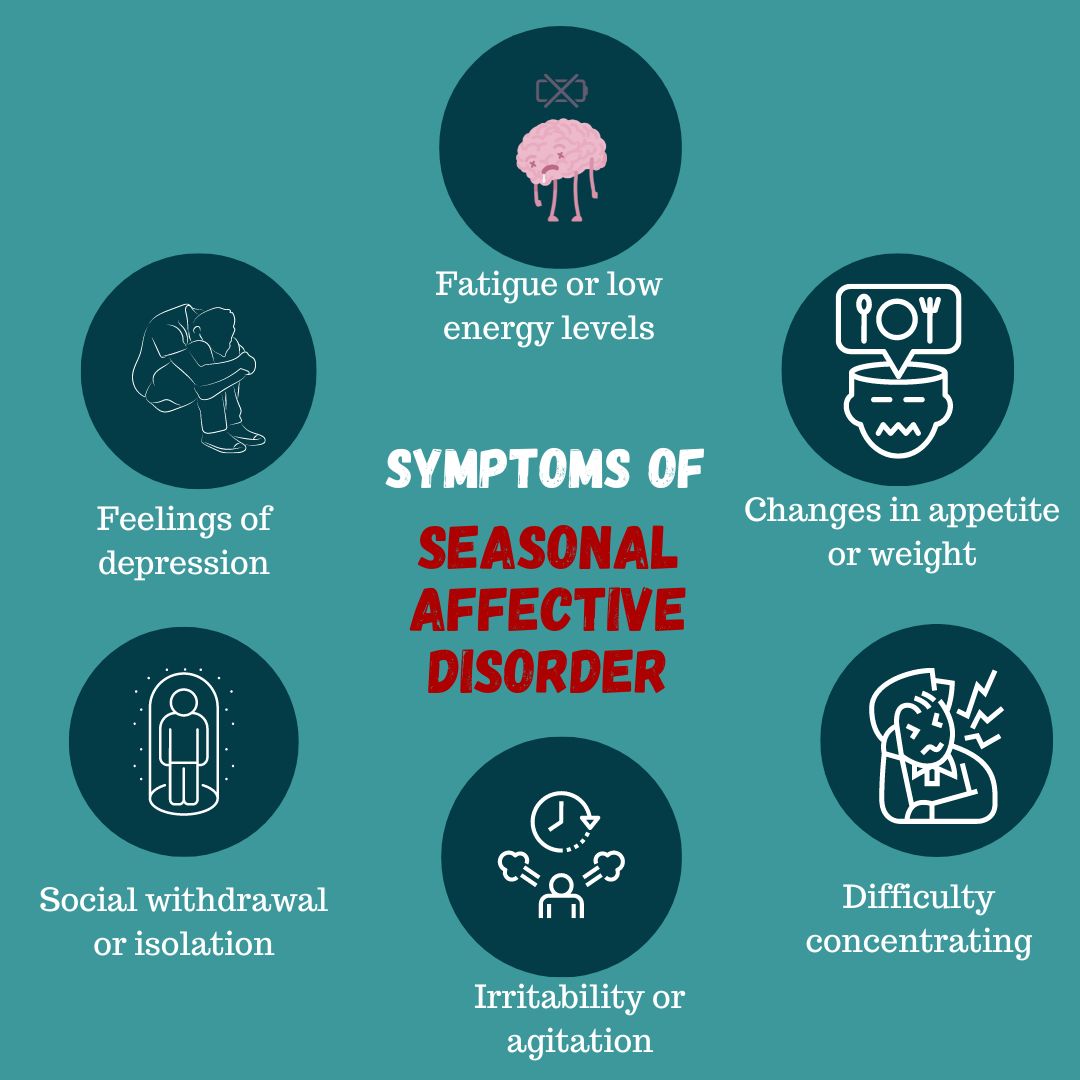
It is important to understand that sometimes we feel a little more than just the “holiday blues.” According to the National Institute of Mental Health (NIMH), Seasonal Affective Disorder (SAD) causes noticeable changes in your mood and behavior as the seasons change. These shifts can influence the way we think, feel, and act daily. While the exact cause of SAD is not fully understood, researchers believe it is linked to shorter daylight hours, reduced exposure to natural light, and lower Vitamin D levels during colder months. Morning light plays a key role in regulating your body’s internal clock, helping you feel alert during the day and sleepy at night. When the sun doesn’t rise until after 8:00am, this natural rhythm can be disrupted. This can make it difficult to maintain stable energy levels and a positive mood.
According to the NIMH, is it estimated that millions of Americans experience some form of SAD symptoms. Due to long winter months, SAD is more common amongst people living farther north. Depending on the severity of symptoms, there are several action steps and treatments to consider. It is important to maintain a consistent sleep schedule. This means waking up and going to sleep at the same time every day. It is also common to use light therapy as a form of SAD treatment. Light therapy is when a person sits in front of a light box every day for about 30-45 minutes. People with eye diseases or people taking certain medications that cause sensitivity to sunlight should consult their doctor before performing this method. Psychotherapy and/or medications can also be necessary to treat depression symptoms that may be heightened by SAD pattern.
Gratitude and Reflection
During the busy and often stressful holiday season, incorporating simple practices like gratitude journaling, appreciation challenges, and mindfulness can make a meaningful difference in  maintaining a positive outlook. Gratitude journaling involves taking a few minutes each day to write down things you’re thankful for whether they are big or small. This helps shift your focus away from stress and toward the good in your life. Appreciation challenges, such as expressing genuine thanks to a new person each day or sharing daily moments of joy with friends or family, can strengthen connections and foster a greater sense of community. Mindfulness practices, like deep breathing, meditation, or simply pausing to notice your surroundings, encourage you to stay present and grounded amid the holiday rush. Together, these habits can help you cultivate a more balanced mindset, reduce anxiety, and fully enjoy the warmth and meaning the season brings.
 Mindful Holiday Preparation

Mindful holiday preparation is all about approaching the season with intention rather than stress and chaos. It begins with setting healthy boundaries. This can mean saying no when necessary, prioritizing commitments that truly matter, and giving yourself permission to slow down. By recognizing your own limits and balancing social obligations with personal downtime, you can reduce stress and prevent burnout before it begins. Incorporating mindfulness practices can help you stay grounded even amid the hustle and bustle. These practices might include pausing to take deep breaths, checking in with your emotions, or focusing fully on one task at a time. Instead of getting caught up in the pressure to create a “perfect” holiday, mindfulness allows you to savor small moments of joy such as sharing a laugh with loved ones or savoring the taste of a Christmas cookie. This allows you to truly be present in the experience. Here are a few examples of mindfulness techniques that you can try today:
The holidays can be joyful and challenging and that is okay. As we enter the holiday season, it’s important to remember that caring for our mental and emotional well-being is just as valuable as celebrating with others. The combination of shorter days, busy schedules, and heightened expectations can take a toll. By recognizing these challenges and approaching them with mindfulness and intention, we can find greater peace and joy. It is important that we listen to what our bodies are trying to tell us and set aside time to recharge. Practicing gratitude, setting healthy boundaries, and being present in each moment can help us stay grounded and connected to what truly matters. Whether it’s through journaling, light therapy, or simply taking time to rest, prioritizing self-care allows us to experience the season with more balance, compassion, and authenticity. Ultimately, the best gift we can give ourselves, and those around us, is the gift of genuine presence and emotional wellbeing.
Resources
References
Seasonal Affective Disorder (SAD) https://www.nimh.nih.gov/sites/default/files/documents/health/publications/seasonal-affective-disorder/seasonal-affective-disorder-508.pdf